Korean Historical Soaps Upset China
Korean historical dramas have upset Chinese authorities and Internet users alike. Chinese authorities have imposed a press embargo on "Taewangsashingi," about the Koguryo Kingdom (37BC-668AD) from the early days until King Kwanggaeto the Great, and Chinese Internet users are calling "Chumong," about the early kingdom¡¯s founding, chauvinistic and anti-Chinese.
Tianya Club, one of the most popular Internet forums in China, and Chinese search engine Baidu are inundated with messages attacking "Chumong." Users complain Korean drama is following in the footsteps of Japanese attempts to rewrite history, depicting Koreans as innocent and the Han-dynasty Chinese as cruel. "The drama portrays Han China as even nastier than Japan,¡± one message says. "What are the Chinese authorities doing? Korea is airing this kind of vicious TV drama all around the world."
Hong Kong¡¯s ATV, which started airing "Chumong" once a week last month, has changed ¡°Han Dynasty" into "Tian Zhao" (meaning ¡°a country ruled by the son of Heaven,¡± its name among vassal states) and "countries" into "tribes" in the subtitles. ATV says it ¡°revised¡± some sensitive lines. ¡°¡¯Chumong' is an interesting and well-produced drama. But its theme is simply a myth or legend,¡± it said.
The Chinese Communist Party¡¯s information department has imposed a press embargo on "Taewangsashingi," which starts airing in September, because it tackles the hairy historical questions of Koguryo, a kingdom China has for some time attempted to co-opt as part of Chinese history. Starring Korean Wave star Bae Yong-joon in his first TV drama in five years, "Taewangsashingi¡± is the most expensive Korean TV drama ever made with W45 billion (US$1=W937) in production cost.
Hong Kong weekly Yazhou Zhoukan said China feels uneasy about a succession of Korean TV dramas about the early Koguryo and Barhae kingdoms. They also include "Yongaesomun," which portrays a general in the later Koguryo period who repelled four invasion attempts by the Tang Dynasty, and "Taejoyong" about the Barhae founder uniting refugees after the fall of Koguryo. In its Feb. 4 edition, the magazine quotes Korea experts as saying such shows do not amount to a cultural invasion but rather provide opportunity for "cultural fusion" between the two countries. The weekly points out that many Korean pop stars are appearing in Chinese TV dramas and the two countries continue to co-produce films and TV dramas.
(englishnews@chosun.com )
Let the Sino-Korean netizen war begin!
website for Jumong
Some photos from Jumong:
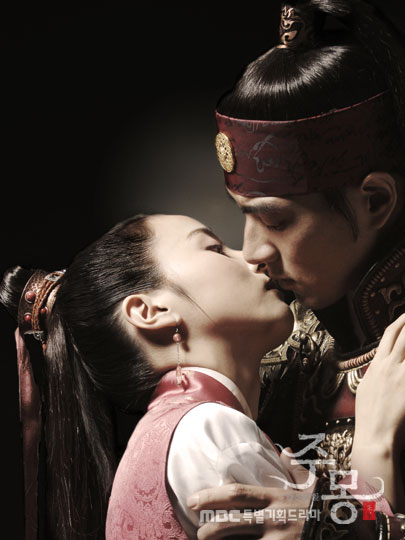
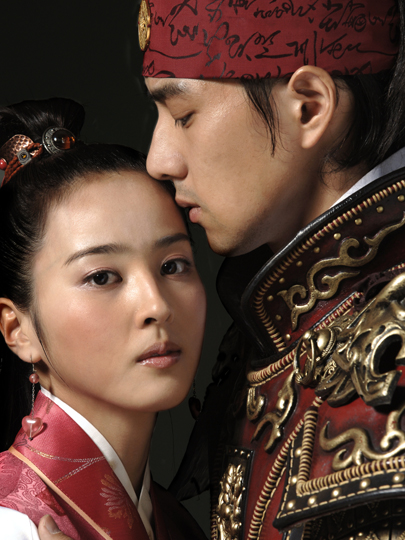
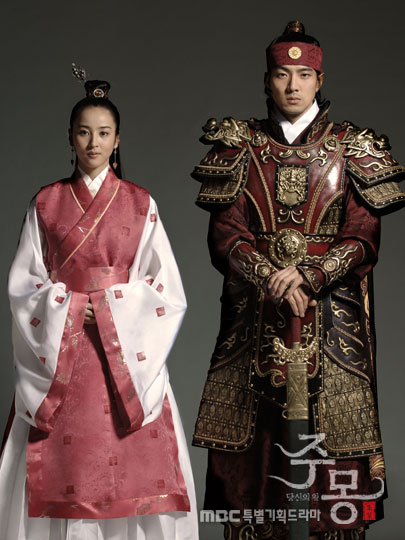
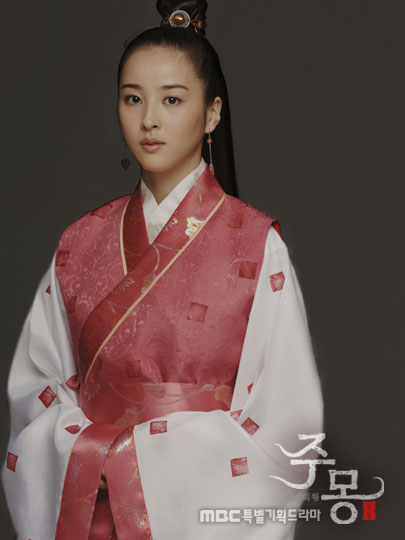
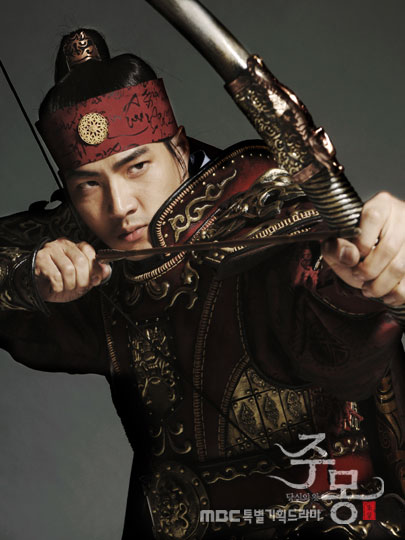
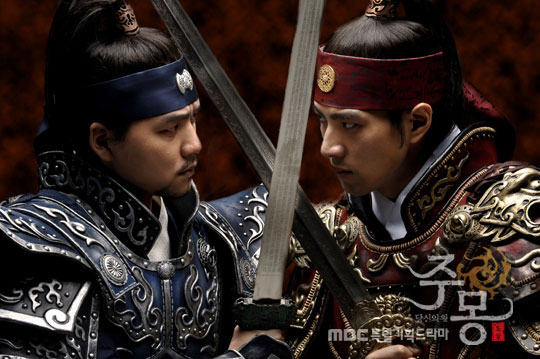
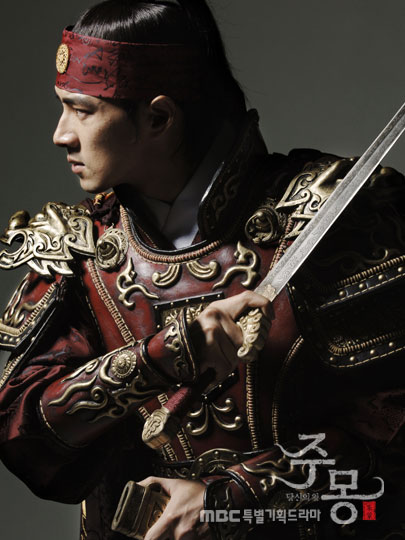
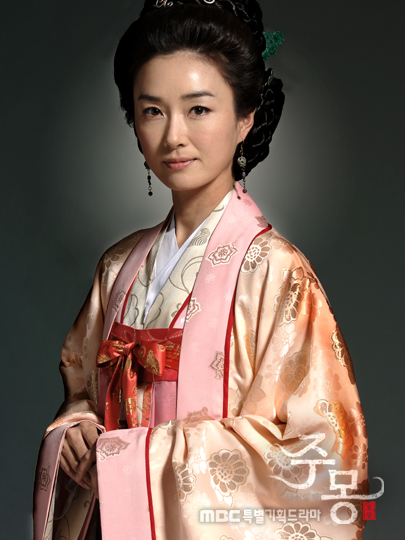
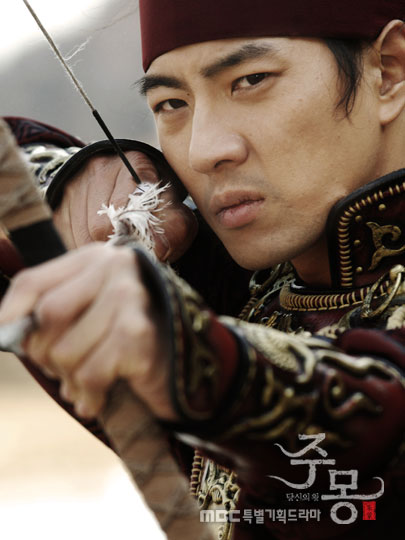
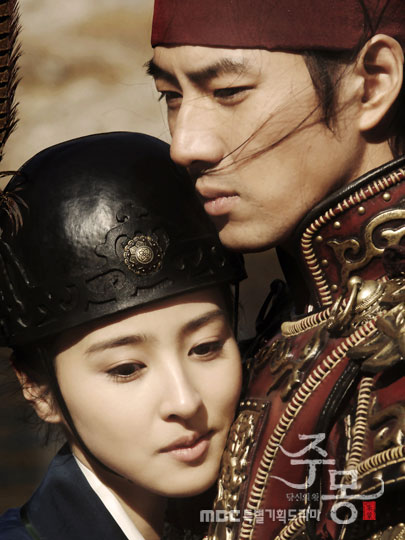
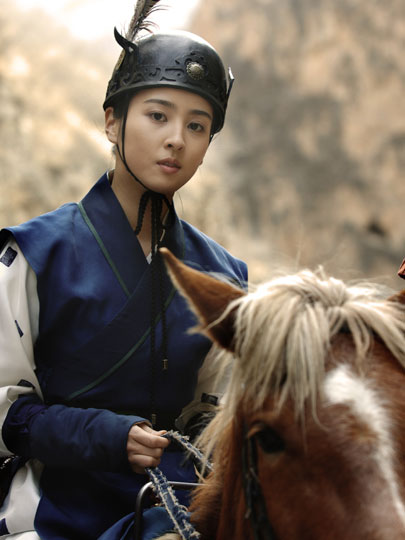
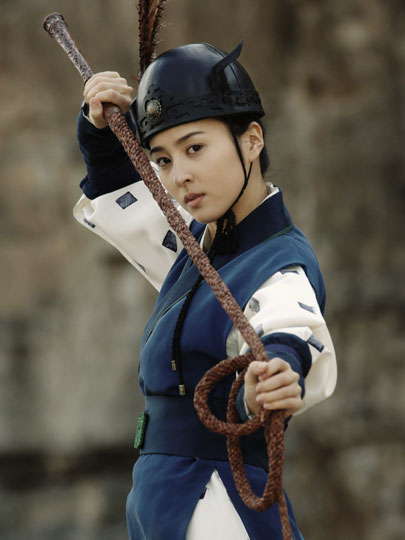
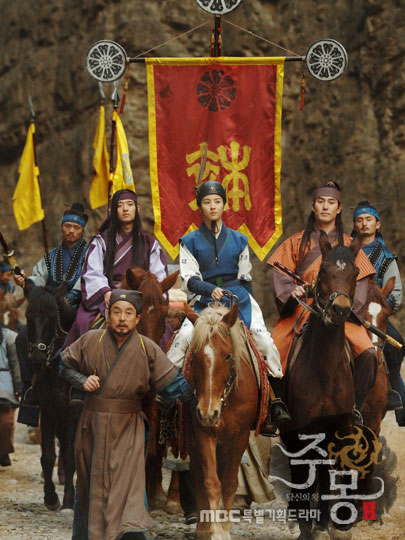
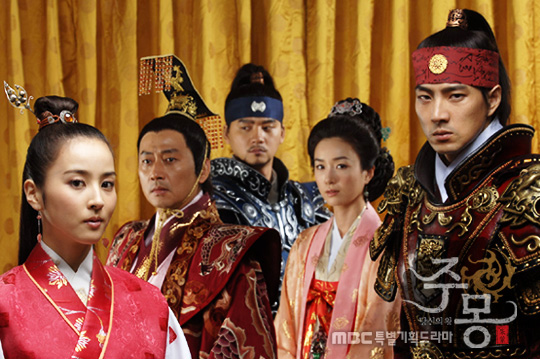
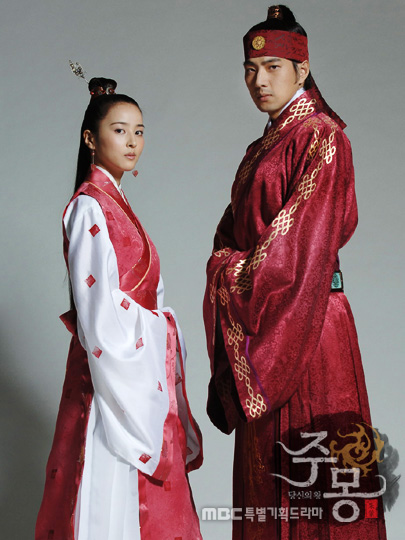
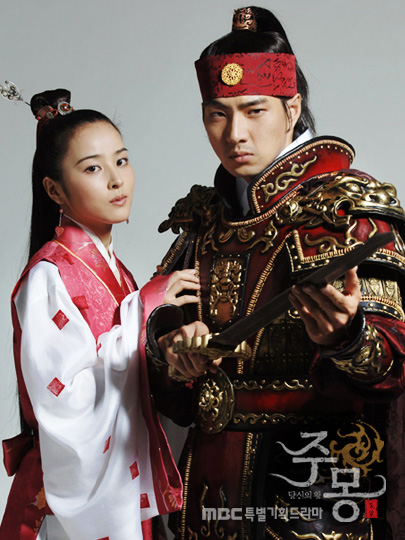
East Asian nationalism is an ugly thing. I'm more sympathetic to the Korean claims; there's too much chauvinism at work in Chinese nationalism--tied in part to the inferiority complex that I've mentioned before. (Not sure if I've talked about it here though.) The desire that "we must show our cultural superiority"--a different form of cultural imperialism than what the Korea wave supposedly represents. (Just a trend in entertainment, those who are reacting against it badly in Japan and China need to calm down and find something else to do besides watch TV.)
As for the attempts of the Chinese government and nationalistic citizens to aggrandize territory, even in the historical past--it's the same old Chinese imperialism, which didn't die with the Qing dynasty. China may be one of the last places on earth where relocalization can take root as a movement. (The United States is also stubborn in holding on 'bigger is better' mentality or the 'big centralized state.' Canada isn't far behind--haha yes I had to put that in there. At least the UK has the UKIP and there are various separation movements in the UK.)
Koreans are a bit more justified in being zealous--they are trying to protect their ethnic and national identity after all, refusing to be assimilated as a satellite state of one big country or another. They did adopt neo-Confucian as official state orthodoxy, and continue to use Chinese characters (at least in South Korea)--the Chinese should be content with that, and focus instead on their internal problems. But it makes for a nice distraction, fostering this spirit of competitiveness with other countries--diverting the people from the real problems plaguing China.

No comments:
Post a Comment