A while back one of the frequent visitors to
CHT alluded to the influence of Straussians upon
ISI by pointing out that the name of its e-journal,
First Principles, refers also to an essential part of the Straussian project. As an Aristotelian, I do not think that the search for universal first principles is wrong in itself, or the claim that these are known by all, but I do not know what the Straussians mean by first principles. According to
Dr. Gutzmann,
For Strauss and his followers, the task of political philosophy is to articulate the timeless truths of morality and politics, as grounded in objective nature and expounded by the best thinkers of the past. The statesmen-intellectuals of the "American founding" gain particular attention. In their subjects' supposed effort to incorporate the enduring lessons of political science into the constitution of the American republic, contemporary Straussians find a compelling subject.
Seems innocuous, at first, doesn't it? I suppose the problem arises when they attempt to explain the American founders through their brand of political science, rather than looking at the sources from which the founders drew. (Is this method of understanding an author derived from their opposition to historicism?)
I have heard that Strauss does not have a high opinion or was skeptical of the medieval intellectual project and medieval philosophy, with its insistence upon the harmony of faith and reason. This is understandable since he did not accept the Christian Faith. What did he think of Church-state relations, and the proper relationship between the Church and secular authority in Christendom?
Straussians tend to have a questionable reputation with everyone else--"left" or "right." While some Catholics (such as
Fr. Ernest Fortin) have learned from Strauss and see themselves as followers of Strauss (I don't know of Fr. Fortin would see himself in this way)
First Principles - On Straussian Teachings (by Paul Gottfried)
Thomas Woods repeats the claim that Straussians are subversive of public order in
his review of
Anne Norton's Leo Strauss and the Politics of American Empire:
Neoconservative Straussians today, in their defense of and even enthusiasm for acts of despotism in the alleged service of a higher good, appear to embrace the Machiavellian idea of the morally autonomous state. Indeed when Straussians refer to the concept of "statesmanship," they very often have in mind a politician’s willingness, in pursuit of his objectives, to break with received morality or his own country’s traditional legal order.
It is unclear to me if the author of the book herself makes
this claim, or if she merely says that the followers of Strauss are not entirely faithful to him.
(Google Books: Anne Norton,
Leo Strauss and the Politics of American Empire)
At any rate, because of
First Principles, I have become aware that ISI is open to the followers of Strauss and considers them to be conservatives.
Now, the item which inspired this post--Ted McAllister reviews
Leo Strauss: An Intellectual Biography: The Theologico-Political Problem Revisited: How to Think About the Modern Project, by
Daniel Tanguay. Mr. McAllister is the author of
Revolt Against Modernity: Leo Strauss, Eric Voegelin, and the Search for a Postliberal Order. He is a
member of the School for Public Policy at Pepperdine. Is he a West Coast Straussian? Probably. He has written for
the Claremont Institute.
(
Leo Strauss: An Intellectual Biography - Google Books Result)
Anyway, this is McAllister's summary of Strauss's ideal of the contemplative (or philosophical) life, according to Tanguay:
Tanguay finds the philosopher’s fundamentally erotic or zetetic way of life to preclude any dogmatic refutation of revelation. Strauss believed that the contemplative life is defined as openness to the Whole (which comes only with some awareness that there is a Whole). Contemplative happiness (that which is peculiar to the philosopher who alone fulfills human nature) is found in the journey that can have no resolution because humans cannot possess knowledge about the Whole, only awareness of that which they search. Since the Whole after which he lusts cannot be known, the philosopher cannot propose a dogmatic atheism and still retain his zetetic search. Incapable of eliminating the possibility of revelation, a genuine philosopher understands that he pursues the philosophical life based on faith—there is no objective grounding (beyond that found in the soul of the philosopher) that justifies his claim that the contemplative way of life is the highest or best. And so Strauss concludes that the theologico-political problem is universal and an insoluble part of the human condition.
(Both this and Anne Norton's book were published by
Yale University Press. Is Yale UP friendly to Straussians? Is
Yale a haven for Straussians? The Philosopher would probably know--I should ask him next time I talk to him on the phone.)
According to Tanguay:
The existential source (and hence the beginning) of Strauss’s philosophical quest was the Jewish problem and the purported liberal solution. On this subject Tanguay is often as elusive as was Strauss, but at the center of the Jewish problem stands the twin themes of authority and identity. The Jewish problem is an expression of the never resolved human problem of the relationship between theology and philosophy, and thus is a particular example of the universal theologico-political problem. The liberal solution to this problem was to make matters of religion private, chasing the deepest questions about how to live out of the public realm. Incapable of arguing away religious ontological claims, the modern answer was to leave to individuals the question about how to live well. In a word, the answer to competing religious traditions and claims to final authority was tolerance. In the case of Jews, the creation of an identity outside of the Law, as rights-bearing individuals of a liberal society, constituted a threat to the very Jewish identity as determined by fidelity to the Law and it provided legal equality that fostered assimilation without the means of providing social equality. Disconnected from the most basic form of their Jewish identity, Jews were nonetheless vulnerable to discrimination.
Strauss’s attempt to resolve the problem of Jews in modern society took several early forms but did not gain satisfactory clarity until, through his study of the “moderate” medieval enlightenment in Judaism and Islam, Strauss rediscovered Platonic or zetetic philosophy. Strauss discovered in the Jewish thinker Maimonides, and then the Islamic philosopher Farabi, a via media that resolved, at least temporarily, the tension between revelation and philosophy. If the Law, as discovered through revelation, declared that human flourishing is found in blind devotion to God while the philosophical imperative is skeptical and zetetic and finds human happiness in philosophical questioning, how can they coexist? The Law and revelation concern themselves with the moral and political life and establish the beliefs necessary to satisfy the human needs for a social and political life. The philosopher is not exempt from these needs even if he cannot believe unambiguously in the claims that establish the social/moral life that he so needs. Farabi understood the different needs of the citizen and the philosopher and therefore noted the important distinction between necessary beliefs (political and moral beliefs that come from revelation) and true beliefs (the beliefs determined by reason). If necessary beliefs are important conditions for the philosopher to devote himself to the theoretical life in pursuit of true beliefs, the philosopher must respect both beliefs and should write in a way that supports necessary beliefs while exposing to other philosophers true beliefs. Strauss embraced this “esoteric writing” because true philosophers pursue their quest based on three assertions: 1) that only very few people are suited to the theoretical or philosophical life and that all others would be harmed by having their religious beliefs challenged; 2) that true beliefs expressed too bluntly to the vulgar poses a direct threat to the life and wellbeing of philosophers as their statements would pose a threat to the health of the city; and 3) that philosophers cannot provide a satisfactory alternative to revelation—that the philosopher has to assume that revelation may be true as well as necessary.
Common to both Jerusalem and Athens—to all the meaningful ancient alternatives—is the assertion of a normative order, to an authority found in revelation or in Nature, that defines the best way to live.
How does Strauss understand Natural Law? Is it susceptible to the charge that it is a form of "naturalism"? (See Finnis and Rhonheimer's critique of attempting to derive the norms of ethics from "nature," or the consequent definition of Natural Law that is also erroneous.)
Would Strauss have had a different opinion about man's ultimate end if he experienced authentic Jewish mysticism or spirituality? Is an authentic Jewish mysticism possible after the coming of Christ? The quick answer is that it is possible, in so far as "mysticism" or the "spiritual life" is available to anyone receptive to grace. So "Jewish" describes the subject of mysticism, and not the intellectual or spiritual means by which mysticism is attained.
Strauss has acquired the same conceit of the ancient philosophers, particularly Plato and Aristotle, that the contemplative life being the ideal or most perfect for human beings. Someone aware of the distinction between nature and grace might respond that they are merely talking about the the ideal or most perfect life attainable by human power alone? But even if that is the case, it is still disordered, if it is not ordered to the love of God.
Ignoring for now the grace-nature controversy that preoccupied de Lubac and the neo-scholastics, I would posit that in a created order where man is called only to a natural end, that end would not only be God, but the best act would be some sort of natural mysticism or contemplation motivated by the natural love of God, not the philosophical contemplation separated from God, to which philosophers strive.
Metaphysics can show that our starting-point for ethics is wrong if we assume that the good in which our ultimate end consists is ourselves. (As it is the case with the ancients and with any ethical system that disregards God.) The metaphysician can show that God is not only the First [Efficient] Cause, but
the Final Cause as well, not only for Himself but for all of creation.
How useful can Strauss be as an ethical philosopher, in comparison to Aristotle, if they are both ignorant of the ultimate end to which all are called, and the need for grace? Strauss is unable to correct Aristotle in this regard. How do they compare on political questions? Does Strauss accept or deny what Aristotle says about the common good and so on? How does Strauss reconcile the tension between the contemplative and active life for the citizen, a tension in Aristotle's
Nicomachean Ethics that still baffles philosophers and scholars today? (From what I have heard from Straussians, they along with Strauss seem to agree with Aristotle that the contemplative life is better. But what of friendship, including political friendship?) Can Straussians defend the judgment that Strauss is better than Aristotle with regards to political theory and should therefore be considered one of its masters?
While Strauss did give an historical account of the development of rights theory and a philosophical critique of rights in
Natural Right and History, has his work been contradicted by further research and reflection on the medieval developments in rights theory? (The Philosopher still recommended it to me.) Are rights universal and part of the Natural Law? Or are they culture-bound? Perhaps both? Does the anti-historicism stance of Strauss prevent him from seeing that some rights are not universal and should not be recognized universally?
(Would we be better able to understand Aristotle's
Politics if his records of various constitutions had been preserved? The
Politics can seem so abstract, though the examples he draws from various constitutions to illustrate his points are helpful. But how much more helpful would it be if we could refer to the entire constitution of various polities?)
As for Strauss's understanding of Plato... I'd rather read more Plato and follow the lead of
Giovanni Reale. One of Strauss's students,
Stanley Rosen is a noted Plato scholar, and I have not yet read his commentaries on Plato. Someday, perhaps.
Related Links:
FT March 2000: Leo Strauss: Natural Right and History (1953)Strauss, Leo: Natural Right and HistoryOn Strauss and Natural Right « The fence between true opinions and ...The Ambivalence of Classic Natural Right: Leo Strauss on ...The Claremont Institute - Ernest Fortin's Teaching for CatholicsThe Claremont Institute - The Christian Socrateson the passing of Fr. Fortin, the Weekly Standard:
Faith and ReasonLeo Strauss: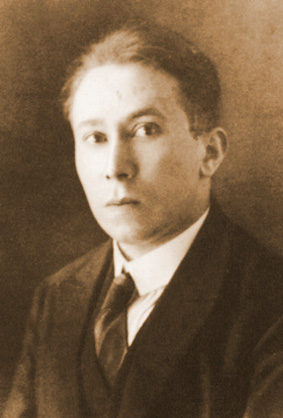 Leo Strauss, Conservative MastermindLeo Strauss's PlatonismChicago Reader | Defending Strauss: University of Chicago ...The Real Leo Strauss - New York TimesFaith and Political Philosophy: The Correspondence Between Leo ... - Google Books ResultThe Rebirth of Classical Political Rationalism: An Introduction to ... - Google Books ResultLeo Strauss, the Straussians, and the American Regime: The ... - Google Books ResultThe Claremont Institute - Leo Strauss, the Bible, and Political ...Zuckert, Catherine H.: The Truth about Leo Strauss
Note to self: do some research on
Carl Schmitt-
 The Concept of the Political
On the Three Types of Juristic ThoughtLegality and LegitimacyLegality and Legitimacy.carl schmittLJIL - International Theory of Carl SchmittThe Crisis of Parliamentary Democracy - Google Books ResultThe Challenge of Carl Schmitt - Google Books ResultCarl Schmitt, the Inquisition, and TotalitarianismCarl Schmitt and Leo Strauss: The Hidden Dialogue - Google Books ResultLegality and Legitimacy: Carl Schmitt, Hans Kelsen and Hermann ... - Google Books ResultMeier, Heinrich: Carl Schmitt and Leo StraussContribution of political theology of Carl Schmitt for political ... (doc)
He supported the Nazi regime? How Catholic was Carl Schmitt? Was he warned by any of the bishops?
Books by Giovanni Reale: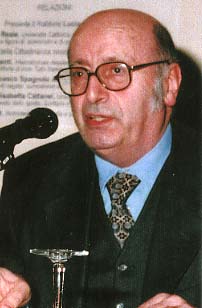 Dialogues on Plato - The Idea of the Good History of Ancient Philosophy I, A
History of Ancient Philosophy II, A History of Ancient Philosophy III, A
History of Ancient Philosophy IV, A The Concept of First Philosophy and the Unity of the Metaphysics of Aristotle
Toward a New Interpretation of PlatoMisc:
Modern Ancients Stanley Rosen's achievement.by Thomas Hibbs
Marc Cohen's Home PageMEDITATIE en MYSTIEK


