Showing posts with label Marcus Aurelius. Show all posts

Friday, April 23, 2010

Tears of a Clown by Taki Theodoracopulos

Emotional incontinence has turned men into wimps. The new man has to be caring and unafraid to burst into tears. But I’ve got news for you. It’s all a sham. Good men were and are caring without having to show it. Stoicism and emotional restraint are superior to cheap histrionics. Touchy-feely types are like Clinton, a dime a dozen, and as dishonest as they come.
Taki echoes Theodore Dalrymple.

An oldie from the good doctor: No one tips their cap any more.
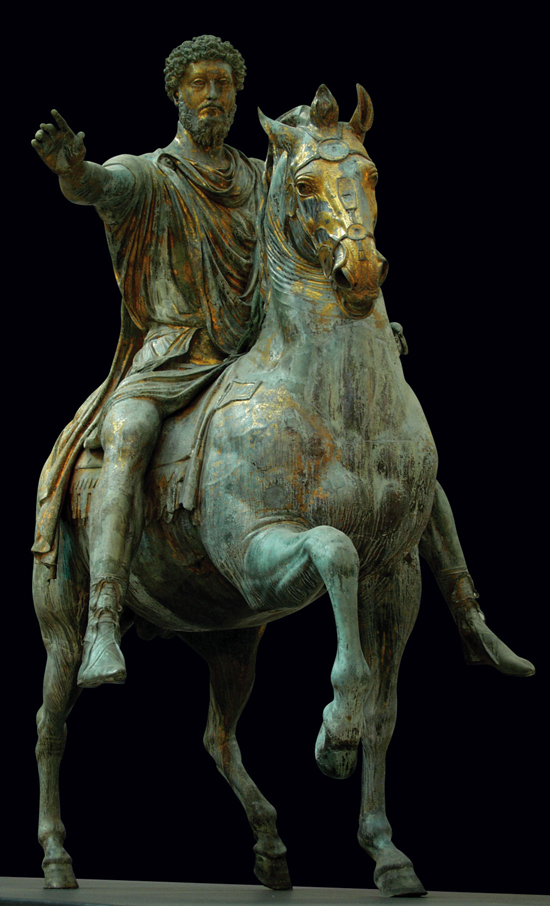
Marcus Aurelius (source)

Tuesday, April 13, 2010

The universal cause is like a winter torrent: it carries everything along with it. But how worthless are all these poor people who are engaged in matters political, and, as they suppose, are playing the philosopher! All drivellers. Well then, man: do what nature now requires. Set thyself in motion, if it is in thy power, and do not look about thee to see if any one will observe it; nor yet expect Plato's Republic: but be content if the smallest thing goes on well, and consider such an event to be no small matter. For who can change men's opinions? And without a change of opinions what else is there than the slavery of men who groan while they pretend to obey? Come now and tell me of Alexander and Philip and Demetrius of Phalerum. They themselves shall judge whether they discovered what the common nature required, and trained themselves accordingly. But if they acted like tragedy heroes, no one has condemned me to imitate them. Simple and modest is the work of philosophy. Draw me not aside to indolence and pride.


Meditations, Book IX

Sunday, February 28, 2010

Quodcumque

Whatever this is that I am, it is a little flesh and breath, and the ruling part. Throw away thy books; no longer distract thyself: it is not allowed; but as if thou wast now dying, despise the flesh; it is blood and bones and a network, a contexture of nerves, veins, and arteries. See the breath also, what kind of a thing it is, air, and not always the same, but every moment sent out and again sucked in. The third then is the ruling part: consider thus: Thou art an old man; no longer let this be a slave, no longer be pulled by the strings like a puppet to unsocial movements, no longer either be dissatisfied with thy present lot, or shrink from the future.

All that is from the gods is full of Providence. That which is from fortune is not separated from nature or without an interweaving and involution with the things which are ordered by Providence. From thence all things flow; and there is besides necessity, and that which is for the advantage of the whole universe, of which thou art a part. But that is good for every part of nature which the nature of the whole brings, and what serves to maintain this nature. Now the universe is preserved, as by the changes of the elements so by the changes of things compounded of the elements. Let these principles be enough for thee, let them always be fixed opinions. But cast away the thirst after books, that thou mayest not die murmuring, but cheerfully, truly, and from thy heart thankful to the gods.

Remember how long thou hast been putting off these things, and how often thou hast received an opportunity from the gods, and yet dost not use it. Thou must now at last perceive of what universe thou art a part, and of what administrator of the universe thy existence is an efflux, and that a limit of time is fixed for thee, which if thou dost not use for clearing away the clouds from thy mind, it will go and thou wilt go, and it will never return.

Every moment think steadily as a Roman and a man to do what thou hast in hand with perfect and simple dignity, and feeling of affection, and freedom, and justice; and to give thyself relief from all other thoughts. And thou wilt give thyself relief, if thou doest every act of thy life as if it were the last, laying aside all carelessness and passionate aversion from the commands of reason, and all hypocrisy, and self-love, and discontent with the portion which has been given to thee. Thou seest how few the things are, the which if a man lays hold of, he is able to live a life which flows in quiet, and is like the existence of the gods; for the gods on their part will require nothing more from him who observes these things.


Meditations, Book 2

Wednesday, May 16, 2007

Marcus Aurelius, Meditations, Book V XXVII

XXVII. Within a very little while, thou wilt be either ashes, or a sceletum; and a name perchance; and perchance, not so much as a name. And what is that but an empty sound, and a rebounding echo? Those things which in this life are dearest unto us, and of most account, they are in themselves but vain, putrid, contemptible. The most weighty and serious, if rightly esteemed, but as puppies, biting one another: or untoward children, now laughing and then crying. As for faith, and modesty, and justice, and truth, they long since, as one of the poets hath it, have abandoned this spacious earth, and retired themselves unto heaven. What is it then that doth keep thee here, if things sensible be so mutable and unsettled? and the senses so obscure, and so fallible? and our souls nothing but an exhalation of blood? and to be in credit among such, be but vanity? What is it that thou dost stay for? an extinction, or a translation; either of them with a propitious and contented mind. But still that time come, what will content thee? what else, but to worship and praise the Gods; and to do good unto men. To bear with them, and to forbear to do them any wrong. And for all external things belonging either to this thy wretched body, or life, to remember that they are neither thine, nor in thy power.


From Project Gutenberg