Wednesday, November 08, 2006

Recent articles by the good doctor

Theodore Dalrymple: A Man Out of Time, Veiled Threat and... Casual Reaction to Criminal Brutality

Eh... I had thought of moving to NZ someday if I ever won the lottery...

From his review of a biography of R. S. Thomas:

The account of the death of the poet’s wife in 1991 is extremely moving. She had long been ill. Her bedroom in their small cottage—which had no amenities, apart from a view so beautiful that it stops my heart to think about it—was reached by a ladder. He brought her home from the hospital when it was apparent that she could not recover, and carried “her up the steps himself as he might a bride,” though he himself had just had an operation for a hernia (he was 78 at the time, she 82). She died four days later.

After her death, he wrote love poems of the greatest possible tenderness:

She left me. What voice
colder than the wind
out of the grave said:
“It is over?” Impalpable,
invisible, she comes
to me still, as she would
do, and I at my reading.
There is a tremor
of light, as of a bird crossing
the sun’s path, and I look
up in recognition
of a presence in absence.
Not a word, not a sound,
as she goes her way,
but a scent lingering
which is that of time immolating
itself in love’s fire.

And, even more tenderly:

We met
under a shower
of bird-notes.
Fifty years passed,
Love’s moment
in a world in
servitude to time.
She was young;
I kissed her with my eyes
closed and opened
them on her wrinkles.
“Come” said death,
choosing her as his
partner for
the last dance. And she,
who in life
had done everything
with a bird’s grace,
opened her bill now
for the shedding
of one sigh no
heavier than a feather.

This is all the more remarkable since, according to the poems that Thomas wrote over the years, their marriage was not out of a storybook. Indeed, he and his wife had contracted it almost coldly, without expectations of romantic bliss:

I saw her,
when young, and spread the panoply
of my feathers instinctively
to engage her. She was not deceived,
but accepted me as a girl
will under a thin moon
in love’s absence as someone
she could build a home with
for her imagined child.

Fifty years after their marriage, he wrote:

Cold hands meeting,
the eyes aside
as vows are contracted
in the tongue’s absence.
Gradually
over fifty long years
of held breath
the heart has become warm.

I doubt that any marriage could be more uncongenial to the modern sensibility than this one: a mere calculation on one side that grows into undemonstrative, but deep, emotion. It is precisely because this kind of relation is so uncongenial or alien to us that it serves as something worth reflecting upon.

Some of his poems here.

The Corporate Food System is Broken

The Corporate Food System is Broken
Industrial Agriculture is Taking Us Down the Wrong Road

By JAMES GOODMAN

Self reliance is not a bad thing. While Emerson's thoughts on "Self Reliance" were controversial enough to get him banned from Harvard University, it seems that most Americans have willingly ceded their own self reliance and therefore their right of choice into the hands of corporate America. They have given up choice in media, health care and even food.

A return to basics

Those goods that are necessary for the survival of a political community, and without which all other considerations become moot.


The 'dark matter' of American politics
by Kurt Cobb

In addition, soil erosion and fertility, the depletion of major fisheries, the destruction of forests, and the skyrocketing prices of raw materials such as copper, nickel and steel are all nonstarters for political candidates. It's as if the basics of civilization--stable climate, fresh water, fertile soil, minerals, and energy supplies--were afterthoughts or at most a problem of location as in the case of oil.


While one may dispute the author's judgment about the earth's carrying capacity or the causes of global warming, he is right in pointing out that very few politicians have addressed the most basic questions that need to be asked for the sake of keeping a community in existence. We no longer care about local self-sufficiency, believing that "a free market" is the best mechanism for meeting the needs of all. (When really, it is the best mechanism to benefit the oligarchs.)

Heavy military expenditures, increasing public and private debt, and threats to our democratic institutions are all related to the stressed condition of the biosphere. A detailed list of the symptoms that result from that stress--the stress of living beyond the earth's carrying capacity--is provided in the latest edition of Limits to Growth. That list reads like a summary of the causes of American political disputes over the past 30 years. Unfortunately, many of these symptoms have been cast in ideological terms instead of ecological terms. This has led people to believe that addressing the symptoms is merely a question of electing the right politicians rather than reworking our way of life.

Of note in the current issue of Antiphon

Contents

The article "The Theological Battle over the Rite of Exorcism, 'Cinderella' of the New Rituale Romanum" by Fr. Manfred Hauke is not available online, but Daniel G. Van Slyke, "The Ancestry and Theology of the Rite of Major Exorcism (1999/2004)" is.

The library at St. John's is the best kept secret next to campus--plenty of good journals and books there; however they are now requiring that student ids be held at the desk--I'm not sure why, perhaps to keep track of who is using the library.

Anyways, the article is a must-read for those who would like to pass judgments on Fr. Amorth's statements and practices as an exorcist.

Tuesday, November 07, 2006

A Russian Orthodox View of Papacy, and More (Part 2)

A Russian Orthodox View of Papacy, and More (Part 2)

Interview With Bishop Hilarion Alfeyev

VIENNA, Austria, NOV. 7, 2006 (Zenit.org).- Catholics and Orthodox should establish a "strategic alliance" for the defense of Christian values in Europe, says an Eastern prelate.

Bishop Hilarion Alfeyev of Vienna and Austria, representative of the Russian Orthodox Church to the European Institutions, made this suggestion, and others, in this interview on topics linked to ecumenism.

Part 1 of this interview appeared Monday.

Q: Benedict XVI is looking for the "full and visible unity" of all Christians -- a unity which man cannot "create," but which he may encourage, through his own conversion, through concrete gestures and an open dialogue about fundamental topics. On the basis of which topics can Orthodoxy and Rome strengthen their bonds? How should they be put into praxis?

Bishop Alfeyev: I believe, first of all, that it is necessary to identify several levels of collaboration and then to work for better understanding at each level.

One level relates to the theological conversations that are pursued by the Joint Catholic-Orthodox Commission. These conversations are and will be focused on the dogmatic and ecclesiological disparities between the Roman Catholic and the Orthodox Church.

At this level I can predict many years of exhaustive and difficult work, especially when we come to the issue of universal primacy. Complications will arise not only because of the very different understanding of primacy between the Catholic and Orthodox traditions, but also from the fact that there is no unanimous understanding of universal primacy among the Orthodox themselves.

This fact already became evident during the recent session of the Commission in Belgrade, and the internal disagreement within the family of the Orthodox Churches on this particular issue will be manifested in ways more acute and striking in the future. Thus, a long and thorny path lies ahead.

There is, however, another level to which we should set our sights, and here I mean not so much what divides as what unites us. To be specific, this is the level of cooperation in the field of Christian mission.

Personally, I believe that it is quite premature and unrealistic to expect restoration of full Eucharistic communion between East and West in the foreseeable future. Nothing, however, prevents us, both Catholics and Orthodox, from witnessing Christ and his Gospel together to the modern world. We may not be united administratively or ecclesiastically, but we must learn to be partners and allies in the face of common challenges: militant secularism, relativism, atheism, or a militant Islam.

It is for this reason that, since the election of Pope Benedict XVI, I have repeatedly called for the fostering of ties between the Catholics and the Orthodox Churches through the creation of a strategic alliance for the defense of Christian values in Europe. Neither the word "strategic" nor "alliance" has so far been commonly accepted to describe a collaboration such as this.

For me, it is not words that matter but rather the connotation behind them. I used the word "alliance" not in the sense of a "Holy Alliance," but rather as it is employed for "The World Alliance of Reformed Churches," i.e., as a term designating collaboration and partnership without full administrative or ecclesial unity.

I also wanted to avoid pointedly ecclesial terms such as "union," because they will remind the Orthodox of Ferrara-Florence and other similar unfortunate attempts at achieving ecclesial unity without full doctrinal agreement.

Neither an ecclesial "union" nor a hasty doctrinal compromise is needed now, but rather a "strategic" cooperation in the sense of developing a common strategy to combat all the challenges of modernity.

The rationale behind my proposal is this: Our churches are on their way to unity, but one has to be pragmatic and recognize that it will probably take decades, if not centuries, before unity is restored.

In the meantime we desperately need to address the world with a united voice. Without being one Church, could we not act as one Church? Could we not present ourselves to secular society as a unified body?

I strongly believe that it is possible for the two Churches to speak with one voice; there can be a united Catholic-Orthodox response to the challenges of secularism, liberalism and relativism. Also in the dialogue with Islam, Catholics and Orthodox can act together.

I should add that any rapprochement between Catholics and Orthodox will in no way undermine those existing mechanisms of ecumenical cooperation that include also Anglicans and Protestants, such as the World Council of Churches and the Conference of European Churches.

However, in the struggle against secularism, liberalism and relativism, as well as in the defense of traditional Christian values, the Roman Catholic Church takes a much more uncompromising stand than many Protestants. In doing so it distances itself from those Protestants whose positions are more in tune with modern developments.

The recent liberalization of doctrine and morality in many Protestant communities, as well as within the Anglican Church, makes cooperation between them and the Churches of Tradition, to which belong both the Roman Catholic and the Orthodox Churches, ever more difficult.

Yet another level of Catholic-Orthodox cooperation would be that of cultural exchange between the representatives of the two Churches. Many misunderstandings that exist between us have a purely cultural origin.

Better knowledge of each other's cultural heritage would definitely foster our rapprochement. Icon exhibitions, choir concerts, joint literary projects, various conferences on cultural subjects -- all this can help us overcome centuries-old prejudices and better understand each other's traditions.

Q: In his letter to the Pope on February 22, the patriarch of Moscow mentions some challenges of the modern world, which should be solved together, and his deep wish to bring back Christian values to society. How can forces be joined, so that the dangers of materialism, consumerism, agnosticism, secularism and relativism could be overcome?

Bishop Alfeyev: These questions were raised during the conference "Giving a Soul to Europe" that took place in Vienna on May 3-5, 2006. The conference was organized jointly by the Pontifical Council for Culture and the Department for External Church Relations of the Moscow Patriarchate.

Some 50 participants representing the Roman Catholic and the Russian Orthodox Churches gathered together in order to ponder on the challenges facing Christianity in Europe and to develop ways of collaboration in facing them.

It is precisely materialism, consumerism, agnosticism, secularism and relativism, all based on liberal humanist ideology, that constitute a real challenge to Christianity. And it is this liberal humanist ideology that we must counteract if we wish to preserve traditional values for ourselves and for our future generations.

Today Western liberal humanist ideology, standing on the platform of its own, self-made universality, imposes itself on people who have been raised in other spiritual and moral traditions and have different value systems. These people see in the total dictate of Western ideology a threat to their identity.

The evidently anti-religious character of modern liberal humanism brings about non-acceptance and rejection by those whose behavior is religiously motivated and whose spiritual life is founded on religious experience.

There exist several variations on the religious response to the challenges of totalitarian liberalism and militant secularism. The most radical answer has been given by Islamic extremists, who have declared jihad against "post-Christian" Western civilization with all of its so-called common human values.

The phenomenon of Islamic terrorism cannot be understood without full appreciation of the reaction that has arisen in the contemporary Islamic world as a result of attempts in the West to impose its worldview and behavioral standards on it.

So long as the secularized West continues to lay claim to a worldwide monopoly on worldviews, propagating its standards as being without alternative and obligatory for all nations, the sword of Damocles of terrorism will continue to hang above the whole of Western civilization.

Another variation on the religious response to the challenge of secularism is the attempt that is being made to adapt religion itself, including its doctrine and morals, to modern liberal standards.

Some Protestant communities have already gone down this path by having instilled liberal standards into their teaching and church practice over the course of several decades. The result of this process has been an erosion of the dogmatic and moral foundations of Christianity, with priests being allowed to justify or conduct "same-sex marriages," members of the clergy themselves entering into such liaisons, and theologians rewriting the Bible and creating countless versions of politically correct Christianity oriented toward liberal values.

Finally, the third variation on the religious response to secularism is the attempt to enter into a peaceful, non-aggressive dialogue with it, with the aim of achieving a balance between the liberal-democratic model of Western societal structure and the religious way of life. Such a path has been chosen by Christian Churches that have remained faithful to tradition, namely the Roman Catholic and Orthodox Churches.

Today both the Roman Catholic and the Orthodox Churches have the capability to conduct dialogue with secularized society at a high intellectual level. In the social doctrines of both Churches, the problems concerning dialogue with secular humanism on the matter of values have been profoundly examined from all angles.

The Roman Catholic Church has dealt with these questions in many documents of the magisterium, the most recent of which being the Compendium of the Social Doctrine of the Church, compiled by the Pontifical Commission "Justitia et Pax" and published in 2004.

In the Orthodox tradition the most significant document of this kind is the "Bases of the Social Concept of the Russian Orthodox Church," published in 2000.

Both documents promote the priority of religious values over the interests of secular life. In opposing atheist humanism, they foster instead a humanism guided by spiritual values.

By this is meant a humanism "that is up to the standards of God's plan of love in history," an "integral humanism capable of creating a new social, economic and political order, founded on the dignity and freedom of every human person, to be brought about in peace, justice and solidarity."

Comparison between the two documents reveals striking similarities in the social doctrines of the Roman Catholic and the Orthodox Churches. If our understanding of social issues is so similar, why can we not join forces in order to defend it?

I believe the time has come for all Christians who choose to follow the traditional line, notably the Catholics and the Orthodox, to form a common front in order to combat secularism and relativism, to conduct responsible dialogue with Islam and the other major world religions, and to defend Christian values against all challenges of modernity. In 20, 30 or 40 years it may simply be too late.

Frailty, Thy Name is ... Feminist?

by Gina R. Dalfanzo

an oldie from Boundless...

Jeff Vail

One of his posts, Elegant Technology. was recently featured at Energy Bulletin, as the Western Confucian notes.

Jeff Vail's A Theory of Power blog (the book can be downloaded here)

But like the anarcho-primitivists, I think he denigrates hierarchy in favor of equality a little bit too much... I haven't read enough of his writings to determine if he is an anarcho-primitivist--it seems unlikely since he does not overtly embrace hunting-gathering, but he does share many of the same critiques, such as that of religion (see also his version of the 4 virtues). His theory of the state and of sovereignty is also problematic.

Stuff from Ignatius Insight

Including an interview with Ed Peters, author of the new book Excommunication and the Catholic Church

Take a look at
Question: Who Is Married? | Edward Peters
Entering Marriage with Eyes Wide Open | Edward Peters

Also:
What is Catholic Social Teaching by Mark Brumley

Mr. Brumley focuses on An Introduction to Catholic Social Teaching by Roger Charles, S.J. (published by Ignatius Press). I'm not sure how Thomistic the book is, and whether it addresses political theology adequately. A book to look into one of these days...

Marriage and the Family in Casti Connubii and Humanae Vitae | Reverend Michael Hull, S.T.D. | Reading the signs of their times, Pope Pius XI and Pope Paul VI both addressed the sanctity of marriage and the family, with special emphasis on the principal threat against them in modern times: artificial birth control.

The Role of the Laity: An Examination of Vatican II and Christifideles Laici | Carl E. Olson | Both Vatican II and the late Holy Father repeatedly outlined and clarified the role of the laity. But one hears very little, if anything, about it at a parish level. Here's what you should know.

More to think about: wealth creation

John Michael Greer writes in the comments section to his latest post, The Eighty Percent Pay Cut:

I thought talking about economics as a zero-sum game would raise a few hackles -- though fewer rose than I expected, I admit. Robin, what you call the "old leftist idea" of a static pie is hard ecological reality. In a world of finite resources, one person's gain is inevitably another's loss. When the playing field of economic exchange is level, people trade something they have in surplus for something they have less of than they want; the result is a net gain in satisfaction, but the total amount of wealth remains constant.

When the playing field is slanted, those with privilege can set the terms of exchange in their own favor, so that wealth concentrates in their hands. It's far from rare to see situations of this sort in which those on the losing end of these exchanges don't even get enough to keep body and soul together, because -- again -- the total amount of wealth remains constant.

Proponents of industrialism like to claim that an industrial economy isn't subject to this principle, because it creates more wealth -- essentially the claim you've made. From an ecological perspective, though, it does nothing of the kind. Industrialism takes wealth from the past (in the form of fossil fuels laid down in past ages) and from the future (in the form of the deferred costs of pollution, such as global warming) in order to concentrate wealth in the present. The social forms taken by industrialism in the modern world, in turn, ensure that the wealth gathered into the present ends up in very few hands, and assists them in controlling a growing fraction of all other wealth, by establishing unequal exchanges in the present.

The idea that everyone benefits from this concentration of wealth in the present -- an idea only really current in the privileged industrial countries of the world -- is a function of the way that industrialism serves as a means of exporting poverty to non-industrial countries. America and western Europe used their industrial systems to extract wealth from the Third World, and that -- not some "creation of wealth" out of thin air -- accounts for the vast disparities in economic status between the industrial and non-industrial worlds. Hornborg presents the data for that at length.

The interesting question is how these disparities of privilege will play out as the fossil fuels that made them possible hit their Hubbert peaks and stop being available to fuel the industrial system. My guess is that a lot of the apparent certainties of global politics and economics will come unglued over the next few decades. It may be a very rough ride.

It continues to amaze me how much re-learning one has to actively pursue in order to make up for all of the indoctrination one suffers through in high school (and college); not that I'm advocating abandoning one opinion for another without reflection, but it is the critical examination that is sorely lacking at the secondary and university level.

The Community Solution

a documentary on Cuba, and its response to an "artificial" peak-oil crisis

Ah Cuba. What is the truth about the situation over there? Can one point to positive achievements of the people there, while acknowledging what Fidel Castro has done to the country and its economy, for good or bad? Or do we really say that Castro intentionally tried to build a more humane economy, instead of mucking things up and forcing the Cubans to take care of themselves? And what was the state of Cuba (and its economy) before the loss of oil imports? Did the crisis accelerate a trend towards relocalization and family-run businesses? Can we move beyond the ideological biases that distort our evaluation of how good or bad things are there, and find data that will illumine an authentic science of politics>

Still, if people are surviving, undoubtedly it is because all property is not under the ownership of the State.

Theodore Dalrymple, Why Havana Had to Die

Heart and soul of the city (eco-restoration in Seoul)

Via Energy Bulletin:

Heart and soul of the city (eco-restoration in Seoul)
John Vidal, The Guardian

A big improvement; can much be done to salvage the eco-disaster that is Beijing?

(especially those "sand storms" that hit Korea and originate from China, which are predicted to get worse as deforestation and desertification in the North continues...)

an older article on the storms

Shortages in both low- and high-skilled labour threatening China’s economic boom

Second, low wages, tax cuts, and long-working hours have all induced many migrant workers to quit their jobs to move back to their farms. The government’s decision last year to eliminate the agricultural tax has fuelled the trend.
Which might be a good thing, if they are practicing agriculture that respects the ecosystem...

A Troubling Verdict

A Troubling Verdict
by Srdja Trifkovic

He’s Tanned, Rested and Ready
By William S. Lind

Peter Hitchens on the BNP

Anyone who thinks this means I support Labour needs his head examined. I also urge people to boycott the BNP, which one contributor maintains -ridiculously - is not a racialist party. Oh yes it is. Its constitution specifically excludes certain people from membership, on a blatantly racial basis this is one of the many reasons why I despise the BNP, and why anyone who tells you that I sympathise with it (as I have seen claimed on some sites) is lying.
source

A party obviously meant to represent the BNP was featured in an episode of Spooks; how far is such a depiction from reality? Or is it just the PC BBC getting some punches in?

The BNP's website. Their membership policy:
Membership of the British National Party is open to those of British or kindred European ethnic descent. While we welcome contact and co-operation with nationalists and patriots of other races, and with the many non-whites who also oppose enforced multi-racialism, we ask them to respect our right to an organisation of our own, for our own, as we respect and applaud their measures to organise themselves in like fashion.
That's too bad--they should understand that culture is not limited to color or nationality, as the Chinese understood... the literati could accept foreign dynasties in so far as those dynasties adopted Chinese culture.

While the BNP has a clue about peak oil, they apparently have no idea about making a peaceful transition towards relocalization.

Friederike Heumann


She studied the viola da gamba with Jordi Savall and Paolo Pandolfo; her recordings were recently featured on the BBC Early Music Show.

one website; another


A photo of Jordi Savall:

Federation of Viola da Gamba Societies
The Viola da Gamba Society
Viola da Gamba Society of America
Viola da Gamba Society-Pacifica
Australian Viola da Gamba Society
Viola da Gamba Society - New England
Viola da gamba, baroque cellos and violins (made by Charlie Ogle)
Viola Da Gamba - Peter Hütmannsberger
Viola da Gamba Maker Marco Ternovec
Viola da Gamba Violone Maker Sergio Gistri
STIMU viola da gamba bibliography
Viola da Gamba - musicolog.com
Viola da gamba Unterricht
Early Music Chicago: instrumental ensembles

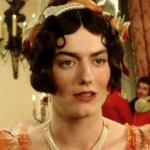
Anna Chancellor


She plays Juliet Shaw on Spooks...

She looks better on the show...

I didn't recognize her at first, but she played...

Caroline Bingley on P&P.


Another site with photos, not so many... BBC website

Varia, 7 November 2006

National - Oct. 31, 2006

Prime Minister Han Myeong-sook presents a vase to UN secretary-general elect Ban Ki-moon and his wife at a congratulatory dinner for Ban at the prime minister’s residence in Samcheong-dong, Seoul on Monday afternoon./Yonhap

Culture - Oct. 31, 2006

Dressed in hanbok or traditional Korean outfits, residents participate in a traditional event looping around the Gochang Fortress with stones on their head in Gochang, North Jeolla Province on Monday. The event, held on Joongangjeol or the ninth day of the ninth lunar month, is said to ward off illness and promote longevity.

Front - Oct. 31, 2006
photo
With the College Scholastic Ability Test just some two weeks ahead, senior students and their parents pray for a good performance among traditional lanterns at Yeamoon Girl’s High School in Busan on Monday night.


Ambassador’s Maori greeting: South Korea’s new Ambassador to New Zealand Lee Joon-gyu, right, rubs noses with Elly Pickering at Government House in Wellington, Wednesday. Lee shared the traditional Maori welcome, known as a Hongi, when he went to New Zealand’s Government House to present his credentials. /Reuters-Yonhap 11-01-2006 20:13

Front - Nov. 1, 2006

A man holds a picket saying 'Free Hugs' in Myeongdong, downtown Seoul on Tuesday. The 'free hugs' campaign originally launched in Australia by Juan Mann in 2004 aims at cheering up strangers with a cuddle on the street./Yonhap

Students hold pickets saying 'Free Hugs' in Myeongdong, downtown Seoul on Tuesday. The 'free hugs' campaign originally launched in Australia by Juan Mann in 2004 aims at cheering up strangers with a cuddle on the street./Yonhap


Culture - Nov. 1, 2006


Fishermen dry squid in the autumn sun at a beach in Pohang, North Gyeongsang Province on Tuesday.

National - Nov. 1, 2006

Thousands of Baikal teals fill the sky over Kanwol Lake in South Chungcheong Province at dusk on Tuesday. The migratory birds breed in Siberia, Amur and the Kamchatka Peninsula and visit Korea every winter.

Business - Nov. 1, 2006

The Bailey House in Samseong-dong, Seoul displays a bottle of premium whisky Johnnie Walker Blue Monaco priced at around W108 million (US$1=W942) on Tuesday./Yonhap


Farewell lunch for Ban’s wife: Yoo Soon-taek, right foreground seated, wife of Ban Ki-moon, incoming U.N. secretary-general, watches a traditional Korean dance, “Taepyongmu,” performed by Naomi Al-Midhadi, left, wife of Qatari Ambassador Ahmed Al-Midhadi, during a farewell luncheon organized by the spouses of foreign ambassadors to South Korea at the Lotte Hotel, central Seoul, Thursday. /Korea Times Photo by Shim Hyun-chul 11-02-2006 21:48

Culture - Nov. 2, 2006

Kang Ho-dong, right, a popular ssirum (Korean wrestling) athlete-turned-TV celebrity, reveals his wedding photos. He will tie the knot with Lee Hyo-jin, a graduate student nine years his junior, on Nov. 12. /courtesy of Fantom Entertainment


Business - Nov. 2, 2006

A model introduces Samsung’s new MP3 mobile phone, the Swing Phone, which targets the European market on Wednesday.

National - Nov. 2, 2006

Officials of the Hyehwa-dong district office in Seoul greet visitors on Wednesday morning for the first time since the office was restored as a hanok or traditional Korean house.


Beauties in Cheju: University students from 50 countries pose for the camera at the Seaes Hotel & Resort on Cheju Island, Friday. They have come to Korea to compete in the World Miss University Contest 2006, which will select peace emissaries on Nov. 11.
/Yonhap 11-03-2006 18:10

Culture - Nov. 3, 2006

Contestants in the 19th World Miss University Contest 2006 opening at the Jeju International Convention Center on Nov. 11 arrive at Jeju International Airport on Tuesday afternoon. Fifty-four students from 52 countries are taking part.


Ferrari for racers: Models showcase the Ferrari F1 racing car at an event to promote the racing car industry, hosted by Bridgestone Tire Sales Korea at the Shinsegae Department Store in Seoul, Friday. / Yonhap 11-03-2006 19:41

Business - Nov. 3, 2006

Serenite Collection D'Art, a four-elements-themed set of fountain pens by French luxury pen maker Waterman priced at W50 million, is on display at Lotte Department Store’s luxury hall Avenuel on Thursday.

Front - Nov. 4, 2006

Kim Yu-na of Korea performs in the Ladies Short Program at Skate Canada in Victoria on Thursday. The 16-year-old star, who took the world junior championship last winter, won the short program in her Grand Prix debut./AFP


Good luck: CJ Foodville gave away salads at its family chain restaurant, Vips, in a Seoul outlet, Sunday, to wish good luck to 600 students, who are just days away from taking their most important exam of their lives ? the College Scholastic Ability Test. The CSAT falls on Nov. 16. / Korea Times 11-05-2006 21:02


Nigerian President Olusegun Obasanjo, left, walks with President Roh Moo-hyun before a welcoming ceremony at Chong Wa Dae, Monday. /Korea Times 11-06-2006 17:40


Front - Nov. 6, 2006

Pedestrians wrap up warm in Gwanghwamun, downtown Seoul, as temperatures plunged on Sunday, two days ahead of Ipdong, the onset of winter according to the lunar calendar./Yonhap

Culture - Nov. 6, 2006

Visitors and organizers of a Sunchang soy bean sauce festival make a giant bowl of the traditional Korean dish bibimbap -- an assortment of vegetables and rice served with hot red pepper sauce. The festival opened in Sunchang, North Jeolla Province on Sunday.

Business - Nov. 6, 2006

A staffer in the wine section of Lotte Mart’s Seoul Station branch tests the radio frequency identification system, a technology for automatic identification to read information stored in tags at distance, using a mobile phone on Sunday. The wine shop installed the system on a trial basis./Yonhap

Front - Nov. 7, 2006

Students take part in a snowball fight at a rest stop on the Youngdong Highway in Gangwon Province on Monday after snow blanketed the region.

Culture - Nov. 7, 2006

A 170-cm-high replica of the Eiffel Tower made of cookies is displayed in the home appliance section of a department store in Myeongdong, Seoul on Monday.

Hwang Soo-jung 'Better than Ever' After Five-Year Break
Half-Korean on Road to Hollywood Stardom

Monday, November 06, 2006

Sophia Myles pics

For The Philosopher

From Doctor Who:


Tristan and Isolde:


Plus a sound clip.

Dearth of ‘Decent’ Jobs Condemns Graduates to Dole

Dearth of ‘Decent’ Jobs Condemns Graduates to Dole

The greatest concern for parents of college students is whether their children will find a job when they graduate, but Korea generated only some 50,000 “decent” jobs last year, a Chosun Ilbo study finds. If graduates do not find decent employment, it means they will continue to be financially dependent on their parents, and that could eat into their retirement savings. Every year, universities and colleges turn out some 530,000 graduates, but the number of all jobs the private and public sector create stands at no more than 300,000-400,000 a year, condemning at least 100,000 graduates to unemployment.

The number of “decent” jobs created by businesses has remained much the same for several years because firms are reluctant to invest and hire college graduates who demand relatively high salaries. “Decent jobs” are defined by the International Labor Organization (ILO) as “productive work under conditions of freedom, equity, security and dignity, in which rights are protected and adequate remuneration and social coverage are provided.”

“Decent jobs should be regular full-time jobs and usually offer income 20 percent higher than average,” says Ha Sang-woo, a researcher with the Korea Employers Federation. Considering that new graduates here can earn W21.8 million (US21,800) a year on average, decent jobs in general are those that pay more than W26 million a year. The Chosun Ilbo conducted a survey using this standard of the 500 largest companies, state-run corporations and financial institutions here and found that no more than 50,000 decent jobs were generated last year. In other words, only one out of every 10 college graduates gets a decent job, and competition is truly fierce.

The survey did not include would-be teachers, doctors, nurses, pharmacists or other professionals whose employment is virtually guaranteed right after graduation or those who passed exams to be lawyers, accountants, and tax accountants. But even when they are included, the number of decent jobs would rise to a mere 65,000, experts say.

Another worrying trend is that those who study overseas then rush back to their home country. The days when they enjoyed better treatment than their competitor who studied at home are gone. The number of jobseekers who studied abroad has skyrocketed, and their scarcity value has plummeted apace. Some 200,000 Koreans studied abroad last year, 52,000 of them in the U.S. and 13,000 in China, the Ministry of Education and Human Resources Development says. In the U.S., there are 47,000 Korean undergraduates and 24,000 postgraduates. Some 90 percent of them come back to Korea after unsuccessful attempts to find jobs overseas.

“After Sept. 11, 2002, U.S. companies have dramatically reduced the number of new foreign recruits,” says Shin Gil-jong, who graduated from Virginia State University. “It’s almost impossible for Korean students in the U.S. to land a job there.” Attending a U.S. university costs W30-70 million a year, and Korean students there have to spend W150-280 million to earn their college degree over four years. Despite the outlay, most return to Korea, where they contribute to the glut of jobseekers competing for decent positions.

(englishnews@chosun.com )


Hrm, does Korea suffer from some of the same structural problems as the U.S.?

The Civilizing Process

Peter Leithard writes:

The German historian of manners Norbert Elias begins his book The Civilizing Process by asking how the “modes of behaviour considered typical of people who are civilized in a Western way” came about. Through a survey of etiquette books and other documents dealing with topics like table manners, blowing one’s nose, spitting, the deportment of the body, facial expressions, and the control of bodily functions, Elias argues that Westerners went through a gradual and uneven affective transformation during the sixteenth and seventeenth centuries. By the end of the process, behaviors considered normal in the Middle Ages had been ruled “barbarous.” This civilized separation from barbarity signaled major changes in feelings of delicacy, shame, refinement, and repugnance.

Go to the link to read more.

Norbert Elias wiki
Amazon (wiki on the book)
Norbert Elias Foundation
HyperElias
A review of a bio
SociologyProfessor
ChangingMinds.org
Norbert Elias's Theory of Civilizing Processes Again Under Discussion:
An exploration of the sociology of regimes

On virtual community

Or why the Internet is usually a lousy place to meet people.

Besides the Internet pedophiles and ephebephiles who go into chatrooms seeking victims, the majority of people using the Internet to chat and meet other people through Facebook, My Space, Xanga, and so on are teenagers or young adults (that seems a reasonable judgment, don't you think?).

Conversing with people through instant messaging and email and so on, without any shared experience in the "real world" is... rather pointless, unless one is so detached from the activity, being wary of forming any sort of emotional ties. As an spiritual work of mercy, perhaps the Internet can be a good tool, but perhaps it would be a better use of time for most people to address the needs of people who physically close to you, living in your community. There may be a need for the internet for the apologetics and other such apostolic works, since the state of catechesis here and in most other countries I suspect is rather low. But who really makes use of such resources, besides those who are already orthodox, or aspiring to have greater knowledge of Sacred Tradition? The best way to introduce people to Christ is through personal contact, as Opus Dei and the other new movements are aware.

As for trying to meet friends through the Internet... how can the Internet facilitate the building of mutual affection and respect, loyalty, trust and reciprocity if it is "consequence-free"? Without the physical contact necessary to prove character in ways other than conversation, is it not more likely that chatting through the Internet can turn into a self-centered way of relieving loneliness? On the other hand, would it not be a sign of that there is some sort of problem if one were to form some sort of an attachment through the Internet? Not necessarily a moral problem or a psychological problem, though those are more obvious.

Obviously this does not apply when friends make use of the Internet instead of the phone or a date [in its broadest sense] to converse, though other means of communication might be preferable.

It seems natural for people to desire to actually meet those they have encountered in virtual reality. But do they go in with an attitude that they would walk away from whatever sort of friendship they had cultivated at that point if they were disappointed by reality? I suppose that is more likely to happen for those who have unrealistic romantic expectations.

Ah well, once I find a real job or a life these sort of questions will become irrelevant...

A Russian Orthodox View of Papacy, and More (Part 1)

A Russian Orthodox View of Papacy, and More (Part 1)

Interview With Bishop Hilarion Alfeyev

VIENNA, Austria, NOV. 6, 2006 (Zenit.org).- Dialogue between Catholics and Orthodox can be fruitful, though many hurdles still exist on the road to Eucharistic communion, says a leading prelate.

Bishop Hilarion Alfeyev of Vienna and Austria, representative of the Russian Orthodox Church to the European Institutions, commented in this interview on Benedict XVI's forthcoming visit to Turkey, as well as on other topics.

Part 2 of this interview will appear Tuesday.

Q: Soon Pope Benedict XVI will visit Turkey, because he wants to strengthen the bonds between Rome and Constantinople. What is the significance of this journey as to the Orthodox-Catholic dialogue?

Bishop Alfeyev: It is to be hoped that this visit will further improve the relations between the Churches of Rome and Constantinople. These two churches broke communion with one another in 1054, therefore it makes them especially responsible to restore unity.

In speaking about the possible impact of this meeting on Orthodox-Catholic relations as a whole, one should remember that the Orthodox Church, insofar as its structure is concerned, is significantly different from the Roman Catholic Church.

The Orthodox Church has no single primate. It consists of 15 autocephalous churches, each headed by its own patriarch, archbishop or metropolitan.

In this family of Churches the patriarch of Constantinople is "primus inter pares," but his primacy is that of honor, not of jurisdiction, since he has no ecclesial authority over the other Churches. When, therefore, he is presented as the "head" of the Orthodox Church worldwide, it is misleading. It is equally misleading when his meeting with the Pope of Rome is considered to be a meeting of the heads of the Orthodox and Catholic Churches.

Historically, until the schism of 1054, it was the Bishop of Rome who enjoyed a position of primacy among the heads of the Christian Churches. The canons of the Eastern Church -- in particular, the famous 28th canon of the Council of Chalcedon -- ascribe the second, not the first place, to the patriarch of Constantinople.

Moreover, the ground on which this second place was granted to the patriarch of Constantinople was purely political: Once Constantinople became "the second Rome," capital of the Roman -- Byzantine -- Empire, it was considered that the bishop of Constantinople should occupy the second seat after the Bishop of Rome.

After the breach of communion between Rome and Constantinople, the primacy in the Eastern Orthodox family was shifted to the "second in line," i.e., the patriarch of Constantinople. Thus it was by historical accident that he became "primus inter pares" for the Eastern part of the world Christendom.

I believe that, alongside with contacts with the Patriarchate of Constantinople, it is equally important for the Roman Catholic Church to develop bilateral relations with other Orthodox Churches, notably with the Russian Orthodox Church. The latter, being the second largest Christian Church in the world -- its membership comprises some 160 million believers worldwide -- is eager to develop such relations, especially in the field of common Christian witness to secularized society.

Q: Do you think that this journey will open new horizons for the talks between the Christian and the Muslim worlds?

Bishop Alfeyev: Dialogue between Christians and Muslims is necessary and timely. It is quite unfortunate that some attempts by Christian leaders to encourage this dialogue have been misinterpreted by certain representatives of the Muslim world.

The recent controversy over Pope Benedict XVI's academic lecture in Regensburg is a vivid example of such a misinterpretation. The aggressive reaction of a number of Muslim politicians, as well as of many ordinary followers of Islam, has been regarded by some observers as overly exaggerated.

Some analysts asked: Are we not moving toward a world dictatorship of Muslim ideology, when every critical observation of Islam -- even within the framework of an academic lecture -- is brutally and aggressively opposed, while criticism of other religions, especially Christianity, is permitted and encouraged?

I should add, perhaps, that several theologians of the Russian Orthodox Church, even those normally critical of the Roman Catholic Church, expressed their support for Pope Benedict XVI when the controversy over his Regensburg lecture broke out. They felt that what he said was important, although, indeed, it was not quite in tune with modern unwritten rules of political correctness.

Q: The Pope did away with the title "Patriarch of the Occident." What does this gesture mean? Is there any ecumenical meaning to it?

Bishop Alfeyev: Well, I was the first Orthodox hierarch that happened to comment on this gesture. Several weeks later, official comments were also made by the Holy Synod of the Patriarchate of Constantinople.

In my remarks I argued that repudiation of the title "Patriarch of the Occident" is likely to be considered by the Orthodox as confirming the claim, reflected in the pope's other titles, to universal Church jurisdiction.

Among the many designations of the Pontiff, that of "Bishop of Rome" remains the most acceptable for the Orthodox Churches, since it points to the Pope's role as diocesan bishop of the city of Rome.

A title such as "Archbishop and Metropolitan of the Roman Province" shows that the Pope's jurisdiction includes not only the city of Rome, but also the province.

"Primate of Italy" indicates that the Bishop of Rome is "first among equals" among the bishops of Italy, i.e., using Orthodox language, primate of a local Church. Following this understanding, none of the three titles would pose a problem for the Orthodox in the event of a re-establishment of Eucharistic communion between East and West.

The main obstacle to ecclesial unity between East and West, according to many Orthodox theologians, is the teaching on the universal jurisdiction of the Bishop of Rome. Within this context -- unacceptable and even scandalous, from the Orthodox point of view -- are precisely those titles that remain in the list, such as Vicar of Jesus Christ, Successor of the Prince of the Apostles, Supreme Pontiff of the Universal Church.

According to Orthodox teaching, Christ has no "vicar" to govern the universal Church in his name.

The title "Successor of the Prince of the Apostles" refers to the Roman Catholic doctrine on the primacy of Peter which, when passed on to the Bishop of Rome, secured for him governance over the universal Church. This teaching has been criticized in Orthodox polemical literature from Byzantine time onward.

The title "Supreme Pontiff" -- "Pontifex Maximus" -- originally belonged to the pagan emperors of ancient Rome. It was not rejected by the Emperor Constantine when he converted to Christianity.

With respect to the Pope of Rome, "Supreme Pontiff of the Universal Church" is a designation that points to the Pope's universal jurisdiction -- a level of authority which is not recognized by the Orthodox Churches. It is precisely this title that should have been dropped first, had the move been motivated by the quest for "ecumenical progress" and desire for the amelioration of Catholic-Orthodox relations.

[Tuesday: A strategic alliance to defend Christian values]

Papal Message to Charismatic-Communities Conference

Papal Message to Charismatic-Communities Conference

"Each Christian Must Become Christ's Follower"

VATICAN CITY, NOV. 5, 2006 (Zenit.org).- Here is a translation of the message sent in Benedict XVI's name by Cardinal Tarcisio Bertone, Vatican secretary of state, to the 12th international conference organized by the Catholic Fraternity of Charismatic Covenant Communities and Fellowships.

The five-day conference, held in Cachoeira Paulista, Brazil, ended today.

* * *

His Holiness Pope Benedict XVI sends cordial greetings to the members of the numerous communities born of that "current of grace" which is the Catholic Charismatic Renewal, as they assemble in Cachoeira Paulista, Brazil, to reflect on the theme "New Communities for a New Evangelization." He is also pleased to greet the many bishops present who have met to reflect on the theme "Charism and Institution: Co-essential."

As His Holiness said to the members of ecclesial movements and new communities gathered in St. Peter's Square on the vigil of last Pentecost: "Anyone who has come across something true, beautiful and good in his life -- the one true treasure, the pearl of great price -- hastens to share it everywhere, in the family and at work, in the contexts of his life" (Homily at first Vespers of the solemnity of Pentecost, 3 June 2006). Was it not such a new, spontaneous and joy-filled witness which then became proclamation, a missionary impulse inspired by the Holy Spirit that led many lay faithful to undertake a more committed Christian life within their communities?

As a result, the Pope also said in St. Peter's Square, they can "collaborate even more, very much more, in the Pope's universal apostolic ministry, opening the doors to Christ. This is the best service that the Church can offer to men and women, and specially to the poor to help the life of each individual; a just social order and peaceful coexistence among nations find in Christ the cornerstone on which the genuine civilization, the civilization of love, can be built" (ibid).

To speak of the new evangelization also means to speak about those who will carry it out, namely, individual Christians, those who have themselves encountered Christ, for "being Christian is not the result of an ethical choice or a lofty idea, but the encounter with an event, a person, which gives life a new horizon and a decisive direction" ("Deus Caritas Est," No. 1).

In order to give life to the world, that true life which is in Jesus Christ, each Christian must become his follower, must make him Master and Lord of his life, must enter into profound communion with him and become familiar with his thoughts, as we find them in the sacred Scriptures. It was precisely to reflect together on how to be disciples of Jesus in our own time that the movements and ecclesial communities of Latin America gathered on 9-12 March last, in Bogota, Colombia.

That meeting pointed to several urgent priorities calling for broad cooperation: Christian formation, a powerful proclamation before the world, a consistent missionary style, a concern for the poor, the suffering and the outcast. A passionate commitment to facing these challenges will surely contribute to the renewal of the Church, particularly in Latin America. As we look forward to the fifth General Conference of the Latin American episcopate, due to meet in Aparecida in May 2007 on the theme "Disciples and Missionaries of Jesus Christ" so that in him the peoples may have life, the Holy Father expresses his hope that the present meeting, through the exchange of experiences, reflections and new proposals, will contribute effectively to the preparation of that significant ecclesial event.

Entrusting the work of the conference to the intercession of Mary, Mother of the Church, particularly venerated in Brazil as Our Lady Aparecida, His Holiness sends to all present his special apostolic blessing.

With personal good wishes for the success of this initiative, I remain

Yours sincerely in Christ,

Cardinal Tarcisio Bertone
Secretary of State

[Translation issued by the Canção Nova Community; adapted]

Pope's Address at Lateran University

Pope's Address at Lateran University

"God Is the Ultimate Truth to Whom All Reason Naturally Tends"

VATICAN CITY, NOV. 6, 2006 (Zenit.org).- Here is a Vatican translation of the address Benedict XVI delivered Oct. 21 when he visited the Lateran University.

* * *

VISIT OF THE HOLY FATHER TO THE PONTIFICAL LATERAN UNIVERSITY
ADDRESS OF HIS HOLINESS BENEDICT XVI

Saturday, 21 October 2006

Extemporaneous greeting on his arrival:

I am happy to be here in "my" University, because this is the University of the Bishop of Rome. I know that here the truth is sought, and so ultimately, Christ is sought, because he is the Truth in person. This journey towards the truth -- trying to know the truth better in all of its expressions -- is in reality a fundamental ecclesial service.

A great Belgian theologian wrote a book, "Love of the Arts and the Desire of God", and has shown that in the monastic tradition the two things go together, because God is Word and speaks to us through Scripture. Therefore, suppose that we begin to read, study and deepen the knowledge of the Arts, and thus deepen our knowledge of the Word.

In this sense, the opening of the Library is both an academic, university event and a spiritual, theological event, precisely because through reading, on the path towards the truth, studying the words to find the Word, we are at the service of the Lord. A service of the Gospel for the world, because the world needs the truth. There is no freedom without truth; [without it] we are not in total harmony with the original idea of the Creator.

Thank you for your work! May the Lord bless you in this Academic Year.

* * *

Your Eminences,
Venerable Brothers in the Episcopate and in the Priesthood,
Distinguished Ladies and Gentlemen,
Dearest Students,

I am particularly pleased to be able to share with you the beginning of the Academic Year, which coincides with the solemn inauguration of the new Library and of this Lecture Hall.

I thank the Grand Chancellor, Cardinal Camillo Ruini, for the words of welcome that he kindly addressed to me in the name of the entire academic community.

I greet the University Rector, Bishop Rino Fisichella, and I thank him for his speech opening this solemn academic event.

I greet the Cardinals, Archbishops and Bishops, the Academic Authorities and all the Professors, and also all who work within the University. Then, I greet with special affection all the students, because the University is created for them.

I recall my last Visit to the Lateran with pleasure and, as if time had not elapsed, I would like to take up again the theme then under discussion, almost as though we had been interrupted only for a few seconds.

A context such as the academic one invites in its peculiar way to enter anew the theme of the crisis of culture and identity, which in these decades dramatically places itself before our eyes.

The University is one of the best qualified places to attempt to find opportune ways to exit from this situation. In the University, in fact, the wealth of tradition that remains alive through the centuries is preserved -- and especially the Library is an essential means to safeguard the richness of tradition -- in it and can be illustrated in the fecundity of the truth when it is welcomed in its authenticity with a simple and open soul.

In the University the young generations are formed who await a serious, demanding proposal, capable of responding in new contexts to the perennial question on the meaning of our existence. This expectation must not be disappointed.

The contemporary context seems to give primacy to an artificial intelligence that becomes ever more dominated by experimental techniques, and in this way forgets that all science must always safeguard man and promote his aspiration for the authentic good.

To overrate "doing", obscuring "being", does not help to recompose the fundamental balance that everyone needs in order to give their own existence a solid foundation and valid goal.

Every man, in fact, is called to give meaning to his own actions, above all when this is put in the perspective of a scientific discovery that weakens the very essence of personal life.

To let oneself be taken up by the taste for discovery without safeguarding the criteria that come from a more profound vision would be to fall easily into the drama of which an ancient myth speaks: Young Icarus, exhilarated by the flight towards absolute freedom and heedless of the warning of his old father Daedalus, flew ever nearer to the sun, forgetting that the wings with which he flew in the sky were made of wax. His violent fall and death were the price of his illusion.

The ancient fable has a perennially valid lesson. In life there are other illusions that one cannot trust without risking disastrous consequences for the existence of one's self and others.

The university professor has the duty not only to investigate the truth and to arouse perennial wonder from it, but also to foster its knowledge in every facet and to defend it from reductive and distorted interpretations.

To make the theme of truth central is not merely a speculative act, restricted to a small circle of thinkers; on the contrary, it is a vital question in order to give a more profound identity to personal life and to heighten responsibility in social relations (cf. Eph 4:25).

In fact, if the question of the truth and the concrete possibility for every person to be able to reach it is neglected, life ends up being reduced to a plethora of hypotheses, deprived of assurances and points of reference.

As the famous humanist, Erasmus, once said: "Opinions are the source of happiness at a cheap price! To understand the true essence of things, even if it treats of things of minimal importance, costs great endeavour" (cf. "The Praise of Folly," XL, VII).

It is this endeavour that the University must commit itself to accomplish; it passes through study and research in a spirit of patient perseverance. This endeavour, however, enables one to enter progressively into the heart of questions and to open oneself to passion for the truth and to the joy of finding it.

The words of the holy Bishop Anselm of Aosta remain totally current: "That I may seek you desiring you, that I may desire you seeking you, that I may find you loving you, and that loving you I may find you again" (cf. "Proslogion," 1).

May the space of silence and contemplation, which are the indispensable background upon which to gather the questions the mind raises, find within these walls attentive persons who know how to value the importance, the efficacy and the consequences for personal and social living.

God is the ultimate truth to whom all reason naturally tends, solicited by the desire to totally fulfil the journey assigned to it. God is not an empty word or an abstract hypothesis; on the contrary, he is the foundation upon which to build one's life.

To live in the world "veluti si Deus daretur" brings with it the assumption of a responsibility that knows how to be concerned with investigating every feasible route in order to come as near as possible to him who is the goal towards which everything tends (cf. I Cor 15:24).

The believer knows that this God has a Face and that once for all, with Jesus Christ, he has drawn near to each man.

The Second Vatican Council acutely recalled this: "For, by his Incarnation, he, the Son of God, has in a certain way united himself with each man. He worked with human hands, he thought with a human mind. He acted with a human will, and with a human heart he loved. Born of the Virgin Mary, he has truly been made one of us, like to us in all things except sin" ("Gaudium et Spes," n. 22). To know him is to know the full truth, thanks to which one can find freedom: "You will know the truth, and the truth will make you free" (Jn 8:32).

Before concluding, I want to express deep appreciation for the construction of the new building complex that completes the university structure well, making it ever more suitable for study, research and the animation of life in the entire community.

You have wished to dedicate this Lecture Hall to my poor person. I thank you for the thought; I hope that it can be a fruitful centre of scientific activity through which the Lateran University can serve as an instrument for fruitful dialogue between the different religious and cultural realities, in the common search for ways that favour the good and the respect of all.

With these sentiments, while I ask the Lord to effuse in this place the abundance of his light, I entrust the itinerary of this Academic Year to the protection of the Most Holy Virgin, and to all I heartily impart the Apostolic Blessing.

[Translation of Italian original issued by the Holy See]

© Copyright 2006 -- Libreria Editrice Vaticana

Should we be pointing fingers at ourselves?

Bishops are blamed for the vocations crisis and for the failure to uphold (or even teach) orthodoxy within their dioceses; they are also blamed for failing to take the appropriate action with regards to the sex scandals and to errant priests.

No doubt they are responsible for many of the problems facing the Church.

Still, we should be pointing fingers at ourselves for our lukewarmness. It has been noted that there is a correlation between declining "religiosity" and "economic progress"; but perhaps it would be better to say that many of those living in industrial and post-industrial economies have become slaves of their appetites, seeking comfort and pleasure and a long life, in order to enjoy more. Even those of us who profess to be Christians would be better off being more abstemious, especially since our witness to Christ may demand it.

How much of our necessities, comforts, recreation and entertainment is made possible because of the burden that has been placed on others all over the world? Though we may have no guilt in the exploitation of others all over the world, do we benefit from that exploitation? And to what extent is it possible for us to extricate ourselves from this web of injustice?

Though this is the "age of the laity" how many of our faithful would be willing to observe to a greater extent the evangelical counsels and the Beatitudes? Though we may cry out against "clericalism" and demand greater participation in the life of the Church (usually through the fabrication of ministries that take away from the role of the ordained ministry), are we not content to sit back and wait for reform to come from the top?

Our bishops and priests certainly have an important leadership role to play in the life of the Church, through teaching and the administering of the Sacraments. Nonetheless, what have we sacrificed for the sake of Christ and for the good of the Church and of souls? How many of us would be willing to leave our bourgeois, suburban [or urban] lifestyles for something more simple, yet requiring more work? (And yet, at the same time, that toil would provide us with an opportunity to exercise greater charity--an opportunity that is lost if we instead pursue comfort and our own wills, believing that the American way of life is reasonable and sustainable.)

After all, the Church is not just composed of clerics, and if it is in a poor state of health and in need of reform, we must look not only at the clerics but also ourselves. If the works of the Holy Spirit are not being accomplished, perhaps we also are at fault, seeking some counterfeit form of spirituality that allows us to live our comfortable lives without critical self-reflection or guilt.

Review of Children of Men

MercatorNet review of Children of Men

Well, the movie is different from the original novel--I was thinking of watching it, but now... it may be in the same category as Babel.

wiki on P.D. James (bio)

Sunday, November 05, 2006

Prayer request

Please pray for Mr. Paul Lee, who is dying of terminal cancer. Thank you.