On March 26th at 11:30am Eastern time, the Holy Mass will be shown from Ss. Simon and Jude Cathedral in the Diocese of Phoenix on EWTN. The Most Rev. Thomas J. Olmsted will be Celebrant. The Cathedral Schola, which sings the Solemn Mass every Sunday at 11:00am, will sing the Introit, Communio and the Ordinary of the Mass, along with some solid Catholic hymns. The Schola is made up of professional musicians.
Saturday, March 24, 2007
Congregation of Saint Athanasius
(An article from 2001)
Sung Mass is at 10:30.
Which reminds me, I still haven't seen Black Narcissus...
Friday, March 23, 2007
Claes G. Ryn, Which American?
by Claes G. Ryn
Quite often I have lunch at a McDonald’s in one of the most affluent and pretentious suburbs in America just outside of Washington, D.C. The residents are ambivalent about having a McDonald’s in their community – it undermines their self-image – so the restaurant is tucked away inside a little mall and almost impossible for outsiders to find.
I like to arrive just after 10:30. I am up very early, and before 11:00 my McDonald’s is still quiet. I eat and read in peace. Later, mothers drive up in their luxury SUVs with their preschool children, and, if schools are closed, older children too. Some high-schoolers show up. On Saturdays many fathers do McDonald’s duty and older children come as well. My French cafĂ© is transformed into bedlam. Near the playpen especially the noise rises dramatically. I have learnt when late to shut out the din, but sometimes I watch the scene in fascination. At the counter toddlers in strollers scream when parents do not give them French fries fast enough. Older children crawl on chairs and tables or rush about shouting and shoving while waiting for mom or dad to bring the food. Mothers and fathers scurry around, anxiously solicitous of their princes and princesses. They comfort the crying and apologize to little Ashley and Eliot for having taken so long. By now I know well the difference between the crying of a child in distress and the importunate crying of a child who won’t wait or take no for an answer. At the playpen – the "hell-hole" – it is obvious that playing without throwing yourself about and making lots of noise would not be real playing. Sometimes the playpen emits such piercing screams that the Asian-American children look at their parents in startled surprise. Deference to grown-ups seems unknown. I used to take offense, but the children have only taken their cue from their parents, who took their cue from their parents. The adults, for their part, talk in loud, penetrating voices, some on cell phones, as if no other conversations mattered. The scene exudes self-absorption and lack of self-discipline.
Yes, this picture has everything to do with U.S. foreign policy. This is the emerging American ruling class, which is made up increasingly of persons used to having the world cater to them. If others challenge their will, they throw a temper tantrum. Call this the imperialistic personality – if "spoilt brat" sounds too crude.
But, surely, this rising elite has wonderful strengths. Are not its adults highly educated – about history, philosophy, geography, and world affairs – and masters of several languages? Do they not travel widely and have a keen understanding of other countries and regions of the world? Are they not sophisticated cosmopolitans suited to running an empire.
Pardon the sarcasm. I am well aware that a different type of American still exists. That American aspires to character traits virtually the opposite of those on display at my McDonald’s. Americans used to admire self-restraint, modesty, humility, and good manners. They were acutely aware of original sin. They feared the self-indulgent ego, in themselves and others. Americans of an earlier era stressed the need to check the darker potentialities of human nature, the unleashing of which could wreak havoc on the individual and society. They hoped that in personal life moral character would restrain the desire for self-aggrandizement, just as in national political life the checks and balances of the U.S. Constitution would contain the all-too-human desire for power. Personal self-control and constitutionalism were but different aspects of the effort to subdue the voracious ego. Human beings could not be trusted with unlimited power.
The Ideology of American Empire (pdf)
The Family Factors
The Family Factors
Lessons from History About the Future of Marriage & Family in the United States
by Allan Carlson
California’s Coup D’Etat
Sigh. What can be done.The move to February 5 would not be so pernicious if California alone were doing so. But most of the large States are accelerating their primaries as well. So we will have a super-duper primary and, bang, the nominee will have been chosen right then and there. Whom does super-duper primary help? In the case of the GOP it helps Rudolph W. (Rudy) Giuliani, assuming he can keep the poll numbers he now has. Rudy is the big-money candidate. Senator Sam Brownback (R-KS), Senator Charles T. (Chuck) Hagel (R-NE), Governor Mike Huckabee (R-AK), Congressmen Duncan Hunter (R-CA), Ron Paul (R-TX) and Thomas G. (Tom )Tancredo (R-CO) will have absolutely no chance under this system. On the Democratic side, Senator Barack Obama (D-IL), Governor Bill Richardson (D-NM), Senators Christopher J. Dodd (D-CT) and Joseph P. Biden, Jr. (D-DE) and former Senator John Edwards (D-NC) also will be relegated to has-beens under this new system because Senator Hillary Rodham Clinton (D-NY) has the money.
In fact, it is doubtful that Governor Ronald W. Reagan (R-CA) could have come back from his earlier defeats, as he did in 1976 in North Carolina. He would require a huge sum of money to win on this super-duper primary system. And since Reagan was defeated in New Hampshire by incumbent President Gerald R. Ford (R-MI), he would not have been able to raise in a few days the huge amount of money required of a defeated candidate.
I always have favored a series of regional primaries spread over six months. Each region of the country would hold a primary on a different day, a month apart from another region. That would give candidates from all over the nation an opportunity to be nominated.
But this system says that our Presidential candidates must be rich and must have money to burn all during the year before that February doomsday. It is a distortion of our political system.
Phoenix on EWTN
From Musica Sacra:
Phoenix on EWTN
By CMAA on March 23, 2007 at 11:08 am
The cathedral's website
Check out also St Stephen Byzantine Catholic Pro-Cathedral
When I was in downtown Phoenix last December, we passed by some building that resembled a church done in the Spanish style, but I don't know what building it is. It's not the Catholic cathedral, that's for sure.
F. J. Sarto, Don't Look Left
Don't Look Left by F. J. Sarto
The author reminds us of the outrages being committed in the Western world by governments that do not acknowledge God or His law:
In Quebec, a proposed government policy would forbid private Christian schools from teaching Biblical sexual ethics.
A law with similar intent is pending in Brazil, which according to Zenit News “seeks to criminalize anything considered a condemnation of homosexuality, including priests who speak against the practice in homilies. Priests could face two to five years imprisonment for preaching against homosexuality. And a rector of a seminary who refuses admission to a homosexual student could face three to five years.”
In Britain, the “anti-discrimination” regulation which will prevent Catholic and other serious Christian adoption agencies from placing children only with married, heterosexual couples will also restrict the teaching of Christian sexual ethics in schools, according to the non-partisan, secular news site MarriageDebate.com.
In Germany, where home-schooling was outlawed by Hitler and the law left on the books, the parents of 15-year-old Melissa Busekros lost custody of the girl for teaching her at home. She is now being held at a psychiatric institution—diagnosed with “school-phobia” at an undisclosed location, with no access to her parents. In the German state of Baden-Wuerttemberg, laws restricting religious garb—which were aimed at the Moslems that country unaccountably allowed to settle there—are now being used to strip teaching nuns of their habits.
In Poland and Ireland, the democratically-passed laws restricting abortion on demand may well be stricken from the books by the diktat of unelected judicial bureaucrats of the European Court of Human Rights—who by the way, ruled against the parents of the abducted German teenager.
Meanwhile, in France, children are still forbidden to wear visible crucifixes or yarmulkes, since this is the only way that anti-clerical country can justify to itself stripping Islamic girls of the Hijab they are religiously moved to wear.
Across the Rhine in Deutschland, a judge recently ruled in favor of an abusive Islamic husband who beat his wife—basing his decision on the Koran.
Looking at the disasters that are Europe and Canada, can one not appreciate the fact that the right to bear arms is still protected at least in the United States?
The only hope of resisting the partisans of secular intolerance is to clean up the Christian Right (Catholic and Protestant), to purge it of jingoism, anti-intellectualism, and end-of-the world nihilism, then to break up its shotgun wedding to the hacks who run the conservative movement. The Christian Right must become less “Right” and much more Christian, reassert its intellectual and moral independence of partisan politics, and insist on applying its principles consistently. Pastors must stop endorsing torture, public Catholics must choose their pope above their president, and all of us must remember that the real war is not between the Democratic and Republican parties, but between the Church and the World. And the battlefield lies within our hearts
Thursday, March 22, 2007
Update about Fr. Fessio
No official confirmation yet that he has been offered the position of theologian-in-residence, or that he has accepted.
updated: confirmation -- and Fr. Fessio has accepted
(link thanks to NOR)
V. E. Smith on History
Is history science? If so, it would have to demonstrate, and pure history resembles a descriptive catalogue of fact rather than a series of demonstrations. It is, as Thucydides illustrates, a record of what happened in the past.
Moreover, history in the natural order has no first principles, and such principles, we saw, are necessary for a science. Such a judgment might even be turned around. There is no necessity in historical events, and necessity is surely one of the characteristics of science.
Finally, when examined as to its scientific character, history will be found to own no universality. Every historical event is, in the last analysis, an individual event, and our knowledge of that event is a knowledge of something individual. In short, our study of pure history does not rise above space and time to the universal and necessary connections among things as reasoned out from first and certain principles. Consequently, for a number of reasons, history cannot be put down as a science.
Is history opinion? True enough Thucydides freely introduces opinion into his history, but if history is no more than opinion, it must share the uncertainty of opinion. In such a case, we would know only as probable that Caesar invaded Gaul, that Wellington conquered Napoleon, that Washington spent a winter at Valley Forge, that Clovis, king of the Franks, became a convert. No respectable historian would want to assign all such events to the limbo of probable knowledge. Hence, history would seem to give us more than merely probable knowledge.
Is history perhaps rhetoric? If so, it would be an art of persuasion, even weaker in certitude than dialectic. It is true that an excellent rhetorician like Lincoln or Pericles may use historical events as devices of persuasion, and it is also true that many textbooks in history take a rhetorical position in favor of a viewpoint held beforehand by their authors, such as nationalism or Communism. But history if it is not dialectic, certainly is not mere rhetoric either.
Nor can history be identified with literature. It is true that both the historical and literary writer are concerned somehow with the individual. But literature, we have seen, involves discourse, whereas in history events follow not from each other but only after each other in temporal sequence. Furthermore, genuine history must always be true, but literature need only be plausible. Alike under certain aspects, the historian and literary man, from other angles, are profoundly different in both interest and technique.
Some distinctions. To get at the more positive meaning of historical knowledge, it is important to make some distinctions. As Hegel remarked, the word history applies unfortunately both to what actually happened in the past and to our study of such happenings. History is a stream of events having physical reality outside the mind and at the same time it is a subject studied by the mind and having a place in the curriculum of schools. Chemistry is also a subject; but when we name what the subject is about, we do not call it chemistry. Chemistry is about physical things, not about chemistry. So too with literature, theology, mathematics, and all other subjects. But history, as a study, is not distinguished in name from its subject matter. History designates the study, and it designates what the study is about. In order to avoid ambiguity, the term history will be employed throughout this chapter to mean history as a form of knowledge rather than history as a stream of events, though the material studied by the historian will affect our verdict concerning the kind of knowledge he enjoys. Moreover, in the interests of simplification, only human history will be considered throughout this chapter, thus omitting natural history with its descriptions of the cosmos in a pre-scientific way.
A second and even more capital distinction obtains between the facts of history, like the date of Charlemagne's coronation, and the opinion about those facts expressed by this or that historian. Thucydides records a number of facts in the passage quoted, but even more striking are his opinions, even his generalizations, about those facts. In a similar vein, it is true that the Roman Empire collapsed and that by the sixth century it had ceased to exist; but the causes of Rome's decline and fall are a matter of constant controversy among students of the phenomenon. That Thomas Jefferson and Alexander Hamilton were prominent figures in the early American government is beyond dispute, but the relative merits of their different economic views can be argued back and forth among their admirers. The ordinary history book includes the dimension of fact and that of opinion. In order to evaluate history, however, these two aspects of the typical text book must be distinguished. In what follows, the concern will be with history as factual knowledge, the knowledge of dates and places and figures of the past. Such knowledge is the fundamental kind of historical knowledge since upon it all opinions by historian claim their base.
History and faith. What then about our knowledge of the facts of history? These facts are usually made known to us by the testimony of men who witnessed them. Such eyewitnesses either wrote reports of what they observed or by word of mouth informed those who later wrote reports. Sometimes the testimony of witnesses to historical events did not pass into written form for centuries after the event itself. While unwritten, such testimony forms that kind of historical knowledge which is called tradition. Illiterate primitive peoples can often recite their ancestry back through many generations. History for them never assumes a written form at all.
Actually, the recent as well as the more remote past constitutes the field of historical knowledge. News stories tonight of what happened this morning are history when we read about them. But again we are dependent on witnesses and reporters.
But however known and whether of the recent or remote past, what we call historical knowledge usually is known on somebody else's word. That George Washington was the first president of the United States is known to us on the authority of those who witnessed his presidency and handed down their testimony in the form of oral or written records or both. To accept a proposition on the authority of another is knowledge by faith. Our knowledge of history then depends on our faith.
What has been said about historical knowledge as a form of faith must be qualified in one important respect. All of an individual's past is history and can be known by him as an historian. Events, important or trivial, which we have personally witnessed we do not know only on the authority of a witness. We remember them. However, in discussing history as a subject, we are usually referring to events distant from us in space and time and not coming within our experience except in some accidental way. Hence, although our own memory can attest to the history of our own past, the kind of knowledge that usually gets into history books is known by the testimony of witnesses and accepted by us on a faith in their words. The historian must test the authenticity and credibility of the witnesses which he uses to reconstruct the past. But such tests involve another problem that we need not consider here.
History and other knowledges. There is then a crucial distinction between history and any of the forms of natural knowledge, inductive or syllogistic, studied so far. All such knowledge, from the scientific to the literary, depends upon what is called intrinsic evidence. The evidence from which such knowledge begins is open to our own observation and our own personal experience. Anything so observed and experienced contains, in principle, enough intrinsic evidence so that we can know something about it and even conclude to its causes. But the facts of our direct experience do not enable us to deduce that Washington was president or even that he existed at all. Such knowledge depends on evidence outside our experience and indeed, it rests on the word of somebody else. Such evidence may be called extrinsic. History is therefore a record of the past compiled by extrinsic evidence, like the testimony of witnesses. Knowledge here is a form of faith.
It is true of course that the historian sometimes depends upon unwritten and unspoken records to achieve a knowledge of his subject. He uses such devices as monuments or coins or drawings as evidence for facts he establishes concerning man's past. But even here the study of the past proceeds by instrumental signs extrinsic to the men and the events they signify, and requiring, to the extent that they are purely historical phenomena, a faith that what they signify is true. A monument or an excavated city, like Pompeii, are signs as artificial in principle as the language of an eyewitness would be.
History is neither science nor art. It rests on natural faith. The opinions by historians about historical events can be formed into dialectical syllogisms and inductions, but history, the record of the past, on which such opinion rests, differs in kind from the arts and sciences so far studied. History rests on extrinsic evidence, while science depends upon evidence intrinsic to experience.
Though neither a science nor an art, history serves a function, as no other subject, in initiating us to the tradition of which we are the heirs and continuators. By extending our individual experience to the dimensions of our whole culture, it enables us to profit from the triumphs and failures of the human spirit. By showing us what others have said and done, it aids us to know what we ourselves should think and do. In this respect, history is a valuable preparation for science, giving us in the intellectual order those opinions where dialectic must begin and in the moral order that experience of others' conduct which aids us to regulate our own.
It's good to get confirmation that one is on the right track from someone whom one admires and holds up as a master. Students should be learning more logic and distinguishing between opinion and knowledge...
Note: Look for Hackett edition of Port Royal logic.
Into Great Silence has a soundtrack?
Check out the samples:
01. Matins Introduction - Psalm 3 (7:53) [fire, bell, cell, scissors]
02. The beginner accepts his robe (3:23) [fire, bell]
03. IntroĂŻt Veni, et ostende nobis faciem tuam (2:30)
04. Offertory Super flumina Babylonis (4:26) [the thaw]
05. Vespers Hymn (Saint Ambroise) - Psalms 144, 145 (10:57) [the cows]
06. Pentecost Matins Venite 8 - Reading: Excerpt from Saint Basil's De Spiritu Sancto - Responsorial (10:20) [drawing up of water]
07. Corpus Christi Canticle of Saint Ambroise and Saint Augustine (15:49) Hymn “Pange Lingua” - Psalm 118 [the crickets, cut of the wood] - [the birds, the delivery of meals]
08. Matins & Lauds Psalm 96 - Canticle of the Three Children (11:11) [bells on the hill and in the cloister]
09. Salve Regina (4:20) [slip in the snow]
Also from the Zeitgeist Films Newsletter:
Listen to Father Michael Holleran, a member of
the Order of Carthusians, speaking about the monastery at Film Forum.
I wonder what someone will make of this.
Evidently Zeitgeist is the distributor for Sophie Scholl as well.
Why Having More No Longer Makes Us Happy
By Bill McKibben, Mother Jones. Posted March 22, 2007.
Bill McKibben's page
Thanks to GodSpy.
Senorita Extraviada: The Missing Women of Ciudad Juarez"
Location: Higgins 310
Event URL: http://www.bc.edu/wrc
Of Interest to Particular Audience: Faculty, Graduate Students, Staff, Undergraduate Students
IMDB page
Crisis in Ciudad Juarez, Mexico - Mass Rape and Murder of Women ...
Stop Violence Against Women
OFFOFFOFF film review SEÑORITA EXTRAVIADA (MISSING YOUNG WOMAN ...
Female homicides in Ciudad Juárez - Wikipedia, the free encyclopedia
The latest by the Mogambo Guru
While Total Fed Credit was down by a miniscule $1.7 billion last week, the Federal Reserve managed to buy up, for themselves and their Treasury co-conspirators, $1.3 billion of U.S. government securities. Not much, to be sure, but this slimy tactic is called "monetizing the debt"; the government wants to spend money, but doesn't have any, so it creates and sells some bonds, and the Federal Reserve (to its everlasting shame) dutifully creates the money to buy them, and then actually buys the bonds with the money!
This is, in essence, the government buying its own debt by creating the money (increasing the money supply) for that exact purpose! This is absolutely crazy! And while there are plenty of you who will say that the Federal Reserve is a private bank, and is not a part of the government at all, you are correct; it is a private bank. But their website address suffix, ".gov" says a lot to me about the supposed independence of the Federal Reserve. This is partly because I am paranoid and distrusting, but mostly because the Fed has done such a pathetically poor job of preserving the value of the dollar. Of course, it's also with Very Damned Good Reason (VDGR), as the economic history of the results of central banks colluding with governments is bleak, bleak, bleak indeed.
And if you don't think that this monetization of debt is an economic horror, I will note that 1.) This means that you have never uttered such nonsense around The Mogambo or you would still be carrying scars to remind you of your folly, and 2.) This kind of monetary crap does not appear anywhere, in any book on economics, except as an illustration of how an economy was horrifically destroyed by its government acting like idiots and debasing the currency - which set off a war, or revolution, or something. Never anything good.
Burning the furniture
The Peak Oil Crisis: Situations To Watch
by Tom Whipple
RELATED NEWS:
Evidence is mounting that oil prices will soon climb to new, perhaps unaffordable for many, highs. Some think “soon” is three, four, or five years away. Others think “soon” may be as close as three, four, five, or six months. It is this latter scenario in which oil and gasoline prices reach new highs before the year is out that we look at today.
Everyone, of course, understands that at anytime a bolt from the blue could seriously curtail world oil supplies and run prices to unimagined highs in a matter of days or weeks. Such an impossible-to-anticipate event might be an assassination, a coup, a new war, a terrorist strike or even a well-placed storm.
There are, however, on-going situations which alone or in combinations could push oil prices to new highs in an easily observable and anticipatable manner.
The most obvious situation is the state of US crude and products stockpiles. Although they are currently considered “ample,” total US stockpiles have been dropping since February indicating that we are burning more than we are pumping and importing. Increased US production is largely out of the question. US oil peaked 35 years ago and talk of new deep water discoveries will be nothing but talk for at least the next five or six years.
Thus the issue becomes why imports have been dropping. Some hold that US importers are cutting back during the spring maintenance season when oil refineries traditionally undergo cleaning and overhaul. Others, looking at the drops in crude production by the US’s traditional suppliers such as Mexico, Saudi Arabia, Nigeria, and Venezuela, are starting to wonder if importers can really find all the crude they want to import. Keep in mind that one of these days the US will be bidding for available supplies against the well-heeled such as China, Japan, and Europe.
The next problem clearly coming onto the radar screens is the Nigerian elections in April. Without going into a long story, it is looking as if the Nigerian electoral process is more likely to initiate yet another civil war than to successfully pass power from one president to another. Oil production is already down about 600,000 barrels a day due to insurgent attacks and more are promised if the elections turn into a fiasco. Many scenarios are possible ranging from a near-total cutoff of Nigeria’s on-shore oil production to US intervention. Watch this one closely.
The 64 billion barrel question, however, is the state of the Saudi oil fields. Many hold, and with good reason, that when Saudi Arabia goes into depletion, the oil age is on the way out. During the last six months Saudi production has dropped from 9.5 million to 8.5 million barrels a day. Now there are several possible reasons for this drop ranging from not being able to find buyers for their heavy, sulfur-laden oil at today’s prices, through a desire to force up prices by cutting supplies, to the key issue which is that the Saudis simply can’t find and open new production fast enough to keep ahead of depletion in their aging fields. If this is the case then 2007 will be a seminal year.
Although the Saudis proclaim that all is well and their “capacity to produce oil” will soon reach new heights, it is likely that before the year is out we should have a better insight into the kingdom’s future as an oil producer.
If Saudi production continues to drop during 2007, suspicions of trouble in the kingdom’s oil fields will increase to a feverish pitch— as of course will oil prices. If prices increase significantly this summer and the Saudi’s don’t respond with significantly higher production, then many will hold that, at least temporarily, the Saudis can not increase production.
A sleeper issue due to come to a head this spring is the nature of the participation by western oil companies in production of synthetic crude from Venezuela’s Orinoco heavy oil sands. A few weeks back, President Chavez decreed the six western oil companies must turn over 60 percent interests and control of the Orinoco projects to the government’s oil company. Negotiations are now going to determine the terms under which the Western oil companies will remain involved in the projects in which they have already invested $30 billion.
The next few weeks should tell whether the oil companies are willing to stay in the Orinoco helping the Venezuelans make synthetic crude, using the oil companies proprietary technology, for much less profit, or simply walk away seeking to recover their investment in the courts. At stake is about 500,000 barrels a day of synthetic crude production which the Venezuelans may or may not be able to keep running by themselves.
Keep an eye on the hurricane season. The El Nino hot spot in the Pacific, which many believe suppressed the 2006 hurricanes in the Gulf, has cooled off. Surface temperatures are already above normal so the ingredients are in place for an active 2007 hurricane season.
Keep the other eye on what the Mexicans are telling us about production from their giant Cantarell oil field, most of which has been coming to the US. Should production really tank in 2007, some believe that the US will have difficulty finding enough oil on the world market to import.
Iraqi oil production continues to bubble along with exports running about 1.5 million barrels a day. Stealing oil and revenue in Iraq is obviously so profitable to the various insurgent groups that nobody wants to blow up the gravy train until they have to. If the recently announced US crackdown on oil stealing is successful, we might see more oil infrastructure blowing up and exports going down.
As a closing thought, keep your remaining eye on the dollar. Some believe there is enough financial turmoil just ahead to limit our ability to import oil.
China: Illegal land-grabs up
Nearly 100,000 hectares of farmland was expropriated last year, 76 per cent more than in the previous year. The central government appears impotent against abuses by local officials and business people.
Two-thirds of world to face water crisis by 2025
UN warns on World Water Day that pollution and mismanagement of water resources are among the main factors causing draughts. North Africa, the Middle East and western Asia are the most affected regions.
The Tallis Scholars


The Tallis Scholars are coming to Boston on Saturday to perform for the Boston Early Music Festival at St. Paul's in Cambridge. Their program.
From the BEMF website:
Listen to Tallis Scholars (Lassus: Salve regina, Palestrina–Sicut lilium I)
official site
Peter Phillips
Gimell Records
Tallis Scholars Summer Schools
singers.com
Nunc Dimittis by Giovanni Pierluigi da Palestrina:
Their namesake, Thomas Tallis.

There are still some tickets available in the C and D sections... I haven't decided whether I will go or not...
Seonbichun
The city of Yeongju, surrounded by the panoramic Sobaek Mountains in northern North Gyeongsang Province, is known in South Korea as a "home" of scholars called "seonbi" during the final Korean kingdom.
Seonbi refers to Confucian scholars of the Joseon Dynasty (1392-1910), typically those who were preparing for the state-held civil service examination, called "gwageo," or had already passed it.
As a spiritual and social pillar of the Confucian kingdom, the scholars actually led the kingdom in various respects and the "spirit of seonbi" was considered one of the most important set of values a person should seek for life. It meant that one should understand propriety and sense of shame; be reasonable by learning morals, arts, and science; respect honor and principles throughout one's life; avoid shameful and improper behavior; be proper in one's remarks and behavior; and observe laws and regulations and respect justice.
Seonbichun
Wednesday, March 21, 2007
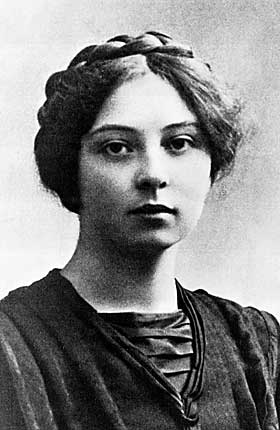
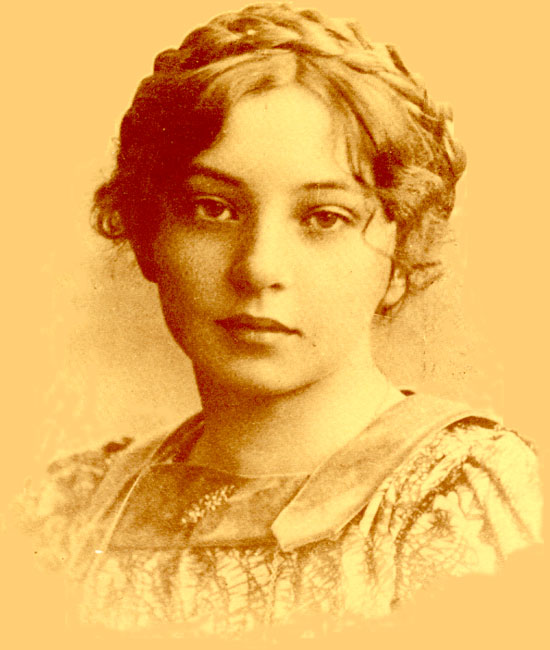
Reading Sigrid Undset Today


Reading Sigrid Undset Today by Cynthia Grenier, a bio (Thanks to Open Book.)
iirc, MBH did her senior thesis on some of Undset's works.
More Links
Sigrid Undset's Time Warp
Linkpage
Stamp of Sigrid Undset
The Unknown Sigrid Undset