Monday, June 22, 2009

Grant Havers, Paleos vs. Protestants

I fail to see, however, any wisdom in conservative efforts to scapegoat Protestantism as the main source of all that ails the present age. While not all paleos have been as extreme as Voegelin in claiming that Lutheran and Calvinist “gnosticism” is a dress rehearsal for Hitler and Stalin, I have yet to encounter more than a handful of paleos who believe that the Reformation was a good thing. It is far more common in my experience to find paleos who wish that the American founding had been a little more Catholic, or who support John Courtney Murray’s contention that America would be far better off if the Founders had read more Aquinas and less Locke. (For the record, I’ll take church-state separation over the ancien regime any day.) It is one thing to bash Protestants for failing to defend their own traditions; it is quite another thing to bash those traditions as unworthy of defense in the first place.
The ancien regime was not the model of Church-state relations; even during the medieval period the ideal was often ignored or violated. Has the question of whether the pope is the ultimate temporal ruler been resolved? Even if he is the final authority in temporal matters (or with respect to the temporal common good of the whole human race), it does not imply he should micromanage. Is church-state separation an essential component of the Anglo-American tradition? Looking at the history of the United Kingdom and of the 13 colonies, it would seem not. Can we say that there was church-state separation in the Lutheran and Protestant polities of continental Europe? So how does church-state separation become a product of Protestantism, rather than, say, a reaction against the religious wars of the 17th century, or of liberals? Does liberalism have its source in Protestantism? I would like to avoid that conclusion, even though some Catholics have argued for it. The revolt against the authority of the Church may be have been a condition for the development of liberalism. But even if Protestantism and liberalism share certain tenents or attitudes in common, did the progenitors of liberalism receive them from a religious source? (In this case it may be possible to claim that non-believing liberals imbibed particular theses from a Protestant culture, but I'd like to see the evidence for this.)
It is also a very strange thing to call oneself a conservative if one is uncomfortable with the conservatism (that is, the older Protestantism) of one’s nation. What exactly, then, is one trying to conserve in America?
One can believe that the older political order is worth conserving when compared to the statist, centralizing new order and also that the Protestant revolt was wrong and the source of many errors that affected not only "religion" but political theory. Does one have to work for the preservation of Protestantism in order to conserve the Federal order and state sovereignty, or Anglo-American culture in general? No. If there were still state-established churches the question would be different. In that situation a Catholic would be wrong to actively promote Protestantism by promoting the state church, but he could tolerate its existence. Would he be a traitor to work for the conversion of non-Catholics? No. (Does that answer hinge on the "Catholik religion' being the right one, that is the one given to us by God? Perhaps.)
by Kevin R. C. Gutzman on June 22, 2009

I lamented here that the Supreme Court’s decision in District of Columbia v. Heller, __ U.S. __, 128 S. Ct. 2783, 171 L. Ed. 2d 637 (2008), seemed about to be “incorporated” into the Fourteenth Amendment’s Due Process Clause—that is, enforced against the states. Since then, however, comes news that a New Jersey appellate court has now found the Second Circuit’s decision not to “incorporate” more persuasive. Mayhap sanity will reign.

Maybe, on the other hand, the Supreme Court will have to take up the issue. It generally dislikes conflict among circuits, as has now developed between the Second and Ninth. That would give some enterprising originalist an opportunity to level a blast at the Incorporation Doctrine generally. (It would also provide phony “originalist” Antonin Scalia an opportunity to explain that he doesn’t want to refight the incorporation battle.)


From his previous post:
James Madison endeavored in the First Congress to include in Congress’s proposed bill of rights an amendment providing for federal judicial oversight of states’ behavior in respect to certain rights. His effort was unavailing. Thus, when “originalist” Antonin Scalia announced that the First Amendment establishes a right to burn a flag enforceable by federal courts against state authorities, he showed exactly how “originalist” he really is.
From John Taylor Gotto:

Name Sounds, Not Things

So how was the murder of American reading ability pulled off? I’ll tell you in a second, but come back first to classical Greece where the stupendous invention of the alphabet by Phoenicians was initially understood. The Phoenicians had an alphabetic language used to keep accounts, but the Greeks were the first to guess correctly that revolutionary power could be unleashed by transcending mere lists, using written language for the permanent storage of analysis, exhortation, visions, and other things. After a period of experiment the Greeks came up with a series of letters to represent sounds of their language. Like the Phoenicians, they recognized the value of naming each letter in a way distinct from its sound value—as every human being has a name distinct from his or her personality, as numbers have names for reference.

Naming sounds rather than things was the breakthrough! While the number of things to be pictured is impossibly large, the number of sounds is strictly limited. In English, for example, most people recognize only forty-four.1

The problem, which American families once largely solved for themselves, is this: in English, a Latin alphabet has been imposed on a Germanic language with multiple non-Germanic borrowings, and it doesn’t quite fit. Our 44 sounds are spelled 400+ different ways. That sounds horrible, but in reality in the hands of even a mediocre teacher, it’s only annoying; in the hands of a good one, a thrilling challenge. Actually, 85 percent of the vast word stock of English can be read with knowledge of only 70 of the phonograms. A large number of the remaining irregularities seldom occur and can be remastered on an as-needed basis. Meanwhile a whole armory of mnemonic tricks like "If a ‘c’ I chance to spy, place the ‘e’ before the ‘i"’ exists to get new readers over the common humps. Inexpensive dictionaries, spell-check typewriters, computers, and other technology are readily available these days to silently coach the fearful, but in my experience, that "fear" is neither warranted nor natural. Instead, it is engendered. Call it good business practice.

Also, communicating abstractions in picture language is a subtlety requiring more time and training to master than is available for most of us. Greeks now could organize ambitious concepts abstractly in written language, communicating accurately with each other over space and time much more readily than their competitors.

According to Mitford Mathews:2

The secret of their phenomenal advance was in their conception of the nature of a word. They reasoned that words were sounds or combinations of ascertainable sounds, and they held inexorably to the basic proposition that writing, properly executed, was a guide to sound. reading. A number of other good treatments are available for the newcomer.

Learning sound-sight correspondences comes first in an alphabetic language. Competence with the entire package of sounds corresponding to alphabet symbols comes quickly. After that anything can be read and its meaning inquired after. The substantial speaking vocabulary kids bring to school (6,000—10,000 words) can now be read at once, and understood.

When the Romans got the alphabet through the Etruscans they lost the old letter names so they invented new ones making them closer to the letter sounds. That was a significant mistake which causes confusion in novice readers even today. Through conquest the Latin alphabet spread to the languages of Europe; Rome’s later mutation into the Universal Christian Church caused Latin, the language of church liturgy, to flow into every nook and cranny of the former empire.

The Latin alphabet was applied to the English language by Christian missionaries in the seventh century. While it fused with spoken English this was far from a perfect fit. There were no single letters to stand for certain sounds. Scribes had to scramble to combine letters to approximate sounds that had no companion letter. This matching process was complicated over centuries by repeated borrowings from other languages and by certain massive sound shifts which still occupy scholars in trying to explain. [Alas, they didn't have the International Phonetic Alphabet.]

Before the spread of printing in the sixteenth century, not being able to read wasn’t much of a big deal. There wasn’t much to read. The principal volume available was the Bible, from which appropriate bits were read aloud by religious authorities during worship and on ceremonial occasions. Available texts were in Latin or Greek, but persistent attempts to provide translations was a practice thought to contain much potential for schism. An official English Bible, the Authorized King James Version, appeared in 1611, preempting all competitors in a bold stroke which changed popular destiny.

Instantly, the Bible became a universal textbook, offering insights both delicate and powerful, a vibrant cast of characters, brilliant verbal pyrotechnics and more to the humblest rascal who could read. Talk about a revolutionary awakening for ordinary people! The Bible was it, thanks to the dazzling range of models it provided in the areas of exegesis, drama, politics, psychology, characterization, plus the formidable reading skills it took to grapple with the Bible. A little more than three decades after this translation, the English king was deposed and beheaded. The connection was direct. Nothing would ever be the same again because too many good readers had acquired the proclivity of thinking for themselves.

The magnificent enlargement of imagination and voice that the Bible’s exceptional catalogue of language and ideas made available awakened in ordinary people a powerful desire to read in order to read the Holy Book without a priest’s mediation. Strenuous efforts were made to discourage this, but the Puritan Revolution and Cromwell’s interregnum sent literacy surging. Nowhere was it so accelerated as in the British colonies in North America, a place already far removed from the royal voice.

Printing technology emerged. Like the computer in our own day, it was quickly incorporated into every corner of daily life. But there were still frequent jailings, whippings, and confiscations for seditious reading as people of substance came to realize how dangerous literacy could be.

Reading offered many delights. Cravings to satisfy curiosity about this Shakespeare fellow or to dabble in the musings of Lord Bacon or John Locke were now not difficult to satisfy. Spelling and layout were made consistent. Before long, prices of books dropped. All this activity intensified pressure on illiterate individuals to become literate. The net result of printing (and Protestantism, which urged communicants to go directly to the Word, eliminating the priestly middleman), stimulated the spread of roving teachers and small proprietary and church schools. A profession arose to satisfy demand for a popular way to understand what uses to make of books, and from this a demand to understand many things.


1The "problem" with English phonics has been wildly exaggerated, sometimes by sincere people but most often by those who make a living as guides through the supposed perils of learning to read. These latter constitute a vast commercial empire with linkages among state education departments, foundations, publishers, authors of school readers, press, magazines, education journals, university departments of education, professional organizations, teachers, reading specialists, local administrators, local school boards, various politicians who facilitate the process and the U.S. offices of education, defense and labor.

2Mitford Mathews, Teaching to Read Historically Considered (1966). A brief, intelligent history of reading. A number of other good treatments are available for the newcomer.


I think Mr. Gotto would endorse some system of phonics, He even seems to believe reading in English can be largely self-taught, as children, once they learn the alphabet and its corresponding sounds, can work out pronouncing words for themselves!


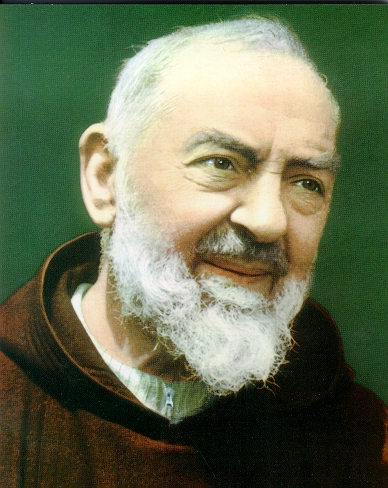
Pope Benedict XVI leads a mass during a visit to Padre Pio at Santa Maria delle Grazie in San Giovanni Rotondo, southern Italy June 21, 2009. Padre Pio is one of the Catholic Church's most popular saints and during his lifetime the monk was said to have the stigmata, the wounds of Jesus' crucifixion on his hands and feet. (Reuters/Daylife)

Pope Benedict XVI (R) celebrates mass at the Renzo Piano church dedicated to Padre Pio in San Giovanni Rotondo during his visit to the crypt of Padre Pio in the southern Italian Apulia region on June 21, 2009. Born Francisco Forgione, at age 23 the friar was said to have permanent sores on his hands similar to the stigmata, or the wounds of Jesus Christ's crucifixion, according to Christian belief. Padre Pio has become a cult figure for millions around the world and the subject of controversy in Italy. (Getty/Daylife)

(Reuters/Daylife)

Pope Benedict XVI celebrates the Holy Mass, next to Domenico D'Ambrosio, archbishop of San Giovanni Rotondo during a visit at the Padre Pio's shrine in San Giovanni Rotondo, southern Italy, Sunday, June 21, 2009. In the background is a portrait of Padre Pio, one of the Catholic Church's most revered saints. (AP/Daylife)


Pope Benedict XVI prays in front of the body of Padre Pio as he is displayed for the veneration of the faithful in a part-glass coffin in the crypt of the old Church of St. Mary of Grace, in San Giovanni Rotondo, southern Italy, Sunday, June 21, 2009. (AP/Daylife)


Pope Benedict XVI prays in front of the exhumed body of the mystic saint Padre Pio in the crypt of Santa Maria delle Grazie in San Giovanni Rotondo, southern Italy, June 21, 2009. Padre Pio is one of the Catholic Church's most popular saints and during his lifetime the monk was said to have the stigmata, the wounds of Jesus' crucifixion on his hands and feet. (Reuters/Daylife)

Pope Benedict XVI looks at the relics of the mystic saint Padre Pio in the crypt of Santa Maria delle Grazie in San Giovanni Rotondo, southern Italy, June 21, 2009. Padre Pio is one of the Catholic Church's most popular saints and during his lifetime the monk was said to have the stigmata, the wounds of Jesus' crucifixion on his hands and feet. (Reuters/Daylife)

Pope Benedict XVI waves during a meeting with the youth at Santa Maria delle Grazie in San Giovanni Rotondo, southern Italy, after paying his respect to the tomb of Padre Pio June 21, 2009. Padre Pio is one of the Catholic Church's most popular saints and during his lifetime the monk was said to have the stigmata, the wounds of Jesus' crucifixion on his hands and feet. (Reuters/Daylife)

Pope Benedict XVI blesses the faithful during his meeting at Renzo Piano church, dedicated to Padre Pio, in San Giovanni Rotondo, southern Italy on June 21, 2009. Born Francisco Forgione, at age 23 the friar was said to have permanent sores on his hands similar to the stigmata, or the wounds of Jesus Christ's crucifixion, according to Christian belief. Padre Pio has become a cult figure for millions around the world and the subject of controversy in Italy. (Getty/Daylife)

Pope Benedict XVI blesses the faithful during his meeting at Renzo Piano church, dedicated to Padre Pio, in San Giovanni Rotondo, southern Italy on June 21, 2009. Born Francisco Forgione, at age 23 the friar was said to have permanent sores on his hands similar to the stigmata, or the wounds of Jesus Christ's crucifixion, according to Christian belief. Padre Pio has become a cult figure for millions around the world and the subject of controversy in Italy. (Getty/Daylife)

Pope Benedict XVI (L) receives a gift during his meeting with priests, religious and youth, at Renzo Piano church dedicated to Padre Pio in San Giovanni Rotondo, in southern Italy in the Apulia region, on June 21, 2009. Born Francisco Forgione, at age 23 the friar was said to have permanent sores on his hands similar to the stigmata, or the wounds of Jesus Christ's crucifixion, according to Christian belief. Padre Pio has become a cult figure for millions around the world and the subject of controversy in Italy. (Getty/Daylife)


I can't say I like the architecture of the church.
Transition communities gear up for society's collapse with a shovel and a smile
Alastair Bland, North Bay Bohemian
Localized efforts have sprouted from the ground up in Santa Cruz, Cotati, Sebastopol, San Francisco and many other towns worldwide, where residents and neighbors are putting their heads together and collaborating on ways to relocalize themselves, bolster self-sufficiency and build the resilience that communities will need to absorb the shock of peak oil.
More choices at garden farm markets
Gene Logsdon, Organic To Be, Dave Smith

Shoppers just now discovering the allure of open air fresh food markets in towns and cities should be aware of new developments. Not only is there an increasing number of different fruits and vegetables being offered, but also meats, dairy products, even fresh fish— all from small garden farms.

Obama's (Latest) Surrender to Wall Street By MICHAEL HUDSON
How the Financial Reform Plan Protects the Status Quo
American Papist: "Badethics": Obama Plans to Replace Bush’s Bioethics Panel

The President's Council on Bioethics
-- so who will be appointed to the "new and improved" version? And if concensus is what is important, will the appointments be stacked in certain directions? What a joke. At least there was discussion on the Bush council, that ended up being published in the proceedings. Can the same be said for anything the Obama council produces (other than perhaps some minor quibbling)?

The Great Beyond: President's bioethics council disbanded
Obama Plans to Replace Bush's Bioethics Panel‎
Members of President's Bioethics Council Voice Objections

Sunday, June 21, 2009

Veritatis Praeco (via NLM)
Catholic Church Conservation: New and important interview with Bishop Fellay in Austrian press

SSPX: "We are the black sheep in any case"

Sissy's Song


I usually like Alan Jackson's slow songs, and the melody for this one is nice, but I can't get into the lyrics for this one -- the presumption of certain forms of American Protestantism. (Not that Catholics these days aren't infected with presumption as well.)

A Woman's Love


Remember When


Small Town Southern Man

Zenit: On Padre Pio's Devotion to Mary

"With a Mother's Hand She Will Guide You to the Heavenly Homeland" [2009-06-21]

Pontiff's Homily at St. Pio of Pietrelcina Church
"God Never Annuls That Which Is Human, but He Transforms It" [2009-06-21]

Benedict XVI's Words at the Padre Pio Hospital
"In Hospitals One Touches the Preciousness of Our Existence" [2009-06-21]

Papal Words to Priests, Youth at Padre Pio Church
"Love for Christ Is Inevitably Linked to Love for His Church" [2009-06-21]


Saturday, June 20, 2009

Future Weapons: Magpul Masada (Bushmaster ACR / Remington ACR)
Thomas Tallis - Miserere nostri

Friday, June 19, 2009

St. Gregory's University and Catholic Higher Education

official website
Fr. Z: Kids and summers, in which he writes, "I just heard a story on Fox News about Pres. Obama’s proposal to lengthen the school year for children."

In the comments--another recommendation for John Taylor Gatto's Underground History of American Education and Samuel Blumenfelds The NEA: Trojan Horse in American Education.

And Weapons of Mass Instruction.

From mid-century onwards certain utopian schemes to retard maturity in the interests of a greater good were put into play, following roughly the blueprint Rousseau laid down in the book Emile. At least rhetorically. The first goal, to be reached in stages, was an orderly, scientifically managed society, one in which the best people would make the decisions, unhampered by democratic tradition. After that, human breeding, the evolutionary destiny of the species, would be in reach. Universal institutionalized formal forced schooling was the prescription, extending the dependency of the young well into what had traditionally been early adult life. Individuals would be prevented from taking up important work until a relatively advanced age. Maturity was to be retarded.

(source)

FSVF video


FRATERNITA' DI SAN VINCENZO FERRIER

Convento di San Tommaso d'Aquino

IN COMUNIONE CON LA CHIESA CATTOLICA

2, route de Ballée
53340 Chémeré-le-Roi
(Francia)

Tel. + 33 02 43 98 64 25
Fax +33 02 43 98 49 19

Orari: 11.00 - 12.30 / 15.30 - 17.30 / 18.30 - 19.30 / 20.00 -20.30

www.chemere.org - fsvf@chemere.org
Litany of the Sacred Heart First Friday Benediction January 3, 2009 St. Margaret Mary Church Oakland, California, USA


Litany of the Sacred Heart of Jesus - Revised (The music is not the actual litany, but something else, but I can find no information on it.)
Paul Gottfried, The Faileocons

In this contest of the generations, I stand entirely on the side of those with a future. My generation of rightists has wasted its chance for success. We can only point to humiliations, continued marginalization, and internecine strife as our war record. Nor have we provided much assistance to each other, unlike our enemies, who like the ancient Spartans as described by Xenophon, “suffer and rejoice together.” Most of my generation of paleos has done little to establish a sense of community. The more fortunate ones have husbanded their resources while doing next to nothing for their allies.

That the young are still groping for a way out of the wilderness is to their credit. It is also the privilege of youth to be looking for new paths, and especially given the failures of their quarrelsome elders. Charles has noticed the obvious here, that the “new paleos” have little to feel happy about as they view their country and most of the Western world in the grasp of cultural gravediggers and a reckless political class. Does he dispute the justification for this pessimism or the justification for the young paleos’ unwillingness to pretend that the solution for Obama is electing more GOP politicians? As for his censures about their sexual morals, which Charles may fear do not quite meet the standard of Trappist monks, I don’t see the licentiousness here that he does. None of the young paleos, to my knowledge, is leading a life of wine and roses. For one thing, they don’t have the disposable income for fun and games that their neoconservative enemies are being showered with. Moreover, compared to the philandering Catholic monarchist Charles Maurras, who spent most of his adult life tumbling from one mistress to the next, the “new paleos” seem to be models of Puritan sobriety.

Let me stir the pot further by drawing another distinction, between those who want to be political activists and those who do not. Many of the paleos I’ve listened to show an otherworldly side, when they’re not bashing each other in geriatric rage. They glorify Catholic monastic ideals or invoke the memories of Christian crusades. They complain ceaselessly about modern life and insist that we return to scholastic precepts and medieval models of social organization. But such advice cannot possibly resonate in the current climate of debate, and it is foolish to castigate those young people who wish to have impact on the present age for not following someone else’s nostalgic reveries.


About whom is he talking here?
From Rorate Caeli: Reminder for the Feast of the Sacred Heart of Jesus (Act of Reparation)
and You Report: Traditional Latin Mass in the San Francisco Bay Area
Beerdigung Ihrer Majestät Zita
John Zmirak talks about the Hapsburgs: Praying with the Kaisers (original at InsideCatholic.com), and mentions a movie I have not yet seen, Sunshine, starring Ralph Fiennes.


There is a shot of Ralph Fiennes lying next to his lover and acting like a beta--but that aside, the movie is on my to see list. Whoa, it's Jennifer Ehle playing the lover (wife?) -- I didn't recognize her.
Just saw the latest trailer for 2012. More disaster porn. I think it is unhealthy to have the desire to watch so much destruction and death on the silver screen. (And what of the 'creative' minds that choose to produce such 'art'?)

Does the CGI ruin the spectacle? It is difficult to say. At 2:06 you can see the fancy ships being built by the government to save a portion of the human race. (And at 2:31 you can see the White House being destroyed. Does Roland Emmerich have something against the White House?)

Is the movie anti-Christian? There is a shot of St. Peter's Basilica being toppled, and a lot of people praying at a vigil being killed. This by itself may not be anti-Christian, since a lot of other landmarks and buildings (like a Buddhist temple in Tibet) are wiped out too, but I think its inclusion in the movie does mean something to the movie, which is an indictment against God and His Providence. Human beings are subject to some impersonal force which wipes out the planet, and humans manage to survive only because of their ingenuity and "resilience."

What trash.
Andrew Peach, On the Demise of Fatherhood

Professor Peach was once at Boston College, and one of the "good guys" -- but this essay seems to be another example of philosophy wrongly posing as intellectual history. He sets out to explain the demise of fatherhood:

If there is to be any hope of stopping this societal hemorrhaging, then we must first identify the cause or causes of this decline in paternity. What exactly is making so many fathers abandon their posts?

I would like to propose that the demise of fatherhood is largely the result of a relatively recent and thoroughly unjustifiable faith in rational self-determination. Indeed, nearly all of the culprits that cultural observers have previously identified—contraceptives, abortion, women’s liberation, increased secularity, the usurpation of the functions of the father by the state—can probably best be understood as instances of this more general tendency.
An unjustifiable faith in rational self-determination... as opposed to original sin and disordered self-love? Do those who sin actually hold to some sort of ideology in order to justify their choices? Perhaps a few who think themselves educated and having ready justification for their actions. But what of the rest? How do we explain the choices that they make? And how much of an explanation do we need to give?

Philosophers are not content with looking at individual actions -- they must find a more general cause, some sort of intellectual trend or "big idea(s)," that explains the actions of many. In another time, the "unjustifiable faith in rational self-determination" would be linked by Catholic or conservative intellectuals to Renaissance humanism, or to modernism, or to liberalism and the Enlightenment -- the rise of "unfettered reason" and the triumph over tradition.

Instead, we should be looking at what goods people want, and how the culture justifies their priorities, if at all. We should also consider that there may be a difference between what people claim to be their system of morality and their actual decision-making process. Is it possible that their version of practical reason does not actually match the words that they parrot when asked about how right actions are distinguished from wrong ones?

We can also ask -- has everyone lost a sense of fatherhood as a duty and vocation equally? If we do ask that question, will we be accused of racism? It may be difficult to write a history of the factors that have lead to fatherhood being lost. How much proof do we need in order to be satisfied with an explanation of what is going on in our societies? We cannot achieve certainty with probable arguments, and it seems to me that the usefulness about such speculation is rather limited when dealing with the issue on the individual level or within government. (Even if there are plenty of think tanks and policy advocates that engage in such speculation when pushing for one agenda or another, or to simply raise awareness that a "problem" exists.)

In regard to paternity, the two most conspicuous and destructive instantiations of this unconstrained vision are voluntarism and functionalism.
He explains:

Voluntarism, the new and Constitutionally validated philosophical undergirding of parenthood, is the notion that no person has any special duties to any other person unless he has explicitly or implicitly consented to them. To be duty-bound for any other reason, such as circumstance or biological kinship, would be to find oneself despotically ruled by irrational forces. This notion lies at the heart of reproductive freedom, championed by organizations such as Planned Parenthood, whose very name echoes the unconstrained view. “Reproductive freedom—the fundamental right of every individual to decide freely and responsibly when and whether to have a child—is a reaffirmation of the principle of individual liberty cherished by most people worldwide,” declares the organization’s website.

and

Functionalism, for lack of a better term, is the legal and cultural notion that fatherhood is only incidentally related to biology and that the traditional functions of a father can be fulfilled through a patchwork of other relations or surrogates. On this view, there is little that is distinctive or even significant about a biological father’s relation to his son. On paper, it would appear that all of the functions of a father—providing affection, attention, protection, financial support—could be carried out by anyone or any group. How could something as incidental as a genetic link between two people possibly determine so much?
What of the impact of radical feminism? Or of the Second World War? Or the growth of an industralized and centralized state? In addition to personal sin, should we also consider whether some sort of emasculation has taken place? The lack or failure of male leadership, specifically the headship of the husband and father. Some may claim that how a man acts as a husband is separate from how he acts as a father, but perhaps there is more of a connection between the two than one might initially think. Often it is the case that a father no longer husbands the household. Being an 'adherent' of consumerism, he does little more than train his children to be good little consumers. There is very little exposure of them to the ethical life. How many fathers fail to give their children the moral formation that they require?

Professor Peach goes on to admit that for the average man, voluntarism and functionalism are not a necessary part of their worldview:
The devastation wrought by voluntarism and functionalism on the human family has been incalculable, but for the average man the unconstrained vision usually never rises to the level of these sophisticated -isms, however much they continue to poison the culture. What has caused the most damage to fatherhood is the simple fact that this age insists that anything outside of the control of the human will is intolerable. And at bottom, success in fatherhood involves faith; it is something outside of the control of the human will. If the success of one of society’s most fundamental and critical roles depended on rational self-determination, then civilization would have come apart long ago. And now that it is being claimed that success in fatherhood must be the product of wise planning, we should not be surprised to see civilization coming apart.
He gives a rather odd account of tradition:

In Sowell’s language, the wisdom embodied in fatherhood is “systemic knowledge,” knowledge acquired from the accumulated experience of previous generations. The rituals, customs, and rules of conduct that have been bequeathed to us by our predecessors are not principally products of reason; rather, they are embodiments of the successful adaptations that humans have made to their surroundings in the past. Not being the express product of a given individual, these adaptations are rarely understood in full by any given individual.
What explains tradition? Its success in promoting human... flourishing? "We keep it primarily because it works." Perhaps this is compatible with certain anthropological/sociological/evolutionary psychological theories of [human] culture, but is human history generally marked by decline or by progress? Who is to say that our ancestors didn't have a better awareness of the reasons set forth within tradition?

The secular holiday of Father's Day may be an appropriate occasion to ask why we do not have enough good fathers. But trying to analyze the root of the problem through the history of ideas does not seem to me to be an effective way to proceed. (And I'll grant that Professor Peach does not limit himself to that approach, but I view this fact as being an tacit admission that it is not enough for the audience.)

Palestrina - Heu mihi Domine