Monday, July 09, 2007

The Liturgical Institute

homepage

Fr. Cassian Folsom had been the president of the Liturgical Institute and vice-rector at Sant Anselmo in Rome for a while; he then became the prior of the re-founded Monastery of Saint Benedict in Nurcia.

The Monastery of San Benedetto, Norcia, Italy
Cassian Folsom, OSB - Sacred Signs and Active Participation at Mass
From One Eucharistic Prayer to Many - Fr Cassian Folsom, OSB
Ratzinger speaks at Fontgombault
Vocations

On Being Missionaries of Christ

On Being Missionaries of Christ
"In God's Field There Is Work for Everyone"


VATICAN CITY, JULY 8, 2007 (Zenit.org).- Here is a translation of the address Benedict XVI delivered today before reciting the midday Angelus with several thousand people gathered in St. Peter's Square.

* * *

Dear Brothers and Sisters,

Today the Gospel (cf. Luke 10:1-12,17-20) presents Jesus sending out 72 disciples to the villages where he is about to arrive so that they will prepare the way.

This is unique to the evangelist Luke, who emphasizes that the mission is not reserved to the Twelve Apostles, but is extended to other disciples. In fact, Jesus says that "the harvest is plentiful but the laborers are few" (Luke 10:2).

In God's field there is work for everyone. But Christ does not limit himself to sending out. He also gives the disciples clear and precise rules of conduct.

First of all he sends them out "two by two," so that they help each other and give an example of fraternal love. He notes that they will be "like lambs among wolves" -- despite everything they must be peaceful and in every situation bring a message of peace; they will not take clothes or money with them, so as to live by what Providence offers them; they will care for the sick, as a sign of God's mercy; where they are rejected, they will leave, limiting themselves to warning those who reject them that they are responsible for rejecting the kingdom of God.

St. Luke highlights the enthusiasm of the disciples over the good fruits of the mission, and records this beautiful expression of Jesus: "Do not rejoice because the demons are subject to you, but rejoice because your names are written in heaven" (Luke 10:20). This Gospel reawakens in all the baptized the awareness of being missionaries of Christ, called to prepare the way for him with words and with the testimony of their lives.

Tomorrow I leave for Lorenzago di Cadore, where I will be the guest of the bishop of Treviso, in the house where the venerable John Paul II was already welcomed. The mountain air will be good for me and I will be able to dedicate myself more freely to reflection and prayer.

I wish all of you, especially those most in need, the possibility of taking a little vacation to reinvigorate your physical and spiritual energies and recover a salutary contact with nature. The mountains, in particular, evoke the upward ascent of the spirit, the elevation toward the "high measure" of our humanity, which daily life unfortunately tends to abase.

In this connection I would like to recall the fifth Pilgrimage of Young People to the Cross of Adamello, where twice the Holy Father John Paul II went. The pilgrimage took place recently and a short while ago culminated in the Holy Mass celebrated at a height of 3,000 meters. In greeting the archbishop of Trent and the general secretary of the Italian bishops' conference, as well as the government officials of Trent, I also renew my appointment with all Italian young people for two days at Loreto, Sept. 1-2.

May the Virgin Mary always protect us, whether on mission or in just repose, so that we carry out our task with joy and with fruit in the vineyard of the Lord.

[Translation by ZENIT]

[After praying the Angelus, the Holy Father greeted pilgrims in six languages. In English, he said:]

I warmly welcome the English-speaking pilgrims present at this Angelus. In a special way I am pleased to greet those taking part in the "Interamnia World Cup," handball tournament in Teramo, Italy. The participants in this event come from more than a hundred different Countries, some of which are in conflict with each other. Yet this peaceful gathering of athletes is an example of how sports can bring us together in the spirit of fellowship between peoples and cultures. Sports are indeed a sign that peace is possible.

In today's Gospel we are reminded that the harvest is plenty but the labourers are few. Let us all pray that the Lord of the Harvest will continue to bless his Church with confident and generous workers. I thank you for your prayerful presence, and I invoke the abundant blessings of Almighty God upon you and your families.

© Copyright 2007 -- Libreria Editrice Vaticana

Godspy interview with Pat Buchanan

From 2004:

Where the Right Went Wrong: An Interview with Pat Buchanan
Along with the Pope, Pat Buchanan opposed the Iraqi War from the start. We spoke to him about the election, the war, the Catholic vote—and Ali G.
By Angelo Matera and John Zmirak

As for the Catholic neocons, they are the altar boys of a sect that holds, heretically, that free market-democracy is mankind's salvation. And they are willing to support military force in our moment of preeminence to bring it about worldwide. Catholic neocons have been had. They have signed on to an agenda of interventions and wars in the Middle East that have less to do with U.S. security than with U.S. hegemony and some vision of a Pax Americana. It is imperialism, even if we call it democratic imperialism. And it will end the way they all did in the 20th century.

John Zmirak, Sake and the Latin Mass

Sake and the Latin Mass
Posted by John Zmirak on July 07, 2007

Who's in charge

In his JOURNAL: Corporate Armies in Russia, John Robb notes, "NATO, in its quest to remain relevant, is eyeing a role as a provider of security oil companies/oil exporting states (these companies will likely be responsive given that another Shell oil platform was attacked today in Nigeria)."

NATO and Energy Security
Paul Gallis
NATO to talk energy security - Boston.com
Energy: NATO Considers Role In Increasing Energy Security - RADIO ...

Is there a reason why we still need NATO?

The future of Pakistan

Two from Asia Times:

A moment of truth for Pakistan Pakistan's bloody six-day offensive against the radical Lal Masjid (Red Mosque) in Islamabad and the militants bunkered inside it is approaching its climax. For President General Pervez Musharraf, though, this is only the beginning of a new phase in the "war on terror" that could radically alter the country's delicate relationship with its jihadis. - Syed Saleem Shahzad (Jul 9, '07)

It could be curtains for the Busharraf showThe United States' willingness to turn a blind eye to Pakistani President General Pervez Musharraf's double games over al-Qaeda and Taliban networks is being undermined. It is affecting the campaign to portray Iran as the primary external source of instability and violence against US troops in the region. And President George W Bush faces a growing domestic political backlash. - Gareth Porter (Jul 9, '07)

Dilip Hiro, The Rising and Falling Power of Hydrocarbon States

via EB

The Rising and Falling Power of Hydrocarbon States
By Dilip Hiro, Yale Center for the Study of Globalization via Petroleum World

John Médaille on the economics of health care

Here, via the Western Confucian.

Sunday, July 08, 2007

Monks and beer

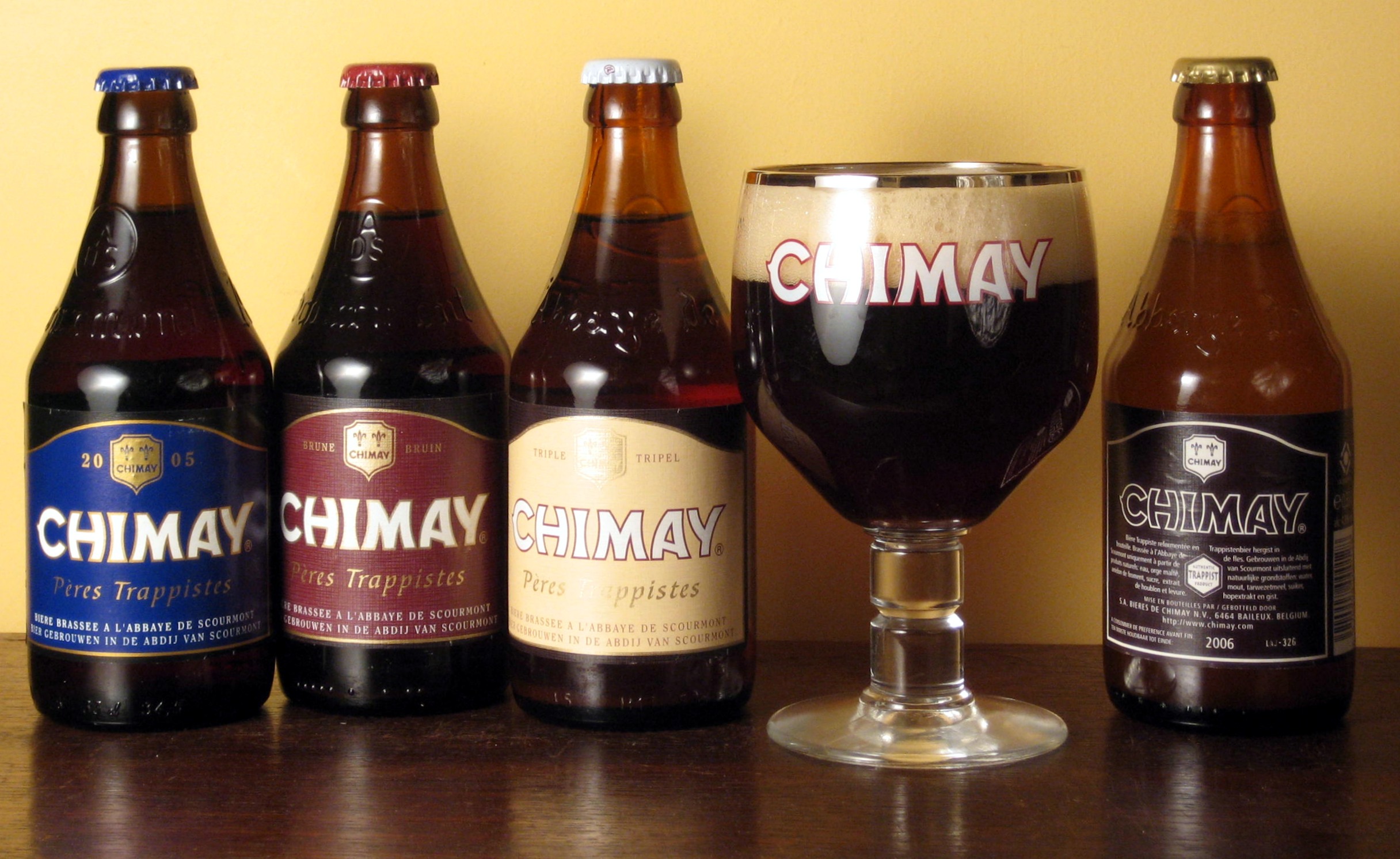
I was at the Sunset Grill tonight with Fujian Gal. Sunset Grill does have Chimay, but I decided not to get it, as it was rather expensive. I wonder if one of the liquor stores around here carries them. I think if I'm going to try a beer, it better be a good one... the Catholics at the ISN conference were praising Chimay.

Monk-y beer business
The monks, the beer, the town and one of only five makers of the genuine Trappiste beers on the planet — discover Chimay with Tony Mallett.


When is a beer not a beer? Answer: when it’s a Trappiste.
Chimay is one of only seven beers in the world (six of them Belgian) that can genuinely and legally call itself by that label.

For the record, just so you can impress your mates, the others are Westmalle, Orval, Rochefort, Westvleteren and Achel. The seventh is Koningshoeven, brewed in the Netherlands. Contrary to popular belief, Duvel isn’t one. So now you know.

The nectar that is the world-renowned Chimay is created in a high-tech plant behind the Cistercian abbey of Scourmont-lez-Chimay, which in turn is a brief drive, or a longish monk’s plod, to the picturesque village, near the French border south-west of Namur, that gives the beer its name.

Old Europe meets New Europe at the abbey? Definitely, in technology terms at least.
As for its general location, Chimay’s Grand Place is charming in a rural, off-the-beaten track kind of way. Underneath the shadow of a church, dotted with terraced cafes and bistros (most selling the ubiquitous brand of beer native to the area), there are many worse places to soak up the atmosphere on a fine day.

The monks of Scourmont follow the doctrines of a celebrated – nay, canonised – sixth-century fella revelling in the name of Benedict. Six centuries after the worthy chap shuffled off this mortal coil, the monastery of Citeaux was founded in Burgundy, later to give its name to the order known as Cistercian.

Still with me? Good… In the 17th century, the Cistercian monks of La Grande Trappe (aha!) in Normandy embraced austerity in a big way. Against all odds it caught on – et voila, the Order of the Strict Observance, or Trappist, monks was born.

The beautiful Scourmont Abbey is relatively young – 153 years old on 25 July just gone. On that day in 1850, Trappists from Westvleteren, near Ypres, set about clearing land donated by the Prince of Chimay in order to farm it.

This they did, selling extra produce to the locals and, along the way, finding time to build an abbey, which now brews the beers and incorporates a cheese-making plant. The cheese is rich and rewarding to taste. Marvellous!

The manual tasks involved in the industries tie in so successfully with the monastic ethos that they are now the largest employers in the region. Crucially, the ‘brothers’ have decision-making powers on the company board and pump euro after euro into social projects in Belgium and abroad.

While the monks spend most of their time in prayer and study in their gorgeous surroundings, they dedicate a few hours each day to ensure that the beer production runs smoothly in the ultra-modern brewery.

The sight of habit-clad, silent monks wandering piously through the cloisters only yards from the laboratories manned by techie types sporting white lab coats can seem a tad weird. But you can live with it, believe me. Well, visit it, at any rate…

The fact is, while the sun dapples the pathways that gently weave their way through leafy trees and as the breeze wafts the delicious scent of blooms across your face, there exists a silence that is more startling than any noise.

Day-trippers will find that the atmosphere at Scourmont is both humbling and uplifting, sometimes enhanced still further by the rare but gentle footfall of a passing monk, head down, hands clasped and mindful of prayer.

The brewery itself is off-limits to casual visitors, being housed so close to a deeply holy order, but they all look the same anyway – trust me, I’m a journalist.

It’s the abbey and the small town itself that are the highlights. But I’ve missed something out here…what about the beer?

Well, here’s a bit of histoire: the first beer at Scourmont was produced in 1862 and was sold in corked bottles – the height of technology back then. By 1948, thirsty punters (those with good taste, naturally) could pour the brew from capped bottles.

This original beer – a 7 percent light, coppery-brown creation – is now shipped across the planet. It’s the famous ‘red cap’. I sampled it for the first time in a bar in York, England, around a decade ago and I was so impressed I moved to Belgium. Well, almost…

Also in 1948, the ‘bleu’ first saw the light of day. This one weighs in at 9 percent and was originally intended to be a dark, festive season beer. Prepare to be jolly after a couple of those, Santa…

The Holy Trinity became complete with the emergence of the ‘white cap’ in 1966. This, har-de-har, ‘light’ beer (8 percent!) boasts an aroma evocative of the expected fresh hops and the not-so-expected hint of muscat.

To be honest, these beers are not for the faint-hearted but, as they are all created using natural ingredients, the hangovers are at least worthy ones. No nasty chemicals – just good old-fashioned, tasty ale. Adam’s ale, you might say – but just a bit stronger.

While we’re being Biblical, what about these monks then? Surely not even the most devout could resist the occasional tipple of the fantastic beverages they play a part in making.

No, they can’t resist. Truth is, there’s another brew, nowhere near as strong as the ones that you or I would jealously guard in some bar off the Grand Place, but as tasty and refreshing in its own way. It’s a lighter version of the ‘famous three’ and the monks partake of a glass or two from time to time. Shame you’d need to turn Benedictine to partake.

So, even among monks, old habits die hard.

Updated August 2004

From Trappist Monks, Heavenly Brew
All about trappist beer; wiki
photo; Chimay

The Trappist Beers:
Chimay: the art of Trappist cheese and beer.
Chimay - The Art of Trappist Beer and Belgian Cheese.
Bières de Chimay - Wikipedia, the free encyclopedia
Trappist Beer from the Chimay Monastery, Belgium
St. Benedictus Abbey - Achel, Belgium
Orval (wiki)
Rochefort (wiki)
Trappistes Rochefort (FAN-site)
Unofficial web site of Brasserie de Rochefort
Tourism Wallonia - Brussels (Belgium) : ABBEY OF NOTRE-DAME DE ...
WESTMALLE ABBEY (wiki)
Abdij Koningshoeven (wiki) De Koningshoeven Brewery - Wikipedia, the free encyclopedia
The abbay of Saint Sixtus of Westvleteren (wiki)

The Trappists

Weltenburg Monastery:
Klosterschenke Weltenburg - Our monastery beer is world class (wiki); Weltenburger - Ein Bier im Himmel wie auf Erden; Abbey website
Weltenburg brewery now offering tours - Munich
Benediktinerabtei Weltenburg - A Short Guide to Weltenburg

Duvel & Maredsous
Duvel
Maredsous beer - Wikipedia, the free encyclopedia
Maredsous: Home
Beers of Europe Ltd - Maredsous

Misc:
Monk's Cafe & Belgian Beer Emporium
Franziskaner Weissbier Brewery Munich. Refreshingly different ...

Brad DeLong on health care reform

Not sure what to make of it. Via The American Scene.

Tomdispatch Interview with Andrew Bacevich, Part 2

Tomdispatch Interview: Bacevich, the Arrogance of American Power

[Note to Tomdispatch readers: In The Delusions of Global Hegemony, Part 1 of the latest Tomdispatch interview, Andrew Bacevich took up military scapegoating over the Iraq War, the strains between the military and civilian sides of the Pentagon, the possibility of an air assault on Iran, and especially the way the Iraq War revealed both the limits of American military power and the dreamy, fantastical, triumphalist thinking that, these last years, accompanied the Bush administration's attempt to expand American global hegemony. Now, Bacevich turns to cheap oil and energy wars, life in uniform, the evolution of his own thinking, and the American way of life. Tom]


Drifting Down the Path to Perdition
A Tomdispatch Interview with Andrew Bacevich (Part 2)

TD: I'd like to turn to the issue of oil wars, energy wars. That seems to be what holds all this incoherent stuff together -- minds focused on a world of energy flows. Recently, I reread [President Jimmy] Carter's 1979 energy speech. Isn't it ironic that he got laughed out of the room for his sweater and for urging a future of alternative fuels on us, while we latched onto his Rapid Deployment Force for the Persian Gulf? As you argue in your book, The New American Militarism, this essentially starts us on what you call "World War IV."

Bacevich: I remember the Carter speech. I was a relatively young man at the time. In general, I have voted for Republicans, although not this Republican in 2004. But I did vote for Carter because I was utterly disenchanted with [President Richard] Nixon and [his National Security Advisor Henry] Kissinger. [President Gerald] Ford seemed weak, incompetent. And I remember being dismayed by the Carter speech because it seemed so out of sync with the American spirit. It wasn't optimistic; it did not promise that we would have more tomorrow than we have today, that the future would be bigger and better. Carter essentially said: If we are serious about freedom, we must really think about what freedom means -- and it ought to mean something more than acquisition and conspicuous consumption. And if we're going to preserve our freedom, we have to start living within our means.

It did not set well with me at the time. Only when I was writing my militarism book did I take another look at the speech and then it knocked me over. I said to myself: This guy got it. I don't know how, but he really got it in two respects. First, he grasped the essence of our national predicament, of being seduced by a false and even demeaning definition of freedom. Second, he understood that cheap oil was the drug that was leading us willy-nilly down this path. The two were directly and intimately linked: a growing dependence on seemingly cheap foreign oil and our inability to recognize what we might call the ongoing cultural crisis of our time.

Carter gives the so-called malaise speech, I think, in July '79. The Russians invade Afghanistan in December '79. Then comes Carter's State of the Union Address in January 1980 in which he, in a sense, recants, abandoning the argument of July and saying, by God, the Persian Gulf is of vital interest to the United States and we'll use any means necessary in order to prevent somebody else from controlling it. To put some teeth in this threat he creates the Rapid Deployment Joint Task Force, which sets in motion the militarization of U.S. policy that has continued ever since. So, July 1979 to January 1980, that's the pivotal moment that played such an important role in bringing us to where we are today. But of course we didn't understand that then -- certainly I didn't. In July 1979, Carter issued a prescient warning. We didn't want to listen. So we blew it.

Fast forward to 2006, and President Bush is telling us, thank you very much, that we're addicted to oil. I heard [House Minority Leader] Nancy Pelosi on the radio over the weekend saying that the Democrats now have a plan to make us energy independent by 2020. She's lying through her teeth. There's no way anybody can make us energy independent by then. We needed to start back in 1979, if not before. Even to achieve independence from Persian Gulf oil will be an enormously costly, painful process that none of the politicians in either party are willing to undertake. Gas is now roughly $3 a gallon. I heard some guy on a talk show the other day say: "Whaddya think we should do? I think we should all park our cars on the Interstate and stop traffic until the government does something." What does he actually want the government to do, I wondered? Conquer another country?

We Americans are in deep denial, unwilling to accept that we're going to have to change the way we live for our own good. Empire does not offer the recipe for preserving our freedom. Learning to live within our means just might. Jimmy Carter was the one guy, back in July of '79, who really had the guts to say that. Unfortunately, he didn't have the guts to stick with it.

TD: I always wonder what would have happened if we had dumped a bunch of money into R&D for alternative fuels back then.

Bacevich: The funding for the Iraq War is now in the hundreds of billions of dollars. [Economist] Joseph Stiglitz projects that total costs could go to $2 trillion. What would a trillion dollars have done for research into alternative fuels? I don't know, but something… something! What do you get for a trillion dollars in Iraq? Nothin'. It's just nuts!

TD: I was amused, by the way, that you were born in Normal, Illinois…

Bacevich: …because the Normal School of the State of Illinois, the teacher's college, was there.

TD: I was also thinking about stereotypes of military men. You know, rigidity of mind and the like. What strikes me in your writings is that you seem more open to rethinking your worldview than almost any scholar around. So I was curious about the evolution of your thought.

Bacevich: Two key moments for me were the end of the Cold War and the Iraq War. The simple story would be that, for the first twenty-some years of my adult life, which coincided with the latter stages of the Cold War, I was a serving officer. I was a cold warrior in uniform. I therefore accepted the orthodox narrative of the Cold War and of the postwar era more generally. I was not oblivious to policy errors we had made and some of the sins we had committed, but as long as I was in uniform I was willing to accept that these were peripheral to the larger narrative. I did retain this notion that the Cold War was an emergency, a very long, serious one in which we as a nation had been called upon to depart from the norm. This was not the way things were supposed to be, particularly in regard to a globally deployed military establishment.

TD: Let me back you up for a moment to Vietnam. You fought there…

Bacevich: 1970-71.

TD: ...and how did you come out of Vietnam?

Bacevich: For a variety of personal reasons, my wife and I decided to stay in the Army after my obligation was up… [He hesitates.] For those who are not familiar with military service, it may be difficult to appreciate the extent to which that life is all embracing. It's like being a monk. It's a calling. Soldiers work real hard. And much of that work is peculiarly satisfying. For most of my time in the service, women were few in number and on the margins. So it was a very masculine environment. This might seem retro, but men living among men and doing manly things [he laughs], there is a peculiar savor to that. At any rate, I bought into the institutional view of Vietnam -- that we had been screwed. The politicians had screwed us; the media had screwed us; the American people had screwed us. They had let us down, and so my commitment was to an institution that, after Vietnam, was engaged in a comprehensive effort to reconstitute and restore itself -- and its standing in American society.

In that context, the questions I was willing to ask about Vietnam or about U.S. foreign policy more generally were fairly narrow. Since getting out of the Army, since trying to make sense of the Cold War and U.S. foreign policy from a different perspective, I've come to see the Vietnam War differently as well. I can accept to some degree the argument that the meaning of Vietnam is to be found in the-military-gets-hung-out-to-dry, but that's not sufficient. And I've come to see the war as just utterly unnecessary, misguided, and mistaken. A monumental miscalculation that never should have happened, but that did happen due to some deep-seated defects in the way we see ourselves and see the world.

In any case, the Cold War essentially ends in 1989 when the [Berlin] Wall goes down; in '91, the Soviet Union collapses. I get out of the Army in 1992 and I'm waiting with bated breath to see what impact the end of the Cold War is going to have on U.S. policy, particularly military policy. The answer is, essentially, none. We come out even more firmly committed to the notion of U.S. military global supremacy. Not because there was an enemy -- in 1992, ‘93, ‘94, there's no enemy -- but because we've come to see military supremacy and global hegemony as good in and of themselves.

The end of the Cold War sees us using military power more frequently, while our ambitions, our sense of what we're supposed to do in the world, become more grandiose. There's all this bloated talk about "the end of history," and the "right side of history," and the "indispensable nation," politicians and pundits pretending to know the destiny of humankind. So I began to question my understanding of what had determined U.S. behavior during the Cold War. The orthodox narrative said that the U.S. behaved as it did because of them, because of external threats. I came to believe that explanation was not entirely wrong but limited. You get closer to the truth by recognizing that what makes us behave the way we behave comes from inside. I came to buy into the views of historians like Charles Beard and William Appleton Williams who emphasize that foreign policy is an outgrowth of domestic policy, in particular of the structure of the American political economy.

So I became a critic of U.S. foreign policy in the 1990s, a pretty outspoken one.

TD: You wrote a book then with the word "empire" in the title...

Bacevich: Yes, because I became convinced that what we saw in the 90s from both Democrats and Republicans was an effort to expand an informal American empire. Fast forward to 9/11 and its aftermath, and the Bush doctrine of preventive war as implemented in Iraq, and the full dimensions of our imperial ambitions become evident for all to see.

I have to say, I certainly supported the Afghanistan War. I emphatically believed that we had no choice but to take down the Taliban regime in order to demonstrate clearly the consequences of any nation tolerating, housing, supporting terrorists who attack us. But the Iraq War just struck me as so unnecessary, unjustifiable, and reckless that... I don't know how to articulate its impact except that it put me unalterably in the camp of those who had come to see American power as the problem, not the solution. And it brought me close to despair that the response of the internal opposition and of the American people generally proved to be so tepid, so ineffective. It led me to conclude that we are in deep, deep trouble.

An important manifestation of that trouble is this shortsighted infatuation with military power that goes beyond even what I wrote about in my most recent book. Again, it revolves around this question of energy and oil. There's such an unwillingness to confront the dilemmas we face as a people that I find deeply troubling. I know we're a democracy. We have elections. But it's become a procedural democracy. Our politics are not really meaningful. In a meaningful politics, you and I could argue about important differences, and out of that argument might come not resolution or reconciliation, but at least an awareness of the consequences of going your way as opposed to mine. We don't even have that argument. That's what's so dismaying.

TD: You've used the word "crusade" and spoken of this administration as "intoxicated with the mission of salvation." I was wondering what kind of "ism" you think we've been living with in these years?

Bacevich: That's a great question, and it's not enough to say that it's democratic capitalism. Certainly, our "ism" incorporates a religious dimension -- in the sense of believing that God created this nation for a purpose that has to do with universal values.

We have not as a people come to terms with our relationship to military power and to the wars we've engaged in and the ways we've engaged in them. Now, James Carroll in his new book, House of War, is very much preoccupied with strategic bombing in World War II and since, and especially with our use of, and attitude toward, nuclear weapons. His preoccupation is understandable because those are the things we can't digest and we can't cough up. You know, at the end of the day, we, the missionary nation, the crusader state, certain of our righteousness, remain the only people to have used nuclear weapons in anger -- indeed, to have used them as a weapon of terror.

TD: Air power, even though hardly covered in our media in Iraq, has been the American way of war since World War II, hasn't it?

Bacevich: Certainly that "ism" that defines us has a large technological component, doesn't it? I mean, we are the people of technology. We see the future as a technological one and can't imagine a problem that doesn't have technological solutions...

TD: ...except when it comes to oil.

Bacevich: Quite true. In many respects, the technological artifact that defines the last century is the airplane. With the airplane came a distinctive style of warfare. The Italians dropped the first bomb in North Africa; the Japanese killed their share of civilians from the air as did the Germans, but we and our British cousins outdid them all. I've been thinking more and more that our record of strategic bombing is not simply an issue of historical interest.

We are not who we believe we are and, in some sense, others perceive us more accurately than we do ourselves. The President has described a version of history -- as did Clinton, by the way -- beginning with World War II in which the United States is the liberator, Americans are the bringers of freedom. There is truth to that narrative, but it's not the whole truth; and, quite frankly, it's not the truth that matters a lick, let's say, to the Islamic world today. Muslims don't give a darn that we brought Hitler or the Third Reich to its knees. What they're aware of is all kinds of other behavior, particularly in their neck of the woods, that had nothing to do with spreading democracy and freedom, that had everything to do with power, with trying to establish relations that maximized the benefit to the United States and American society. We don't have to let our hearts bleed about that. That's the way politics works, but let's not delude ourselves either. When President George W. Bush says, "America stands for freedom and liberty, and we're coming to liberate you," it's absurd to expect people in that part of the world to take us seriously. That's not what they've seen and known and experienced in dealing with the United States.

TD: And, of course, within the councils of this administration, they threw out anyone who knew anything about the record of U.S. policy in the Islamic world.

Bacevich: Because those experts would have challenged the ideologically soaked version of history that this administration has attempted to carry over into the 21st century. Only if we begin to see ourselves more clearly, will we be able to understand how others see us. We need to revise the narrative of the American Century and recognize that it has been about a host of other things that are far more problematic than liberation. There can be no understanding the true nature of the American century without acknowledging the reality of Hiroshima, Nagasaki, Dresden, Hanoi, and Haiphong.

TD: Do you, by the way, think that the reality-based community is catching up with the Bush administration?

Bacevich: It's catching up, but is it in a way that has political consequences? If we just toss Bush out and bring in... Who? Senator Clinton or John McCain? Will things be different? Somehow, I don't think so. Of course, there is something to be said for competence even in implementing a bad policy. Right now, we have incompetents implementing a bad policy, but the essence of the problem is the policy -- not just the Iraq War but this paradigm of a Global War on Terror, this notion of unconstraining American power. That's what we have to rethink.

TD: Your thoughts on three military matters: what might be called the religionizing of the military; the Bush administration's setting up of a Northern Command in 2002 for the so-called homeland, which I find disturbing; and finally, what do you make of the now-normalized practice of presenting the costs of war-fighting as a non-Defense Department budget supplementary item?

Bacevich: I think the last thing in your list is outlandish and irresponsible. It's as if we're keeping two sets of books. But again, the administration abetted by the Congress plays these games and nobody seems to care. Still, it doesn't change the facts -- that we're spending more on defense than the rest of the world put together. That has no precedent. And are we becoming safer and more secure and more prosperous? If we're not yet secure, does that mean we should be spending twice again as much? I have friends who think we should, or who at least believe that the defense budget is inadequate. I myself think that the flinging of money at the Defense Department ought to prompt Americans to reconsider the notion that the solution to our problems is to be found in the realm of military power.

I think the evangelizing issue reflects at least three things. Number one, the elite disengagement from the military after Vietnam. The Episcopalians don't sign up any more, or the Presbyterians. Number two, the heightened political engagement of Christian evangelicals who, by the 1960s, had embarked on a crusade to save America from itself. Evangelicals have long seen the U.S. military as allies in that cause. American society may be going to hell in a hand basket with its promiscuity, its pornography, its divorce rates, its abortion, its women's rights, all these things evangelicals lament, but the military's a bastion of traditional virtue. Now, they misperceive soldiers in that regard, but I think that's one reason military service has a special appeal for evangelical Christians.

Third comes the politicization of the military. When I first became an officer, the tradition of being apolitical was still deeply rooted. As one consequence of Vietnam, that went away. The officer corps came to see its interests as lying with the political right. Evangelical Christianity is just part of a larger mix.

TD: So, you have an all-embracing world that has become more politicized, that's moved south, and that has few new streams of blood heading into it, unlike in the era of the draft or of the World War. What are the results of the military becoming less and less like American society?

Bacevich: I think it's bad news. The only good news -- this is pure speculation as there's no evidence for it -- might be that since the Iraq War is the handiwork of a conservative, evangelical, Republican President, perhaps members of the officer corps will begin to rethink where their loyalties should lie and will come to the realization that hitching their flag to the Republican Party is not necessarily good for their institutional interests. The officer corps loved [President Ronald] Reagan. He saved the military. And here we have, according to some people, the most Reaganite president since Reagan who seems to be doing his darnedest to destroy the military. That might have some impact.

TD: About a year ago you said, "The only way I can envision a meaningful political change along the lines that I would like to see would be in reaction to an awful disaster." Would you like to comment?

Bacevich: A disaster like that could go either way. One hates to speculate on this, but were there another 9/11, the likely result could be that Americans would rise up in their righteous anger and say, let's go kill them all. But it's at least possible to hope that such a disaster might offer an opportunity for people who are advancing alternative views to be heard.

One of the strange things about the Iraq War and other post-9/11 policies is that, except for gas being at $3 a gallon, who the hell cares? Part of the cunning genius of the Bush administration has been the way it's insulated Americans from the effects of their policies. You know, 9/11 happens and they seize upon it to declare their Global War on Terror. The President says from the outset that this is a long war, that it may take decades, that it's comparable to the world wars. On the other hand, he chooses not to mobilize the nation. There are no changes in our domestic priorities; no significant expansion of the armed forces.

Well, why was that? In their confidence about how great our military power was, they calculated that what we had would suffice. That was a major miscalculation. But I think they also calculated that by telling Americans, as President Bush famously did, to go down to Disney World and enjoy this great country of ours, they would be able to buy themselves political protection. Even though opinion polls show that public support for the President has dropped tremendously, in a sense events have proven them right. They have not been held accountable for their egregious mistakes because average citizens like you and me don't really feel the pain in any direct way.

Now, if the President had said: We're going to cut back on our domestic programs; we're going to raise taxes because this is an important war and, by God, we need to pay for it; we need a bigger Army and so we're going to impose a draft. Then I think Americans might have been more attentive to what's been happening over the past four years. But alas, they've not been. Instead we've drifted down the path toward perdition.

[Note: Those readers who want some background on the issues discussed in this interview are advised to pick up a copy of Bacevich's remarkable book, The New American Militarism.]

Tomdispatch Interview with Andrew Bacevich, Part 1

From last year, but still timely.

Tomdispatch Interview: Bacevich on the Limits of Imperial Power

[Note to Tomdispatch readers: This is the tenth in an ongoing series of interviews at the site. The last three interviews were with Chalmers Johnson (1 and 2), Katrina vanden Heuvel, and Mike Davis (1 and 2). Tom]


The Delusions of Global Hegemony
A Tomdispatch Interview with Andrew Bacevich (Part 1)

I wait for him on a quiet, tree and wisteria-lined street of red-brick buildings. Students, some in short-sleeves on this still crisp spring morning, stream by. I'm seated on cold, stone steps next to a sign announcing the Boston University Department of International Relations. He turns the corner and advances, wearing a blue blazer, blue shirt and tie, and khaki slacks and carrying a computer in a black bag. He's white haired, has a nicely weathered face, and the squared shoulders and upright bearing of a man, born in Normal, Illinois, who attended West Point, fought in the Vietnam War, and then had a twenty-year military career that ended in 1992.

Now a professor of history at Boston University, he directs me to a spacious, airy office whose floor-to-ceiling windows look out on the picturesque street. A tasseled cap and gown hang on a hook behind the door -- perhaps because another year of graduation is not far off. I'm left briefly to wait while he deals with an anxious student, there to discuss his semester mark. Soon enough though, he seats himself behind a large desk with a cup of coffee and prepares to discuss his subjects of choice, American militarism and the American imperial mission.

Andrew Bacevich is a man on a journey -- as he himself is the first to admit. A cultural conservative, a former contributor to such magazines as the Weekly Standard and the National Review, a former Bush Fellow at the American Academy in Berlin, he discovered sometime in the 1990s that his potential conservative allies on foreign policy had fallen in love with the idea of the American military and its imagined awesome power to change the world. They had jumped the tracks and left him behind. A professed cold warrior, in those years he took a new look at our American past -- and he's not stopped looking, or reconsidering, since.

What he discovered was the American empire, which became the title of a book he published in 2002. In 2005, his fierce, insightful book on American dreams of global military supremacy, The New American Militarism, How Americans Are Seduced by War, appeared. (It was excerpted in two posts at this site.) It would have been eye-opening no matter who had written it, but given his background it was striking indeed.

Forceful and engaged (as well as engaging), Bacevich throws himself into the topic at hand. He has a barely suppressed dramatic streak and a willingness to laugh heartily at himself. But most striking are the questions that stop him. Just as you imagine a scholar should, he visibly turns over your questions in his mind, thinking about what may be new in them.

He takes a sip of coffee and, in a no-nonsense manner, suggests that we begin.

Tomdispatch: In a Los Angeles Times op-ed, you said the revolt of the retired generals against Secretary of Defense Rumsfeld represented the beginning of a search for a scapegoat for the Iraq War. I wondered whether you also considered it a preemptive strike against the Bush administration's future Iran policy.

Andrew Bacevich: The answer is yes. It's both really. Certainly, it's become incontrovertible that the Iraq War is not going to end happily. Even if we manage to extricate ourselves and some sort of stable Iraq emerges from the present chaos, arguing that the war lived up to the expectations of the Bush administration is going to be very difficult. My own sense is that the officer corps -- and this probably reflects my personal experience to a great degree -- is fixated on Vietnam and still believes the military was hung out to dry there. The officer corps came out of the Vietnam War determined never to repeat that experience and some officers are now angry to discover that the Army is once again stuck in a quagmire. So we are in the early stages of a long argument about who is to be blamed for the Iraq debacle. I think, to some degree, the revolt of the generals reflects an effort on the part of senior military officers to weigh in, to lay out the military's case. And the military's case is: We're not at fault. They are; and, more specifically, he is -- with Rumsfeld being the stand-in for [Vietnam-era Secretary of Defense] Robert McNamara.

Having said that, with all the speculation about Bush administration interest in expanding the Global War on Terror to include Iran, I suspect the officer corps, already seeing the military badly overstretched, doesn't want to have any part of such a war. Going public with attacks on Rumsfeld is one way of trying to slow whatever momentum there is toward an Iran war.

I must say, I don't really think we're on a track to have a war with Iran any time soon -- maybe I'm too optimistic here [he laughs] -- but I suspect even the civilian hawks understand that the United States is already overcommitted, that to expand the war on terror to a new theater, the Iranian theater, would in all likelihood have the most dire consequences, globally and in Iraq.

TD: Actually, I was planning to ask about your thoughts on the possibility of an Iranian October surprise.

Bacevich: You mean, attacking Iran before the upcoming fall election? I don't see Karl Rove -- because an October surprise would be a political ploy -- signing off on it. I think he's cunning, calculating, devious, but not stupid. With the President's popularity rating plummeting due to unhappiness with the ongoing war, it really would be irrational to think that yet another war would turn that around or secure continued Republican control of both houses of Congress.

TD It seems that way to me with gas assumedly soaring to $120 a barrel or something like that…

Bacevich: Oh gosh, oh my gosh, yes…

TD But let me throw this into the mix, because I've seen no one mention it: If you look at the list of retired commanders who came out against Rumsfeld, they're all from the Army or Marines. We always say the military is overextended, but only part of it is -- and I note the absence of admirals or anybody connected to the Air Force.

Bacevich: That's a good point. One could argue that the revolt of the generals actually has a third source. If the first source is arguing about who's going to take the fall for Iraq and the second is trying to put a damper on war in Iran, the third has to do with Rumsfeld's military transformation project. To oversimplify, transformation begins with the conviction that the military since the end of the Cold War has failed to adapt to the opportunities and imperatives of the information age. Well before 9/11, the central part of Rumsfeld's agenda was to "transform" -- that was his word -- this old Cold-War-style military, to make it lighter, more agile, to emphasize information technology and precision weapons.

Well, if you're in the Air Force, or you're a Navy admiral, particularly one in the aviation community, that recipe sounds pretty good. It sounds like dollars, like programs being funded. But if you're in the Army or the Marine Corps, becoming lighter and more agile sounds like cutting divisions or like getting rid of tanks and artillery; it sounds like a smaller Marine Corps.

Both the initial stage of the Afghanistan War and the invasion of Iraq were specifically designed by Rumsfeld as projects to demonstrate what a transformed military could do. Hence, his insistence on beginning the Iraq War without a major build-up, on invading with a relatively small force, on having the ground intervention accompany the air campaign rather than having a protracted air campaign first as in the first Gulf War. All the literature about both Afghanistan and Iraq now shows that the war-planning process was filled with great civil/military tension. The generals argued, "Mr. Secretary, here's the plan; we want to do a Desert Storm Two against Iraq," and Rumsfeld kept replying, "I want something smaller, think it over again and get back to me" -- reflecting his intention to demonstrate his notion of how America will henceforth fight its wars.

Well, now we can see the outcome and it's at best ambiguous. That is to say, the early stages of Afghanistan and Iraq proved to be smashing successes. The smaller, agile forces performed remarkably well in demolishing both the Taliban and the Baath Party regime; but in both cases, genuine victory has proven enormously elusive. This gets us to the third basis for the generals' gripe. When they talk about Rumsfeld's incompetence and micromanagement, they're arguing against the transformation project and on behalf of those services which have footed most of the bill.

TD: Just to throw one other thing into the mix, if there were a campaign against Iran, it would be a Navy and Air Force one.

Bacevich: It would begin with a Navy and Air Force campaign, but it wouldn't end that way. If the Army generals could be assured that we know exactly where the Iranian nuclear program is, that we have the targeting data and the munitions to take it out… Well, that would be one thing, but we don't have that assurance. From the Army and Marine Corps perspective, an air attack might begin a war with Iran, but the war would not end there. As is the case in both Afghanistan and Iraq, some sort of ugly aftermath would be sure to follow and the Navy and the Air Force aren't going to be there, at least not in large numbers.

TD What about the Iraq War at present?

Bacevich There are a couple of important implications that we have yet to confront. The war has exposed the limited depth of American military power. I mean, since the end of the Cold War we Americans have been beating our chests about being the greatest military power the world has ever seen. [His voice rises.] Overshadowing the power of the Third Reich! Overshadowing the Roman Empire!

Wait a sec. This country of 290 million people has a force of about 130,000 soldiers committed in Iraq, fighting something on the order of 10-20,000 insurgents and a) we're in a war we can't win, b) we're in the fourth year of a war we probably can't sustain much longer. For those who believe in the American imperial project, and who see military supremacy as the foundation of that empire, this ought to be a major concern: What are we going to do to strengthen the sinews of American military power, because it's turned out that our vaunted military supremacy is not what it was cracked up to be. If you're like me and you're quite skeptical about this imperial project, the stresses imposed on the military and the obvious limits of our power simply serve to emphasize the imperative of rethinking our role in the world so we can back away from this unsustainable notion of global hegemony.

Then, there's the matter of competence. I object to the generals saying that our problems in Iraq are all due to the micromanagement and incompetence of Mr. Rumsfeld -- I do think he's a micromanager and a failure and ought to have been fired long ago -- because it distracts attention from the woeful performance of the senior military leaders who have really made a hash of the Iraq insurgency. I remember General Swannack in particular blaming Rumsfeld for Abu Ghraib. I'll saddle Rumsfeld with about ten percent of the blame for Abu Ghraib, the other ninety percent rests with the senior American military leaders in Baghdad…

TD: General Ricardo Sanchez signed off on it…

Bacevich: Sanchez being number one. So again, if one is an enthusiast for American military supremacy, we have some serious thinking to do about the quality of our senior leadership. Are we picking the right people to be our two, three, and four-star commanders? Are we training them, educating them properly for the responsibilities that they face? The Iraq War has revealed some major weaknesses in that regard.

TD: Do you think that the neocons and their mentors, Rumsfeld and the Vice President, believed too deeply in the hype of American hyperpower? Ruling groups, even while manipulating others, often seem to almost hypnotically convince themselves as well.

Bacevich: That's why I myself tend not to buy into the charge that Bush and others blatantly lied us into this war. I think they believed most of what they claimed. You should probably put believe in quotes, because it amounts to talking yourself into it. They believed that American omnipotence, as well as know-how and determination, could imprint democracy on Iraq. They really believed that, once they succeeded in Iraq, a whole host of ancillary benefits were going to ensue, transforming the political landscape of the Middle East. All of those expectations were bizarre delusions and we're paying the consequences now.

You know, the neoconservatives that mattered were not those in government like Douglas Feith or people on the National Security Council staff, but the writers and intellectuals outside of government who, in the period from the late seventies through the nineties, were constantly weaving this narrative of triumphalism, pretending to insights about power and the direction of history. Intellectuals can put their imprint on public discourse. They can create an environment, an atmosphere. When the events of September 11, 2001 left Americans shocked and frightened and people started casting about for an explanation, a way of framing a response, the neoconservative perspective was front and center and had a particular appeal. So these writers and intellectuals did influence policy, at least for a brief moment.

TD: Here's something that puzzles me. When I look at administration actions, I see a Middle Eastern catastrophe in the midst of which an Iranian situation is being ratcheted up. Then there's China, once upon a time the enemy of choice for the neocons and Rumsfeld, and now here we are this summer having the largest naval maneuvers since Vietnam, four carrier task forces, off the Chinese coast. Then -- as with Cheney's recent speech -- there's the attempted rollback of what's left of the USSR, which has been ongoing. On the side, you've got the Pentagon pushing little Latin American bases all the way down to Paraguay. So many fronts, so much overstretch, and no backing down that I can see. What do you make of this?

Bacevich: My own sense is that this administration has largely exhausted its stock of intellectual resources; that, for the most part, they're preoccupied with trying to manage Iraq. Beyond that, I'm hard-pressed to see a coherent strategy in the Middle East or elsewhere. In that sense, Iraq is like Vietnam. It just sucks up all the oxygen. Having said that, before being eclipsed by 9/11 and its aftermath, China was indeed the enemy-designate of the hawks, and a cadre of them is still active in Washington. I would guess that large naval exercises reflect their handiwork. Still, I don't think there's been a resolution within the political elite of exactly how we ought to view China and what the U.S. relationship with China will be.

Why the hell we're extending bases into Latin America is beyond me. Rumsfeld just announced that he has appointed an admiral as the head of U.S. Southern Command. Now this has almost always been an Army billet, once or twice a Marine billet, never a Navy one. I got an email today from someone who suggested that this was another example of Rumsfeld's "boldness." My response was: Well, if he was bold, he'd simply shut down the Southern Command. Wouldn't it be a wonderful way to communicate that U.S.-Latin American relations had matured to the point where they no longer revolved around security concerns? Wouldn't it be interesting for Washington to signal that there is one region of the world that does not require U.S. military supervision; that we really don't need to have some four-star general parading around from country to country in the manner of some proconsul supervising his quarter of the American Empire?

Now, I have friends who think that [Venezuelan President Hugo] Chavez poses a threat to the United States. I find that notion utterly preposterous, but it does reflect this inclination to see any relationship having any discord or dissonance as requiring a security -- i.e. military -- response. I find it all crazy and contrary to our own interests.

TD: One thing that's ratcheted up in recent years is the way the Pentagon's taken over so many aspects of policy, turning much of diplomacy into military-to-military relations.

Bacevich: If you look at long-term trends, going back to the early Cold War, the Defense Department has accrued ever more influence and authority at the expense of the State Department. But there's another piece to this -- within the Defense Department itself, as the generals and the senior civilians have vied with one another for clout. When Rumsfeld and [Paul] Wolfowitz came into office they were determined to shift the balance of civil/military authority within the Pentagon. They were intent on trimming the sails of the generals. You could see this in all kinds of ways, some symbolic. Regional commanders used to be called CINCs, the acronym for commander-in-chief. Rumsfeld said: Wait a minute, there's only one commander-in-chief and that's my boss, so you generals who work for me, you're not commanders-in-chief any more. Now the guy who runs US Southern Command is just a "combatant commander."

Also indicative of this effort to shift power back to the civilians is the role played by the Joint Chiefs of Staff, which has been nonexistent for all practical purposes. Accounts of the planning and conduct of the Afghanistan and Iraq Wars make clear that they had virtually no influence at all. They were barely, barely consulted. Ever since Colin Powell was chairman of the Joint Chiefs and became a quasi-independent power broker, presidents have chosen weak chairmen. Presidents want top officers to be accommodating rather than forceful personalities who might hold independent views. I'm sure General Myers of the Air Force is a wonderful man and a patriot, but he served four years as chairman after 9/11 and did so without leaving any discernible mark on policy. And that's not accidental. It reflects Rumsfeld's efforts to wrest authority back towards the office of the Secretary of Defense.

TD: Isn't this actually part of a larger pattern in which authority is wrested from everywhere and brought into this commander-in-chief presidency?

Bacevich: That's exactly right. I've just finished a review of Cobra II this new book by Michael Gordon and Bernard Trainor. A major theme of the book is that people like Cheney, Rumsfeld, and Wolfowitz saw 9/11 as a great opportunity. Yes, it was a disaster. Yes, it was terrible. But by God, this was a disaster that could be turned to enormous advantage. Here lay the chance to remove constraints on the exercise of American military power, enabling the Bush administration to shore up, expand, and perpetuate U.S. global hegemony. Toward that end, senior officials concocted this notion of a Global War on Terror, really a cover story for an effort to pacify and transform the broader Middle East, a gargantuan project which is doomed to fail. Committing the United States to that project presumed a radical redistribution of power within Washington. The hawks had to cut off at the knees institutions or people uncomfortable with the unconstrained exercise of American power. And who was that? Well, that was the CIA. That was the State Department, especially the State Department of Secretary Colin Powell. That was the Congress -- note this weird notion that the Congress is somehow limiting Presidential prerogatives -- and the hawks also had to worry about the uniformed military, whom they considered "averse to risk" and incapable of understanding modern warfare in an information age.

TD: And you might throw in the courts. After all, the two men appointed to the Supreme Court are, above all else, believers in the unitary executive theory of the presidency.

Bacevich Yes, it fits. I would emphasize that it's not because Cheney, Rumsfeld, and Wolfowitz are diabolical creatures intent on doing evil. They genuinely believe it's in the interests of the United States, and the world, that unconstrained American power should determine the shape of the international order. I think they vastly overstate our capabilities. For all of their supposed worldliness and sophistication, I don't think they understand the world. I am persuaded that their efforts will only lead to greater mischief while undermining our democracy. Yet I don't question that, at some gut level, they think they are acting on your behalf and mine. They are all the more dangerous as a result.

[Note: Part 2 of Andrew Bacevich's interview, Drifting Down the Path to Perdition, will be posted on Thursday. Those readers who want some background on the issues discussed in this interview are advised to pick up a copy of Bacevich's remarkable book, The New American Militarism, How Americans Are Seduced by War.]

The Last Confederate


A post about the movie at Lew Rockwell blog. I find it remarkable that this movie would be screened in West Hollywood. (See the charges of revisionism in the Variety review below.) I doubt it will be shown here in Massachusetts. Maybe it's because it's obviously an indie movie, but I have worries about the quality of the movie, production values, and the acting. The trailer reminds me of the quality of acting seen in the trailer for such movies as the Mormon Saints and Soldiers. Still, maybe it will be as good(?) as Gods and Generals. Perhaps I will have to watch Ride with the Devil again (especially since Jewel is in it).

the film's website and trailer; DVD can now be pre-ordered (Amazon)
While I was in California I read Eugene Genovese's The Southern Tradition: The Achievement and Limitations of an American Conservatism. The book accomplishes what it sets out to do, and I would be interested in reading more on what the Southern Agrarians thought about race issues and civil rights policies. The SPL lists Eugene Genovese as a neo-Confederate? Or just an intellectual associated with neo-Confederates? I wonder what Dr. Genovese makes of that. Can there be anything more irritating than a self-appointed police of thought and PCness that takes upon itself to be the ultimate arbiter of historical truth?
I wonder how much hardcover copies are going on the used book market now.

The Press: Enemy of the People

Seems like many of the wire services and major newspapers are continuing to ignore Ron Paul. If they were really in the business of informing people, wouldn't the newspapers be continually printing articles about all of the contenders and their positions, and seeking clarification from them when necessary? (Especially with the changes in the primaries schedule, isn't this the kind of public service we need?) Shouldn't they be trying to foster the "electoral process" rather than impeding it? Wouldn't they be doing the American people a service by getting experts and intellectuals to pose questions for the various candidates, and to foster some kind of discussionof the issues? Then again, maybe they are in the pocket of the oligarchy...

Clueless about the liturgy?

While traditionalists celebrate the issue of the motu proprio yesterday by the Holy Father (I have not seen much disappointment expressed on the Internet yet), it has surprised me that some bloggers have taken it upon themselves to provide some sort of "balanced view" of things, as if we who would celebrate need to be reminded what being a "good" Catholic means, especially on how we look at the liturgy and liturgical reform. [Which is why I think that proclaiming one's self to be a "centrist" is wrong-headed--while there may be good reasons to shun describing Catholics as "orthodox" or "heterodox" without good reason, nonetheless either one accepts all of the teachings of the Faith or one doesn't--there isn't a mean to be achieved with respect to right belief, as Faith is not a moral virtue. On questions of practical matters there may be greater room for disagreement, but not all have the virtue of prudence to the same degree.]

Many write as ultramontanists, as evidenced by their failure to distinguish between the various weights of documents written by the pope and a lack of consideration to Sacred Tradition. Some may even accept of an exaggerated notion of papal authority with regards to the liturgy. In other words, they give credibility to the worst nightmare of Protestants and Orthodox alike, who are understandably concerned with how the Catholic Church understands the office of the pope.

When some defenders of the missal of Paul VI compare the missal of John XXIII with the missal of Paul VI, they conflate three separate questions about the liturgy and liturgical reform.
1. First there are the actual texts of the missal: the prayers, the readings and so on.
2. How it is to be celebrated.
(2a. The rubrics of the priest. 2b. The way it is celebrated by the people -- what is supposed to be normative? Sung mass? Low Mass? What does "active participation" mean? 2c. The question of sacred music.)
3. The use of the vernacular language in the liturgy.
4. Issues like concelebration, receiving the Eucharist under both species, and so on.

The pioneers of the liturgical movement advocated a re-education of the laity, so that they could "actively participate" in the liturgy. The pastoral question of participatio actuosa is not something that was unknown before the second Vatican Council. The Low Mass mentality of clerics and the faithful, the view that the Low Mass was the ideal celebration of the liturgy, was already understood to be a problem, and hence there was a push for the restoration of the sung liturgy as the ideal. Others (Fr. Romano Guardini) created or adopted the dialogue Mass as a pastoral solution.

There was some disagreement on how much vernacular should be introduced, if at all (Fr. Lambert Beauduin, for example, in trying to foster an authentic liturgical spirituality among the faithful, did not even consider the introduction of the vernacular, though I do not know what position he would have taken if presented with the possibility).

The point is that changes to 2, 3, and 4 could have been made to the 1962 or 1965 missal. We could even concede that Sacrosanctum Concilium was problem free*, and that the 1962 missal could have been revised in accordance with it. (Some will argue this is precisely what happened with the promulgation of the 1965 missal, but I have not read the literature for both sides of this argument, so I can't evaluate whether this is true or accurate.) To support changes to 2, 3, and 4 is not necessarily to oppose the 1962 missal or to unqualifiedly endorse the missal of Pope Paul VI.

[Indeed, one notes that with the MP, the way has been opened for the organic development of the classical Roman Rite to begin again--in the future we may see a revision of the liturgical calendar, the introduction of old prefaces and collects and other prayers, etc. On the question of concelebration, one should read the critiques of current Roman practice by Eastern-rite Catholics, or scholars of the Eastern-rites, like Fr. Serge Keleher and Fr. Robert Taft, S.J.]

What is really the main problem is #1 and how it was done, the rupture with organic development and continuity. From the beginning there have been those who have opposed the new missal on a textual basis. (e.g., the famed critique of Cardinals Ottaviani and Bacci.) Various scholars have done work since then to show how much of the Roman liturgical treasury was really lost with the new missal. (See, for example the work of Lauren Pristas.) One can debate the pastoral wisdom of having a 3-year cycle of readings, or of adding a third reading to Sunday liturgy, and the role of Scripture readings in the liturgy (Is it really necessary to turn the liturgy into Bible study? Or is this another manifestation of a certain weakness of those members of the Concilium who were eggheads?) The readings could have been reformed, sure--but what of all the additions and many more subtractions that were made? And then there is the reform of the Divine Office!

Some have even argued that the new missal is more "traditional" because it incorporates ancient prayers and prayers from other rites. Now many traditionalists do not have a problem with a restoration of prayers (for example collects and prefaces) that were dropped, leading to an impoverished missal. And, as far as I know, intercessory prayers and litanies were a part of the Roman rite in the past, though not used as extensively (if anyone has a definite answer, please correct)--it seems good to (re-)introduce them into the liturgy. (Although perhaps the petitions should be set down and comprehensive enough to meet all pastoral need, so as to cut down on bad ad-libbing.) But if it is wrong for certain prayers and practices to be imposed "from above" on the Eastern rites (the problem of "Latinizations"), because it fails to respect the integrity of the liturgical tradition and also because it is not organic, then cannot the same also be said of the attempt to do something similar to the Roman rite with prayers and texts from non-Roman rites?

(And even though I would like to see more Eastern elements incorporated into Latin worship, I do recognize that it would be a mistake to do it in this way. Besides, much of what is "Eastern" used to be Roman as well--the absence of pews, for example. There is nothing to prevent pastors from introducing a baldachin into their churches, but the restoration of a veil or curtain in front of the altar might take some time. Moreover, I do not see any reason to adopt prayers from the Eastern rites.)

Those who seek to defend every aspect of the creation of the new missal out of a misguided sense of loyalty to the see of St. Peter do not understand the ramifacations of their arguments on ecumenism with the Orthodox, who have a better sense that most Latin-rite Catholics of the centrality of the liturgy to the spiritual life of the individual and of the local church. Perhaps they should talk with the Orthodox and learn what the Orthodox think about such wholescale tampering with liturgical texts.


*Recommended:
A Pope and a Council on the Sacred Liturgy:
Pope Pius XII’s ‘Mediator Dei’ and the Second Vatican Council’s ‘Sacrosanctum Concilium’ with a comparative study “ A Tale of Two Documents” by Aidan Nichols

CIEL: its mission and rôle

CIEL: its mission and rôle

CIEL (the Centre International d'Etudes Liturgiques) is becoming an increasingly prominent liturgical movement. Here, in connection with CIEL's colloqium last October, Shawn Tribe – CIEL's Canadian delegate – interviews three spokesmen of the organisation: Lt-Cdr Neville McNally, the director of CIEL UK; Dr Alcuin Reid, well known to Oriens readers for his liturgical writings; and Fr Thomas Kocik, author of Reform of the Reform?: A Liturgical Debate.


That there is need today for a new liturgical movement seems self-evident. In fact, it is fair to say that this new liturgical movement has already started. With Benedict XVI now on the throne of St Peter, this movement is poised to reach into the very depths of the Curia.
A liturgical movement ought to be characterised by, on the one hand, authentic, scholarly study of the sacred liturgy, and on the other, promoting authentic, solemn worship. “Authentic worship” should not be taken as a coded reference to one or another particular liturgical rite. Rather, we are speaking of an overall Catholic spirit of the liturgy, one which has characterised numerous liturgical rites and uses in the history of the Church, both East and West. The sacred liturgy of the Church Militant is an icon of the heavenly liturgy, an offering up of the one Sacrifice of Christ on the Cross.

The Church teaches us that the liturgy is a treasure we receive, not something we are masters over. But what is this treasure? Academic study of the sacred liturgy, if properly done, enables us to appreciate the treasure better. Watered, then, by these intellectual wellsprings, our normative liturgical practice and parish worship is only destined to bloom and flourish with time and patience. CIEL takes its place in the midst of this new liturgical movement. For the first time in CIEL’s history, it hosted, this last September, its annual international colloquium in an English-speaking country. Perhaps, then, it is fitting that represented in this essay-interview are four nationalities: British, Australian, American and Canadian.

Q.: Lt-Cdr McNally, as director of CIEL UK, can you first tell us a bit about the general mission of CIEL?

Neville McNally: CIEL, the French word for heaven, is the acronym of the French name of the organisation, Centre International d’Etudes Liturgiques. The movement began in France in 1994 as an initiative to study the treasures of the traditional liturgy of the Church. Since then CIEL has organised an annual series of colloquia on the liturgy. In 1996, CIEL UK was one of the first national organisations to be established as a response to the French initiative to help disseminate the results of academic research of liturgy in the English-speaking world.

Q.: CIEL distinguishes itself as being “scholarly and non-polemical”. Can you tell us how CIEL fulfils this aspect of its mission?

Neville McNally: The source of CIEL’s scholarly activity is the series of annual international Colloquia of studies on the liturgy, of which the CIEL 2006 Colloquium at Oxford is the eleventh. The importance of the organisations’ work has been acknowledged by senior church figures, both in the local Church and in Rome.

Q.: How has the work of CIEL been received by the Holy Father and other Roman officials?

Neville McNally: The Church authorities have been very supportive of CIEL and CIEL UK’s endeavours. A number of forewords to the Proceedings have been written by curial Cardinals and senior Church figures. In 2003 Loïc Merian, the CIEL President, had the joy of being received in private audience by the late Holy Father, Pope John Paul II, and was able to present him with a copy of the Proceedings.

Q.: CIEL UK recently hosted a conference in Oxford. As host, what can you tell us about this conference?

Neville McNally: For the first time CIEL UK had the privilege of hosting the International Colloquium at Merton College, Oxford, from 13 to 16 September 2006. Known as CIEL 2006, the Colloquium received papers from about a dozen academics on the theme of “The Genius of the Roman Liturgy: Historical Diversity and Spiritual Reach.” The Catholic scholarly associations of Oxford and the mediaeval setting of the College provided a wonderful context.

Q.: Dr Reid, how did you first become acquainted with the work of CIEL?

Alcuin Reid: Some French friends alerted me to its foundation back in 1995 and I purchased the first volume of proceedings – never translated into English – from the gift shop at [traditional Benedictine monastery] Le Barroux shortly thereafter. CIEL UK began its annual Masses and conferences in London in 1997 and I have been happy to attend many of them. I was honoured to be its guest speaker in 2004. I have also had the privilege of speaking at the Colloquia in Paris 2003 and Rome 2005.

Freedom to flourish

Q.: Dr Reid and Fr Kocik, what are your impressions of CIEL as an organisation and of its work?

Alcuin Reid: CIEL is loosely organised, and probably much better for that. This lack of a central “board” enables local initiatives – such as CIEL UK – the freedom to flourish. CIEL’s work is a contribution to the vital task of examining the place and nature of the Sacred Liturgy in the Church today; a question all too often ignored.

Fr Thomas Kocik: I first became aware of CIEL in the late 1990s, by way of an article in the Catholic press. If memory serves, CIEL was described as a school for the defence of the classical Roman liturgy. For too long the liturgical progressives were portrayed as having the intellectual upper-hand over their “reactionary” and “nostalgic” opponents. CIEL would change that, the article predicted. Judging from the quality of its academic work, those hopes have not been dashed.

Q.: CIEL promotes the study of the “classical Roman liturgy” (i.e. the Tridentine Mass), and it celebrates these liturgies at it conferences, but is CIEL and its work only of interest to "traditionalists" or does it have a broader audience and application?

Neville McNally: The CIEL Colloquia are open to all, whether traditionalist or not.

Fr Thomas Kocik: CIEL encompasses those who embrace the so-called Tridentine Rite as well as those who advocate a “reform of the reform.” In this context, the terms “traditionalist” and “reformist” are not mutually exclusive. In my book, The Reform of the Reform?, I propose a “traditionalist-reformist coalition of some form,” perhaps a scholarly association. CIEL, I think, fits that bill. Time will tell.

Q.: There have been rumours of pending moves on the part of the Holy Father both for the Tridentine Rite and for the reform of the reform; how might CIEL's work be important in the case of such developments?

Neville McNally: Any such changes would be very welcome of course, but they would not alter the need for study and knowledge of the traditional liturgy. In that sense, the work of CIEL could become very important.

Alcuin Reid: As I said, we shall probably not know the impact of CIEL’s work. It is simply important that that work be done. Perhaps CIEL may serve to ignite the flame of love of the Sacred Liturgy in some person who may be in a position of authority and influence many years from now. All that is in the hands of Providence.

Breaking language barriers

Q.: The Oxford conference was the first major CIEL conference in English. Is this an important development for the work of CIEL in the English-speaking world? And if so, why?

Neville McNally: The previous ten Colloquia were held in either France, or more recently Rome, and the lingua franca was French. While the calibre of the speakers had been consistently high, participation by English-speaking attendees was not always easy because of the language barrier. This year, most talks were delivered in English, but in addition, English transcripts of papers delivered in a foreign tongue were provided to English-language attendees. We also catered for French speakers by providing French transcripts for non-French papers.

Q.: Dr Reid, you gave one of the papers at the upcoming conference, what can you tell us about this?

Alcuin Reid: My paper attempted to explore Sacrosanctum Concilium’s concept of the organic development of the Liturgy. This is an important question, as some argue that Sacrosanctum Concilium itself was a betrayal of liturgical tradition, whereas others argue that its implementation was the problem. I couldn't promise more than to explore the question.

Q.: You are also known, Dr Reid, for your work on a new edition of the Fortescue and O’Connell Ceremonies of the Roman Rite Described. What can you tell us of the liturgies during the colloquium?

Alcuin Reid: Lauds, Vespers and Compline were sung each day according to the Roman Rite. Solemn Mass was celebrated each day; Saturday’s Mass was pontifical. Gregorian chant had pride of place and each delegate was given a specially printed book – sponsored by Baronius Press – containing the texts of the offices and Masses in Latin and English. The organisers felt strongly that this was a liturgical conference and that as well as talking about the Sacred Liturgy we should celebrate it as fully as possible.

Q.: Do you have any final words on CIEL or the CIEL Conference?

Fr Thomas Kocik: If there is any doubt as to the power of CIEL and similar associations to effect needed change, one need only consider how traditionally-minded Catholics fared only fifteen years ago.


For more information on CIEL:

www.ciel-uk.org – CIEL UK

www.ciel-uk.org/Canada – CIEL Canada

www.cielusa.org – CIEL USA

A painting you might have missed

And I had not seen it until I was browsing through Yahoo! News Photos--are there any photos of this painting over at Yahoo! Korea? Perhaps the Western Confucian can find more information about the painting and the artist. This is the only photo I found.

Pope Benedict XVI walks near a painting presented by worshippers, at the end of his weekly general audience at the Vatican June 20, 2007. REUTERS/Chris Helgren (VATICAN)

Photos: Benedict XVI with Mar Dinkha IV


Pope Benedict XVI meets Mar Dinkha IV (L), head of the Assyrian Church of the East, an independent Christian Church with members in Iraq, Lebanon, Syria, and Iran, at the Vatican June 21, 2007. REUTERS/Osservatore Romano (VATICAN)

Chinsagu no Hana/Hana

Another Okinawan classic, not sure if I got the title right, it's listed as just "Hana" for some of the videos:
夏川りみ - 花(すべての人の心に花を)


花(すべての人の心に花を)-夏川りみ


HANA & WARABIGAMI Rimi Natsukawa with Jake Shimabukuro


Ryuichi Sakamoto - Chinsagu No Hana


Hana - Satoko Ishimine (audio only)

Hana - Satoko Ishimine Live performance


花 -hana- song by 石嶺聡子 Satoko Ishimine(same performance as above, w/o introduction but better quality video)


Ok, more vids with Rimi Natsukawa -- much better than your typical Japanese pop singer...
Rimi Natsukawa - Wasurete wa ikenai mono


Rimi Natsukawa - Tinsagu nu Hana


(stereo version)

Rimi Natsukawa - Tinsagu nu Hana


(stereo version)

Rimi Natsukawa - Zutto, oboeteru

rimi natsukawa - kokorotsutae


Rimi Natsukawa, Kokorono Uta #1

Rimi Natsukawa -Toki no Kawa-


Rimi Natsukawa -Mirai-


Rimi Natsukawa -Toriyo-


Rimi Natsukawa -Famureuta-


Rimi Natsukawa -Warabigami-


Rimi Natsukawa & Oe Senri -Boku no mune de oyasumi-


Kakashi


rimi natsukawa - sayonara arigato


rimi natsukawa - sayonara arigato ~ama no kaze~

Sayounara Arigatou ~amanokaze~

Her rendition of Amazing Grace


This turned into a post for Rimi Natsukawa... that's ok.


Myspace
wiki
internet-okinawa.com
Song Lyrics
CD Universe

Hrm... Internet Archive?