via EB: Deep Thought -- April 8
Neighborliness, Innovation and Sustainability
Alex Steffen, WorldChanging
Tuesday, April 08, 2008

Heinberg, Resilient communities: A guide to disaster management
Resilient communities: A guide to disaster management
There are plenty of marginalized "alternatives" advocates who for decades have been researching and promoting low-energy ways of doing things that will make perfect sense in a post-petroleum environment. What if these folks could be mobilized and coordinated, their knowledge made readily available to local officials and the public at large, in preparation for the imminent period when existing systems start to fail in ever more obvious ways?
Global Public Media
Zenit: Benedict XVI's Message to the United States
Benedict XVI's Message to the United States
"I Am Coming, Sent by Jesus Christ, to Bring You His Word of Life"
VATICAN CITY, APRIL 8, 2008 (Zenit.org).- Here is the text of the video-message that Benedict XVI sent to the people of the United States on the occasion of his imminent visit to Washington, D.C., and New York. His visit will take place April 15-20.
* * *
Dear Brothers and Sisters in the United States of America,
The grace and peace of God our Father and the Lord Jesus Christ be with all of you! In just a few days from now, I shall begin my apostolic visit to your beloved country. Before setting off, I would like to offer you a heartfelt greeting and an invitation to prayer. As you know, I shall only be able to visit two cities: Washington and New York. The intention behind my visit, though, is to reach out spiritually to all Catholics in the United States. At the same time, I earnestly hope that my presence among you will be seen as a fraternal gesture towards every ecclesial community, and a sign of friendship for members of other religious traditions and all men and women of good will. The risen Lord entrusted the Apostles and the Church with his Gospel of love and peace, and his intention in doing so was that the message should be passed on to all peoples.
At this point I should like to add some words of thanks, because I am conscious that many people have been working hard for a long time, both in Church circles and in the public services, to prepare for my journey. I am especially grateful to all who have been praying for the success of the visit, since prayer is the most important element of all. Dear friends, I say this because I am convinced that without the power of prayer, without that intimate union with the Lord, our human endeavours would achieve very little. Indeed this is what our faith teaches us. It is God who saves us, he saves the world, and all of history. He is the Shepherd of his people. I am coming, sent by Jesus Christ, to bring you his word of life.
Together with your Bishops, I have chosen as the theme of my journey three simple but essential words: "Christ our hope". Following in the footsteps of my venerable predecessors, Paul VI and John Paul II, I shall come to United States of America as Pope for the first time, to proclaim this great truth: Jesus Christ is hope for men and women of every language, race, culture and social condition. Yes, Christ is the face of God present among us. Through him, our lives reach fullness, and together, both as individuals and peoples, we can become a family united by fraternal love, according to the eternal plan of God the Father. I know how deeply rooted this Gospel message is in your country. I am coming to share it with you, in a series of celebrations and gatherings. I shall also bring the message of Christian hope to the great Assembly of the United Nations, to the representatives of all the peoples of the world.
Indeed, the world has greater need of hope than ever: hope for peace, for justice, and for freedom, but this hope can never be fulfilled without obedience to the law of God, which Christ brought to fulfillment in the commandment to love one another. Do to others as you would have them do to you, and avoid doing what you would not want them to do. This "golden rule" is given in the Bible, but it is valid for all people, including non-believers. It is the law written on the human heart; on this we can all agree, so that when we come to address other matters we can do so in a positive and constructive manner for the entire human community.
[The Pope continued in Spanish]
I direct a cordial greeting to Spanish-speaking Catholics and manifest my spiritual closeness, in particular to the youth, the ill, the elderly and those who are in moments of difficulty of feel themselves in need. I express my heartfelt desire to be with you soon in this beloved nation. In the meantime, I encourage you to pray intensely for the pastoral fruits of my imminent apostolic trip and to keep high the flame of hope in the resurrected Christ.
[Translation by ZENIT]
Dear brothers and sisters, dear friends in the United States, I am very much looking forward to being with you. I want you to know that, even if my itinerary is short, with just a few engagements, my heart is close to all of you, especially to the sick, the weak, and the lonely. I thank you once again for your prayerful support of my mission. I reach out to every one of you with affection, and I invoke upon you the maternal protection of the Blessed Virgin Mary.
Que la Virgen María les acompañe y proteja. Que Dios les bendiga. [May the Virgen Mary accompany and protect you. May God bless you.]
May God bless you all.
© Copyright 2008 -- Libreria Editrice Vaticana
Monday, April 07, 2008

Paul Gottfried, A Paleo Epitaph
A Paleo Epitaph
Responses from others over at Taki's Mag:Daniel Larison - After Paleoconservatism
Richard Spencer - Right From the Beginning
Daniel Larison adds more: The Worse, The Worse
And he refers us to responses by Clark Stooksbury, Gerald Russello and Leon Hadar at the The American Conservative group blog.
Also worth a look--Tom Piatak's discussion of "Free Trade": They Are the Hollow Men
On ties
I don't like them, but this may be useful nonetheless, something I found at Xanga:
His musings on what it means to be a gentleman these days: The Modern Day Gentleman – Part 1. I think he concedes too much to modernity, but then again maybe he's perfectly fine with modernity.
I remember someone claiming he didn't like them because they were "Protestant." Well, that isn't exactly true, I don't think, since the tie came from the cravat, which was adopted by the French in the 17th century. According to wiki, they had in turn borrowed it from Croatian mercenaries. (Both Catholic peoples.)
Being rather pragmatic when it comes to clothing, I tend to dislike the cravat because it is a hindrance to, let's be plain about this, combat and a liability, just like long hair. While it is true that they were worn by Croatian mercenaries and soldiers since then, I nonetheless am suspicious of them. Ancient Roman and Chinese soldiers may have worn scarves and such, but that would be for warmth (or for use as a towel), not for appearance?
Perhaps I'm making excuses. But I also don't like it's socio-economic class associations. (I don't like the Regency period that much.)


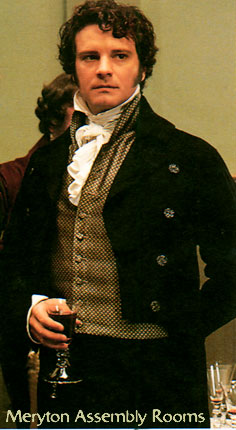
Oh well. I have to admit that the cravats and waistcoats at this site are attractive. I'll wear a tie reluctantly because of custom; maybe with money to provide for an ostentatious wardrobe I'd enjoy ties more.
More on the History of the Cravat/Necktie:
cravats
Jane Austen Centre Magazine: Neckcloths, Cravats, Stocks, Solitaires, Jabots & Macaronis
Regency Reproductions - Historical OverviewMen's Fashion of the 18th Century 1
British fashion and clothing in the 18th and 19th century, the .
19th Century Collars and Ties
History of ties, tie history, necktie history
Father's Day : History of Necktie
TIE HISTORY
Victorian cravat / necktie / neck tie, deluxe (Civil War clothing ...
Victorian Neckties and Cravats
A Colonial Gentlemen's Clothing: A Glossary of Terms
Neckties History at ABC Neckties - www.abcneckties.com/necktiehistory.html.
what the cravat replaced: bands and ruffs
Recreating 16th and 17th Century Clothing: The Renaissance Tailor
Elizabethan Ruffs
Ruffs
More How-to Guides:
Tie-a-Tie.net | Learn How to Tie a Tie
How To Tie A Tie - Presented by ScoutDB.org
HOW TO TIE A CRAVAT Neckwear Gentlemen's Wedding Neckwear
How To Tie A Cravat (Beauty & Style: Style For Men)
85 Ways to Tie a Necktie (this is the link that works: The Mathematical Theory of Tie Knots)
Necktie Aficionado - Where To Buy Men's Silk Neckties
Merchants:
Silk Ties - Silk Neckties - Silk Neck Ties - Men's Silk Neckties ...
WildTies.com
Necktie,Neckties,Luxury Cufflinks,Uniform Necktie- Silk-Necktie.com
Handmade Silk Cravats for cravat lovers - Beau Ties Ltd.
Guide for the Modern Day Gentleman Part 3 - Neckties Continued
Guide for the Modern Day Gentleman Part 2 - Neckties
His musings on what it means to be a gentleman these days: The Modern Day Gentleman – Part 1. I think he concedes too much to modernity, but then again maybe he's perfectly fine with modernity.
I remember someone claiming he didn't like them because they were "Protestant." Well, that isn't exactly true, I don't think, since the tie came from the cravat, which was adopted by the French in the 17th century. According to wiki, they had in turn borrowed it from Croatian mercenaries. (Both Catholic peoples.)Being rather pragmatic when it comes to clothing, I tend to dislike the cravat because it is a hindrance to, let's be plain about this, combat and a liability, just like long hair. While it is true that they were worn by Croatian mercenaries and soldiers since then, I nonetheless am suspicious of them. Ancient Roman and Chinese soldiers may have worn scarves and such, but that would be for warmth (or for use as a towel), not for appearance?
Perhaps I'm making excuses. But I also don't like it's socio-economic class associations. (I don't like the Regency period that much.)
Oh well. I have to admit that the cravats and waistcoats at this site are attractive. I'll wear a tie reluctantly because of custom; maybe with money to provide for an ostentatious wardrobe I'd enjoy ties more.
More on the History of the Cravat/Necktie:
cravats
Jane Austen Centre Magazine: Neckcloths, Cravats, Stocks, Solitaires, Jabots & Macaronis
Regency Reproductions - Historical OverviewMen's Fashion of the 18th Century 1
British fashion and clothing in the 18th and 19th century, the .
19th Century Collars and Ties
History of ties, tie history, necktie history
Father's Day : History of Necktie
TIE HISTORY
Victorian cravat / necktie / neck tie, deluxe (Civil War clothing ...
Victorian Neckties and Cravats
A Colonial Gentlemen's Clothing: A Glossary of Terms
Neckties History at ABC Neckties - www.abcneckties.com/necktiehistory.html.
what the cravat replaced: bands and ruffs
Recreating 16th and 17th Century Clothing: The Renaissance Tailor
Elizabethan Ruffs
Ruffs
More How-to Guides:
Tie-a-Tie.net | Learn How to Tie a Tie
How To Tie A Tie - Presented by ScoutDB.org
HOW TO TIE A CRAVAT Neckwear Gentlemen's Wedding Neckwear
How To Tie A Cravat (Beauty & Style: Style For Men)
85 Ways to Tie a Necktie (this is the link that works: The Mathematical Theory of Tie Knots)
Necktie Aficionado - Where To Buy Men's Silk Neckties
Merchants:
Silk Ties - Silk Neckties - Silk Neck Ties - Men's Silk Neckties ...
WildTies.com
Necktie,Neckties,Luxury Cufflinks,Uniform Necktie- Silk-Necktie.com
Handmade Silk Cravats for cravat lovers - Beau Ties Ltd.
Servais Pinckaers, OP: RIP

Thomistica.net: Servais Pinckaers, OP: RIP
Vox-Nova: Rumor: Servais Pinckaers, O.P. passes
Fr. Servais Pinckaers dies at the age of 82.
Fribourg: Décès du dominicain Servais Pinckaers, ancien doyen de la Faculté de théologie
Un spécialiste de théologie morale né à Liège le 30 octobre 1925
Fribourg, 7 avril 2008 (Apic) Le Père dominicain Servais-Théodore Pinckaers, professeur émérite de théologie morale à la Faculté de théologie de l'Université de Fribourg, dont il fut également doyen, est décédé le 7 avril à l'âge de 82 ans.Né le 30 octobre 1925 à Liège, en Belgique, "une ville détruite par Charles le Téméraire, en 1468, à cause de son amour de la liberté", aimait-il à dire, Servais Pinckaers est entré à l'âge de 20 ans dans l'ordre des dominicains. Un ordre auquel il allait rester fidèle toute sa vie.
Profès dans l'Ordre des frères prêcheurs en 1946, il est ordonné prêtre en 1951. En 1952-53, il passe son doctorat à Rome. Il est ensuite enseignant à La Sarte, en Belgique, de 1954 à 1966. De 1966 à 1973, le Père Pinckaers est supérieur de la maison des dominicains de Liège avant d'être appelé comme professeur de théologie morale à l'Université de Fribourg. En 1989-1990, il est doyen la Faculté de théologie, et plusieurs fois prieur du couvent de l'Albertinum, à Fribourg.
Il est nommé en juin 1989 consulteur à la Congrégation pour l'Education catholique par le pape Jean Paul II. Auteur de nombreux ouvrages théologiques, il a donné sa dernière leçon à l'Université de Fribourg en juin 1996. En l'an 2000, le professeur de théologie morale était fait docteur "honoris causa" de l'Université du Latran à Rome.
De nombreuses distinctions
La distinction de docteur en "théologie du mariage et de la famille" lui avait été remise en présence du cardinal Camillo Ruini, Grand chancelier de l'Université, et du cardinal Angelo Sodano, secrétaire d'Etat au Vatican. En 1975, 10 ans après le Concile, le Père Pinckaers participait, notamment avec le Père Raphaël Oechslin, et ses confrères Guy Bedouelle et Georges Cottier, à la fondation de "Sources", une nouvelle revue dominicaine bimestrielle éditée à Fribourg. Son objectif était de garder le "juste milieu" dans la mise en pratique des réformes issues du Concile Vatican II.
Il fut également consulteur de la Congrégation pour l'éducation catholique, organe de la Curie romaine, responsable de la formation et des séminaires, et membre de la Commission théologique internationale, un important collège du Saint-Siège qui réunit 30 membres sous la présidence du préfet de la Congrégation pour la doctrine de la foi et traite des questions centrales de la théologie.
Le Père Pinckaers est l'auteur de nombreux ouvrages théologiques qui sont devenus des références en la matière. L'Université de Fribourg l'avait honoré à l'occasion de son 65e anniversaire en 1990, notamment par la parution d'un recueil d'hommages sous le titre "Aux sources du renouveau de la morale chrétienne". La messe d'obsèques du Père Pinckaers aura lieu au couvent de Ste-Ursule à Fribourg jeudi 10 avril à 14h30. (apic/be)07.04.2008 - Jacques Berset
ND Center for Ethics and Culture profile: Servais Pinckaers, O.P.
Google Books:
The Sources of Christian Ethics - 1995 - 519 pages
Morality: The Catholic View - 2001 - 141 pages
The Pinckaers Reader: Renewing Thomistic Moral ... - 2005 - 422 pages
Fr. Servais Pinckaers, OP 16 June 1999 Fides et Ratio-13 Reflections
The Host 2?
Link for an interview with Bong Joon-Ho, director of the first, posted at Twitch. He is not directing the sequel.
Is a sequel really necessary? Will the characters from the first be brought back? If the sequel loses the element of a family I would probably skip it; horror fans may still enjoy it, but I don't think the first movie really counts as a horror movie, unless one thinks Jurassic Park is horror (or Jaws). Song Kang-ho as Chief Brody...
I had forgotten that I had posted something about the sequel last year, until I was going through the results of a Google search for more news about the sequel.
The latest rumor is that the film will be a prequel, and not a sequel. Seems like the wrong direction to take... how will they be able to fit the events of the prequel into the timeline created by the original?
More on the sequel:
The Host Getting a Sequel! « FirstShowing.net
SciFi Japan » Sequel Planned for THE HOST
Robo Japan: Korean Monster Sequels Slated For 2009
Early Details on the 'Host' Sequel (Er, prequel?) - Blogging Sundance
The Host Spawns a Sequel in the Shape of a Prequel! - Film School ...

The Host
Korean website
Is a sequel really necessary? Will the characters from the first be brought back? If the sequel loses the element of a family I would probably skip it; horror fans may still enjoy it, but I don't think the first movie really counts as a horror movie, unless one thinks Jurassic Park is horror (or Jaws). Song Kang-ho as Chief Brody...
I had forgotten that I had posted something about the sequel last year, until I was going through the results of a Google search for more news about the sequel.
The latest rumor is that the film will be a prequel, and not a sequel. Seems like the wrong direction to take... how will they be able to fit the events of the prequel into the timeline created by the original?
More on the sequel:
The Host Getting a Sequel! « FirstShowing.net
SciFi Japan » Sequel Planned for THE HOST
Robo Japan: Korean Monster Sequels Slated For 2009
Early Details on the 'Host' Sequel (Er, prequel?) - Blogging Sundance
The Host Spawns a Sequel in the Shape of a Prequel! - Film School ...
The Host
Korean website

Rod Dreher recommends Ostrov (The Island). Fr. Stephen Freeman of St. Anne Orthodox Church reviews the movie.
Ostrov (film) - Wikipedia, the free encyclopedia
Amazon.com: Ostrov (The Island), NTSC version with English ...
Sundance Review: Ostrov (Island) - Cinematical
official Russian website
trailer
Ostrov (film) - Wikipedia, the free encyclopedia
Amazon.com: Ostrov (The Island), NTSC version with English ...
Sundance Review: Ostrov (Island) - Cinematical
official Russian website
trailer
Yasujiro Ozu
Started: 09/10/06
I was going to finish this post after watching some of his movies, but I haven't had a chance to do that yet.

Links:
OzuYasujiro.com
www.yasujiroozu.com
Profile by Nick Wrigley
Midnight Eye feature
Strictly Film School
Chris Fujiwara, The composer's eye
wiki
Guardian.uk article on Tokyo Story
Easterwood.org
Ozu and Hou
Strictly Film School on Hou Hsiao-hsien
Some of his movies are available as a part of the Criterion Collection; Tokyo Story; Late Spring,
Early Summer, Good Morning, A Story of Floating Weeds


YesAsia
I was going to finish this post after watching some of his movies, but I haven't had a chance to do that yet.
Links:
OzuYasujiro.com
www.yasujiroozu.com
Profile by Nick Wrigley
Midnight Eye feature
Strictly Film School
Chris Fujiwara, The composer's eye
wiki
Guardian.uk article on Tokyo Story
Easterwood.org
Ozu and Hou
Strictly Film School on Hou Hsiao-hsien
Some of his movies are available as a part of the Criterion Collection; Tokyo Story; Late Spring,
Early Summer, Good Morning, A Story of Floating Weeds
YesAsia
I started dreaming about Magnum, P.I., which quickly turned to my version of the series finale. I haven't seen that movie finale for a long time. Hrm, I just looked at the wiki entry, and they're turning it into the movie... sounds like a bad idea. Then I woke up because I had set the alarm for 5:30. At least I'm up.
Welsh towns pushing for local currency
From Transition Culture: Towns to drive local economy with own currency
Sunday, April 06, 2008
BACDS Country Dance Week 2008
Country dance and music camp being held July 12-19, 2008--webpage. Bay Area Country Dance Society
Yeah, another thing I'd check out once I got a real job. Still, there are regular dances being held in Palo Alto, $5 for students.
Hmm... CDNY has dances until early June. I don't think I'd get out there in time to catch the last one with Pete Takeshi.
Bare Necessities: English Country Dance Collection
Zenit: Pontiff Urges Grandparents to Return to the Family
Pontiff Urges Grandparents to Return to the Family
Says Their Participation Can Help Crisis of Values
By Mirko Testa
VATICAN CITY, APRIL 6, 2008 (Zenit.org).- Benedict XVI urged grandparents to return to being an active presence in the family, adding that they are a valuable resource for facing the growing crisis of family values.
The Pope said this Saturday upon receiving participants from the April 3-5 conference held in the Vatican on the theme “Grandparents: Their Witness and Presence in the Family.” The conference, organized by the Pontifical Council of the Family, sought to highlight the role grandparents in fostering family unity, and as mediators in the relationship between the married couple and between the parents and their children.
During the study sessions the role and the positive contribution of grandparents in various cultures and societies in which families are continually threatened was brought to light.
Above all, the importance of grandparents in faith education and in the conservation and safeguarding of the culture of a country was emphasized.
Speaking on behalf of the participants in the congress, Cardinal Ricardo Vidal, archbishop of Cebu, Philippines, and member of the Pontifical Council for the Family, told Benedict XVI that during the conference “there emerged feelings of gratitude with regard to grandparents, persons rich with affection, delicacy, authority and goodness, who lovingly hand on religious and moral values.”
In speaking to the participants of the conference, the Pope began by first expressing his wishes for the speedy recovery of Cardinal Alfonso López Trujillo, president of the Vatican council, who was not able to attend the plenary meeting and papal audience for health reasons.
Treasure
The Holy Father then turned to the theme of the conference and spoke about grandparents as “a treasure that we cannot take away from new generations.” In fact, he explained, “it is not possible to plan the future without relating to a past rich with significant experiences and spiritual and moral points of reference.”
Benedict XVI followed this with a plea that grandparents “return […] to being a living presence in the family, in the Church and in society” and that they “continue to be witnesses of unity, values founded on fidelity to a single love that generates faith and joy in living.”
The emergence of “new models of the family” and “widespread relativism” which threaten the nuclear family make this call all the more urgent, he said.
“Unfortunately, the culture of death seems to be advancing,” the Pope observed, pointing out that it threatens even the older generations. “With growing insistence one arrives at proposing euthanasia as a solution for resolving certain difficult situations.”
“Today economic and social evolution has caused profound transformations in the life of families,” the Pontiff added. “The elderly, among whom there are many grandparents, find themselves in a kind of ‘parking lot’: Some feel themselves as a burden on the family and prefer to live alone or in nursing homes, with all the consequences that these choices have.”
Marginalization
Because of this, continued the Pope, “old age, with its problems that are also linked to new familial and social contexts on account of modern developments, must be evaluated with care and always in light of the truth about man, the family and the community.”
“We must join together to defeat together every marginalization," he said, "because not only are grandfathers, grandmothers, and the elderly in general overwhelmed by the individualistic mentality but everyone. If grandparents constitute a precious resource, as is often said and from many quarters, then consistent choices must be made that permit this resource to be properly valued."
“One must always respond vigorously to that which dehumanizes society," Benedict XVI said, calling on parish and diocesan communities “to meet the modern needs of the elderly.”
The Pope concluded with a thought about the 4th World Meeting of Families that will be celebrated Jan. 13-18, 2009, in Mexico City. “All the Christian families of the world look to this nation ‘always faithful’ to the Church, which will open the doors to all the families of the world.”
The American bishops need to address geographical mobility, and its impact on family life.
Zenit: B16--Setting Out for Emmaus
Setting Out for Emmaus
"The Road That Leads There Is the Journey of Every Christian"
VATICAN CITY, APRIL 6, 2008 (Zenit.org).- Here is a translation of the greeting Benedict XVI gave today before praying the Regina Caeli with several thousand people gathered in St. Peter's Square.
* * *
Dear Brothers and Sisters,
This Gospel for this Sunday -- the 3rd Sunday of Easter -- is the celebrated account of the disciples of Emmaus (cf. Luke 24:13-35). The story is told of two disciples of Christ who, on the day after the Sabbath, that is, the third day after Jesus’ death, sad and dejected, leave Jerusalem and set out for nearby village called, precisely, Emmaus.
Along the road, the risen Jesus comes and walks beside them but they do not recognize him. Seeing that they were disheartened, he explained, on the basis of the Scriptures, that the Messiah had to suffer and die to enter into his glory. Having entered into the house with them, he sat down at table with them, blessed the bread and broke it, and at that point they recognized him, but he disappeared from their sight, leaving them full of wonder before the broken bread, new sign of his presence. And immediately the two returned to Jerusalem and told the other disciples what happened.
The location of Emmaus has not been identified with any certainty. There are different hypotheses, and this fact is not without its significance because it leaves us to think that in reality Emmaus represents every place: The road that leads there is the journey of every Christian, indeed, of every man. Along our roads the risen Jesus is our companion on the journey, to reignite in our hearts the warmth of faith and hope and the breaking of the bread of eternal life.
In the disciples' conversation with the unknown traveler the expression that the evangelist Luke puts in one of their mouths is striking: “We were hoping…” (24:21). This past tense verb says everything: We believed, we followed, we hoped …, but now it is all over. Even Jesus of Nazareth, who had shown himself to be a powerful prophet in deeds and words, failed, and we are disappointed.
This drama of the disciples of Emmaus is as a mirror of the situation of many Christians of our time. It seems that the hope of faith has failed. Faith itself enters into crisis because of negative experiences that make us feel like we are abandoned by the Lord. But this road to Emmaus on which we travel can become a way of purification and maturation of our believing in God.
Even today we can enter into conversation with Jesus listening to his word. Even today he breaks the bread for us and gives himself as our bread. And in this way the encounter with the risen Christ, which is possible even today, gives us a deeper and more authentic faith, tempered, so to speak, by the fire of the Easter event; a robust faith because it is nourished not by human ideas, but by the word of God and by his presence in the Eucharist.
This stupendous Gospel text already contains the structure of the Mass: in the first part the hearing of the word through the sacred Scriptures; in the second the Eucharistic liturgy and communion with Christ present in the sacrament of his Body and his Blood.
Nourished at this twofold table, the Church is unceasingly built up and renews itself day by day in faith, in hope and in charity. Through the intercession of Mary Most Holy, let us pray that every Christian and every community, reliving the experience of the disciples of Emmaus, rediscover the grace of the transforming encounter with the risen Lord.
[After the Regina Caeli the Pope said the following in Italian:]
The first International Congress on Divine Mercy concluded today with the Eucharistic celebration in St. Peter’s Basilica. I thank the organizers, especially the vicariate of Rome, and to all the participants I extend my cordial greeting, which now becomes an exhortation: Go and be witnesses of God’s mercy, source of hope for every man and for the whole world. May the risen Lord be with you always!
I greet the numerous members of the Focolare movement, working as catechists in parishes, who have come here from many countries throughout the world, and I wish you well in the service that you render to spreading and welcoming the word of God.
[Translation by Joseph G. Trabbic]
[After the Regina Caeli the Holy Father greeted the pilgrims in several languages. In English, he said:]
I am happy to greet all the English-speaking visitors present at today’s Regina Caeli prayer. On this Third Sunday of Easter, Saint Luke relates how the Risen Christ walks with his disciples, makes their hearts burn within them by his words, and reveals himself in the breaking of the bread. Let us pray that our Easter journey will teach us to open our hearts with joy to the living Christ present in his Church. Upon all of you I invoke God’s abundant blessings!
Rod Dreher on the new survivalism
The New Survivalism
The book that sparked the NY Times article and the Crunchy Con's post: Wealth, War and Wisdom.
Chapter 1
Wiley-VCH - Biggs, Barton - Wealth, War and Wisdom
Wealth, War and Wisdom by Barton Biggs, author of Hedgehogging
The book that sparked the NY Times article and the Crunchy Con's post: Wealth, War and Wisdom.
Chapter 1
Wiley-VCH - Biggs, Barton - Wealth, War and Wisdom
Wealth, War and Wisdom by Barton Biggs, author of Hedgehogging
Neo-Keynesian, Monetarist and Austrian School economics
From the comments section for the Crunchy Con's "Economics 101", Vox Day writes:
The interview with Dr. Frank Shostak, the chief economist for MF Global, focuses on the difference between Neo-Keynesian, Monetarist and Austrian School economics and how those differences are important in understanding what is taking place in the current situation.
Audio file of the interview at Vox Day
An Introduction to Austrian Economics
Thomas C. Taylor
C&T has a new home
@ Wordpress
This post by Mr. Nichols is one that should be read by those voting in the elections this year:
A Formidable Circle
This post by Mr. Nichols is one that should be read by those voting in the elections this year:
A Formidable Circle
East Asians and catechesis
Is it more likely to find supporters of the natural family manifesto among American Catholics and European Catholics (or Westerners in general) than with Asian Catholics living in industrialized countries? How many of those Asians would hold the restoration of the home economy to be the ideal, supporting distributism, agrarianism or the protection of family businesses?
How many Asian Catholics are open to having large families? I remember the Western Confucian posting a photo of a South Korean (Protestant) family that was held to be atypical and newsworthy, in so far as it had the largest number of children (was it 8 or 9?). In Hong Kong and other East Asian countries (Korea, Japan, China, Taiwan, and by extension Singapore) there may be population concerns as well as worries about earning enough money to support a large family, but what of the children of those who come to the United States?
I've never seen East Asian Catholics here in the U.S. having large families, which are common among traditionalists and 'conservative' Novus Ordo Catholics. (There have to be a better names for the two groups...) They tend to be more East Asian than Catholic in their mentality, seeking a high-paying job, middle-class comforts, and a small family. It's not clear to me what sort of means they employ in limiting the size of their families, but 2 children per family seems to be the norm, 3 at the most. I suspect that many are ok with artificial contraception--my guess being that it is not something discussed either in East Asia or in the ethnic parishes here, and that it is a practice that is accepted, if not condoned.
How many East Asian Catholic women have the goal of being a stay-at-home mother? This may be the cultural norm in Japan still, among women who actually end up being married. Is it the case for Korean women as well? It is rarely the ideal for those who immigrate to the United States or the Children nowadays.
Perhaps East Asian Catholics are no different from their non-Catholic peers either in Asia or in the United States, when it comes to expectations about family, career, and so on. Is it any surprise then that so few of their children really embrace the Christian vocation and live in accordance with it? Asian wordliness does seem to be contrary to the Gospel.
Edit: East Asian Catholics do not appear to be much different from their Western counterparts when it comes to family "planning" and job/financial "concerns." Many have remarked on the correlation between industrialization and the shrinking of family size, though I'd like to see the statistics on American and English family size and cultural practices before the Lambeth Conference, and similarly an explanation of how the reduction in family size was achieved in Europe and where and among whom it originated. Did rural European families continue to have large families before the First World War?
Why do (conservative and traditionalist) Catholics who emphasize openness to life and the priority of the family in the married vocation, despite being a minority in number, nonetheless have a presence in America and Europe and yet not in other industrialize parts of the world? (Ignoring for the moment China and its one-child policy.) This is both with respect to an actual physical presence, and the virtual presence in the Catholic media. Yes, much of the Catholic media in the United States is lay-run or involves lay people. Is it merely a lack of education and leadership by bishops elsewhere? A failure of catechesis? A lack of full orthodoxy among foreign missionaries, who have a presence both in missions, parishes, and educational institutions?
A few in the United States and Europe are aware of the problems of industrialization and peak oil. Besides those who support farmers' rights, how many in East Asia are trying to get the word out about the problems of industrialization (and its unsustainability)?
Perhaps the Holy Father could devote some space to these questions in his next encyclical.
At the bottom of all of these questions is the fact that there do not appear to be many East Asian Catholics here in the United States who share the same views and goals as I do. I am fortunate to have become acquainted with both "traditionalist" and "conservative" Catholics who are counter-cultural, tried to restore some sanity into their networks. What is probably needed at ethnic parishes is a renewed focus on evangelizing of their members and more direction from (and self-examination by) the clergy. But I am not optimistic that this will happen in time to prevent the next generation from being lost to the worldliness that surrounds them.
Subscribe to:
Posts (Atom)