I thought the other one was the official WYD icon...
Tuesday, July 29, 2008
Macross Frontier, ep 16
Macross Frontier - 16 | Random Curiosity

The opening with Mr. Birla (a Zentran) and the trains reminded me of Galaxy Express 999.

Antares squadron.

Brera defending the VB-6 Konig Monster and Ranka.

At the beginning of the series, Sheryl was very confident (too much self-esteem?) but she seems to be losing some of this as Ranka's career progresses and she remains sick and unable to really do much. Is there more to Sheryl than being an idol singer? She is stubborn and tenacious, and apparently wants to hold on to Alto. But what else does she have going for her, character-wise? Curious, strong-willed, proud, and seemingly intelligent... but is she too self-absorbed? (Like Minmei before she grew up a little?)
Star Crossed Anime Blog :: Macross Frontier - 16 :: July :: 2008
Macross Frontier 16 | Sea Slugs! Anime Blog
Yukan Blog! » Blog Archive » Macross Frontier - 16: Sheryl’s Lost ...
THAT Animeblog - Macross Frontier 16:
Monday, July 28, 2008
It's funny, I'm getting more updates about Korean dramas and movies these days from Twitch than from Soompi or KFCCinema. I just don't have the time to negotiate the threads at the two forums.
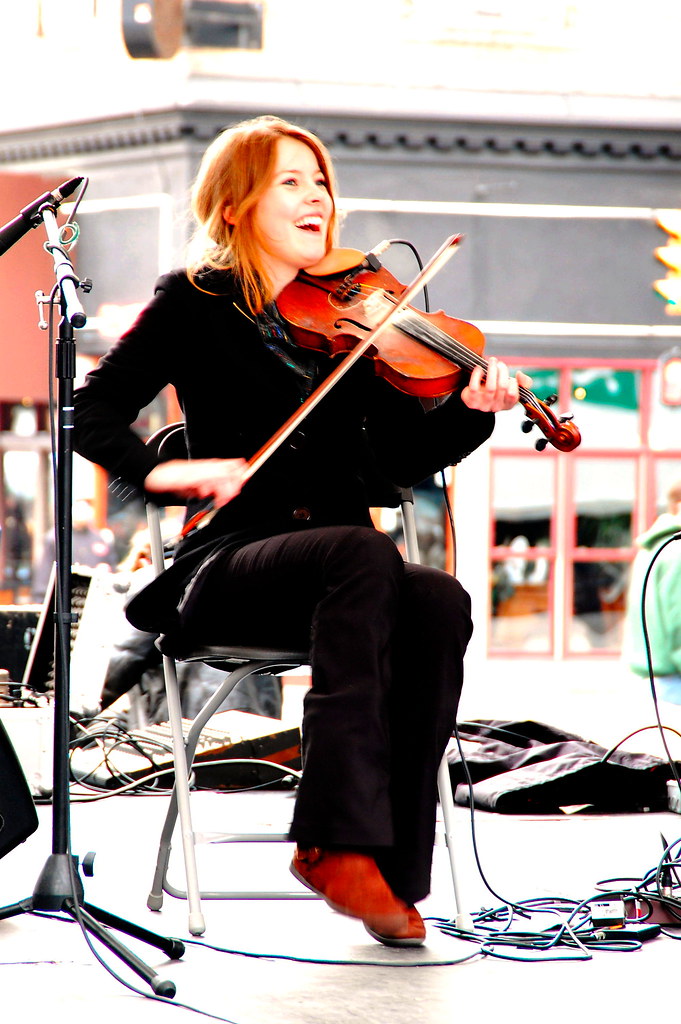
Chrissy Crowley vids
Rambles: Chrissy Crowley, self-titled
source of the following:


CHRISSY CROWLEY APPEARING AT A ROLLO BAY CEILIDH
Chrissy Crowley at a Rollo Bay Ceilidh
How does one resolve the tensions that arise between daily contact between the wife and the in-laws? In traditional Chinese culture it was understood that when a woman was married, she became a part of the husband's family, and her ties with her own family had been severed. So there would be no problems of showing 'favoritism' to her own family, or her parents competing with his parents for time with them (and the children) and so on. And, her parents would no longer have any sort of authority over her, nor would she consult them for advice (probably), since she would be under the authority not only of the husband, but of his elders as well.
In another post (not yet published) I remark that Dr. Laura usually counsels couples to maintain some sort of distance between themselves and their parents, especially if they are newlyweds. iirc, she has advocated that since the integrity and health of the family comes first, if in-laws who move in become difficult, they should seek alternate accomodations (or be put in nursing care if they have poor health). This sort of advice would be shocking to traditional East Asians, I think, though the younger generation seems to not place much weight on the manifestation of filial piety mentioned in the article.
Part of the problem in Chinese culture is with parents who are used to having authority and do not relinquish it, even when their children come of age. As a result, their children have difficulty making decisions on their own. (Until it comes time for them to rebel, for the sake of their psychological health. This seems to happen often when they settle in the United States.) Some measure of independence is necessary, if by independence we understand it as having the ultimate authority in deciding what should be done for the good of one's family, instead of obeying the dictates of one's parents. We get the problem at the opposite extreme in many parts of American society--people expect social security, their pension, and so on to take care of them (and to enable some measure of an 'independent' existence, free from the help of others), rather than relying upon their children for such support. Indeed, some (surprisingly enough like my mother) even say that they would not would not pass that norm onto them, or expect their children to perceive such an obligation.
Chinese parents do need to learn the difference between giving advice and commanding (whether it be explicitly or implicitly through 'guilt trips' and emotional manipulation). And if they are staying at the home of their children, they need to realize that they do not have control of the environment and the way things are run. (Though the adult children should take their needs into consideration, and their preferences to some degree.) Adult children need to learn to see their parents as a resource to which they can still turn for advice.
I do not think it would be inaccurate to say that in the past American (and English) families were patriarchal--but one finds an increasing expectation among Americans that the families of both spouses should receive equal attention. But surely it can be admitted that if the expectation that the care of the parents should fall primarily on the [first] son, it is easier to figure out the necessary social arrangements to make this happen, and to take care of any exceptions to this? This would seem to be a more pressing need in certain kinds of communities, either those that are too diffuse, or too big. In smaller communities, where everyone lives in close proximity it would be easier for the spouses to take care of both sets of parents, if this should be necessary.


I still don't care for the movie. The movie deals with relationships between Chinese mothers and American-born daughters, and the culture clash between them. I can't think of a movie that deals with the tension between a wife and her in-laws, except perhaps Pushing Hands.
Engaging the Culture?
"Engaging the culture" sounds so amorphous and runs the risk of committing an error of 'reifying' something that has no substantial reality in itself--Christians are called to love their neighbor, and we do so in accordance with the specific vocation God has given to us, so if anything lay people are called to engage their neighbors. (One of the difficulties in answering the question is because of the use of the word 'culture,' which is used analogically to reform not only to the norms and traditions of a community, but to the artifacts by which such norms and traditions are transmitted, as well as the actions and practices which embody those norms and traditions.)
As for mass culture/entertainment, I do think that any right-thinking person would seek to eschew that as much as possible, even though one should appreciate what is true, good, and beautiful as a foundation for dialogue. But all would be better off learning how to entertain themselves through music and so on, and thus avoid what is produced in Hollywood or elsewhere. It's just a better way to promote communal life.
Culture is a means whereby we engage our neighbor, and can also be its fruit. Those who are called to be full-time artists will have to discern how to use their abilities and under what conditions, but the rest of us who are normally just 'consumers' of mass culture may have some talents that we should cultivate in service of the local community. And if not, we can at least try to host or help with wholesome festivities and gatherings.
I admit that I am one of the biggest consumers of mass culture, though I try to be discerning. Discussing the true, good, and beautiful through the products of mass culture is sadly one of the few ways one can have a conversation of substance as well as start a dialogue. The culture wars continues, but many people have become resigned to their differences and do not refuse to discuss 'politics' or 'political issues' because of the acrimony that it can cause. (Which makes one wonder what sort of foundation there is for communal life, other than having a common bourgeois existence with all of its accompanying values? That's simply not enough to sustain a true friendship.) Culture is ordered to friendship; it is also true that it is difficult to have an impact on the culture of a community without friends. And so lay Catholics need to appreciate the necessity of developing friendships with other Catholics for living out their vocation.
The vocation of a Christian artist is perhaps very difficult these days, given the lack of funding from traditional sources and opportunities. How few of our artists are skilled in traditional ecclesiastical arts, and those that are cannot find enough employment because of the disdain for the Catholic artistic heritage by the powers that be in parishes and chanceries. If they are to make a living, they must avail themselves of what other opportunities there are in this society.
Those who seek to reform the culture must do so locally (and this is relevant not only to the Catholics laity and Christians, but to traditional conservatives in general), through their immediate networks, instead of putting their hope in some sort of nation-wide change, mediated by the entertainment industry. Which is why I think the decline in the use of the parish setting, as it had traditionally been in the United States, for gatherings and festivities is another casualty of the spiritual warfare in which we are all engaged. There are very few loci in which a true community can come together, at least in suburbia. We can engage the culture by promoting music, dance, cooking(!), and other arts at our celebrations. Even short plays and performances could be welcome at such occasions.
Now what can a single person do, apart from aiding the efforts of his family? If I get married, I hope my wife will be as eager to entertain others as my seniors have been.
Josef Pieper, In Tune with the World: A Theory of Festivity
Reuters: Wendell Berry and Wes Jackson at Hudson Institute on June 30
Hudson Institute > Hudson Upcoming Events Detail
People, Patterns, and Philanthropy in Rural America: webcast, transcript
Panel discussion with Wendell Berry, Herman Daly, Dee Davis, Alex Echols, Wes Jackson, Linda Reed, and Karl Stauber. Moderated by Krista Shaffer.
He asks at the end: Senator Obama I ask you, "What's it gonna be?" If he is elected, I would guess, "More of the same."
Quick review of The Tudors, season 2
Based on my first impressions of the first season and the second, the producers do not depict the strong friendship between St. Thomas and Henry VIII or the king's love for his friend well--it is more assertion than anything else. This is how it really seemed in episode 5, which depicts St. Thomas' trial and execution--Henry VIII is shown raging at God and proclaiming his love for St. Thomas, but it struck me as being melodramatic. Perhaps the problem is that not enough of the personal history of the two men was shown. (Then again, the scriptwriting for what has been shown has been weak--in one scene Henry is shown holding his daughter and he makes the comment that perhaps some day she will be the one ruling an empire -- out of character and just an attempt by the writers to be clever.)
The historical inaccuracies have been noted elsewhere, and as someone who prefers the accent on historical rather than on drama or fiction, they have a negative impact on the entertainment value of the series for me. And there is the amount of skin and coupling shown on the show--I don't think I can think of a movie where this sort of 'realism' has been necessary. On a whole, I can't recommend the show. One is better off reading a well-written history of the period. (Especially if it has pictures. heh.)
I do like looking at the costumes, but I will leave it up to the experts to debate whether the production has been historically accurate or not.
If there is anything positive, St. Thomas More is depicted as being devout and a strong adherent to the Faith, as I noted earlier. He is also a good father. Alas, not much of his famous wit and mirth is shown (though given the quality of the writing, we should not be surprised if those responsible have little familiarity with what is required for wit). Nothing really of his Christian humanism. Some may quibble about how much conscience is emphasized, and his actions in response to the king may be misperceived as 'political machinations.' And those who are already predisposed to be anti-Catholic will see his opposition to heresy as intolerance. (I note that Catholic historian Eamon Duffy opposed making St. Thomas More patron of statesmen precisely because of how he handled heretics.) I thought it was nice that he is also shown praying in Latin--it does lend an air of erudition--but how one ultimately evalutes this depends on one's religious convictions, Catholic [traditional or 'modern'], Protestant, or other. Does the show capture his sanctity? Can any AV media really do that? I enjoyed Jeremy Northam's performance nonetheless--I can't say the same about some of the other actors.
I think the show has tried to remain neutral towards the whole dispute between the Catholics and the Protestants--Catholics recognize the problems with the Church at the time. St. John Fisher is shown as being committed and free from corruption, if not holy. But there may be a subtle anti-Catholic bias in how the clerics associated with the Roman Curia and Paul III (played by Peter O'Toole) are portrayed.
There will be a third season. When they run out of wives for Henry VIII, will they continue the story into the reigns of Queens Mary and Elizabeth?
(Some more photos here.)

Some photos @ TVGuide.com, yahoo! TV, The Tudors wiki
SAINT THOMAS MORE MARTYR, CHANCELLOR OF ENGLAND—1535
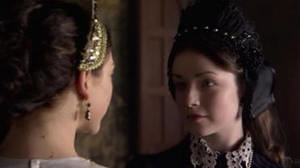
Sarah Bolger (wiki) as Mary Tudor
Sarah Bolger dishes more about her role on The Tudors, Season 2
Mary Tudor by wonderful and pretty Sarah Bolger on Flickr:


Sarah Bolger interview The Spiderwick Chronicles with Emma
Sarah Bolger - "Spiderwick Chronicles"
The books: The Spiderwick Chronicles; the movie
Google Books: The Six Wives of Henry VIII by Alison Weir (Grove Press)
The Six Wives of Henry VIII | PBS
TudorHistory.org: The Six Wives of Henry VIII
Masterpiece Theatre | Henry VIII
Good news for Pete Takeshi
Twitch: EVIL DEAD 4. It’s Coming.
Will Bruce Campbell be back? Bubba Ho-Tep. He is also in USA Network's Burn Notice, which Pete Takeshi might want to check out eventually.
Hmmm... Luc Besson and Korea Team Up for “Da Vinci-esque” Qin Shi Huang?
Double hm. [K-FILM CAPSULE REVIEWS] 내 사랑 유리에 (My Love, Yurie)
So would Myers' defenders defend this as well? They would probably say 'respect of national symbols' is 'rational' because patriotism is 'rational' while [mono]theism is not.
(1) However atheism is a belief; it cannot be proven that there is no God, because God and existence cannot be shown to be contradictory.
(2) Talk about the probability of there being no God probably rests on some version of naturalism or the problem of evil or the lack of intelligibility, all of which can be dealt with.
(3) And why should rationality come into play at all, if we are dealing with beliefs, and what matters is 'freedom of expression' more than anything else?
Sharon Astyk, Everything you needed to know
(original)
Lucas willing to do another Indy movie
The time to do a 4th and a 5th movie was about 10 years ago, so that they could end the series on a high note. Isn't that what they were trying to do with Kingdom of the Crystal Skull, while paving the way with a possible spin-off? Harrison Ford may be in good shape for his age, but his on-screen credibility as an action hero is fading. There's been a dearth of well-written dramas for a while--I'd rather see Mr. Ford acting in one than in an action movie. Or maybe a 'post-Civil War' drama/Western?
Jeremy Northam videos
Emma & Knightley
Possession 2002 - Ash & Christabel (Josh Groban)
tudors bloopers - part one
St. Francis de Sales on contempt
One of the most evil dispositions possible is that which satirises and turns everything to ridicule. God abhors this vice, and has sometimes punished it in a marked manner. Nothing is so opposed to charity, much more to a devout spirit, as contempt and depreciation of one’s neighbour, and where satire and ridicule exist contempt must be. Therefore contempt is a grievous sin, and our spiritual doctors have well said that ridicule is the greatest sin we can commit in word against our neighbour, inasmuch as when we offend him in any other way, there may still be some respect for him in our heart, but we are sure to despise those whom we ridicule.
Sunday, July 27, 2008
Not as interested in Mr. Dreher's application of James Davison Hunter's lecture to this controversy as the lecture itself.
The thesis of the lecture was that the cultural conditions that brought about the founding of the American Republic no longer exist. Hunter explained that even though American at the founding contained people who believed religious faith was the source of ultimate authority for the government, and those who believed pure reason was, the American settlement was sufficiently opaque to accomodate both sides. The reason? A shared commitment to a broad understanding of what constituted the common good. Whether you believed an understanding of the Good derived primarily from religious dictates, or natural reason shorn of the distorting lens of religion, there was broad agreement on where society ought to be headed.Hunter-CultureWars-TheStruggletoDefineAmerica (Google Books)That's over, Hunter says. The Enlightenment dream that Reason alone can disclose authoritative truths to live by has been shown to have been empty. All Reason alone gives us is radical subjectivity. It has shown us how and why to doubt everything, but does not show us why we should believe in anything (other, I suppose, than the truths disclosed by science -- which aren't moral truths at all). Hunter says the students he teaches at UVA have never read the postmodernist philosophers, but they, by virtue of living in contemporary America, are as postmodern as any Derrida.
What does this mean for the future of democracy? Hunter says that we're at a pretty risky time right now. We've lost a shared understanding of the Common Good; and moreover, we're getting to the place where we don't have the civic conviction that life in a pluralistic democracy demands a certain degree of mutual respect, and respect of the forms we've developed for working out our differences in public.
He told a story at the beginning of the lecture that illustrated the crisis, as he sees it:
Back in the 1990s, during the Congressional fights over arts funding, Hunter says he was invited to a top-secret meeting in NYC, in which the heads of various arts groups and foundations, as well as an ACLU lawyer, gathered to strategize. They invited Hunter to speak to explain the conflict from a sociologist's point of view. Hunter said he began by saying that in a pluralist liberal democracy like ours, how you say and do things is as important as what you say and do. His point was that given human nature and human passions, we have to be very careful to watch how we say and do things, because it's very easy to spark unnecessary conflict. Preserving the political order that guarantees us individual freedom, including freedom of speech, requires a certain standard of behavior, especially when you share the public square with people who believe things radically different from what you believe.
Hunter said after he spoke, Sidney Blumenthal, then in the Clinton White House as an adviser, came to the podium to give his advice to the group. Hunter quotes him as saying, "You know how to deal with this? Seize power!"
Mars Hill Audio, vol. 1; vol. 8; vol. 44
Discussion of the P. Z. Myers incident has been the ugliest (and most fruitless and hence pointless) I've seen on the internet, with Christians and non-Christians failing to reach an agreement as to how it should be judged and what consequences there should be, if any. Secession for those areas that want to remain committed to Christianity sounds better with each passing day, though even those areas will need to renew themselves by better conforming to Divine Commandments.
Those who are militantly opposed to religion because it is not 'rational' often fail to recognize how many of their certitudes are actually beliefs they have accepted on the basis of the authority of others. Once again, our 'institutions of learning' have failed to teach the citizenry basic logic so they can recognize the difference between knowledge and opinion.
Before the Shooting Begins, by James Davison Hunter
CJR - Before the Shooting Begins, by James Davison Hunter
James Davison Hunter on The Paula Gordon Show
The Death of Character (Google Books)
The education of character is dependent upon a well-functioning community--this is something to consider when one is entering the debate on sex education. Telling teens that they need to use protection, without giving them norms to which they can strive to follow, is a disaster. But who is willing to defend marriage and its purposes, and the 'traditional' family? Not public schools here in California--though it may be different in other regions. Moral education, education in virtue, requires accountability, both on the part of those being educated and on the part of those who are supposed to be educating.
Related Links:
Cornerstone Values Website
Elisabeth Lasch-Quinn History Dept-Maxwell School
Boundless items
Cool But Meaningless Friendships: Episode #27 by Motte Brown
Moving from entertainment-based friendships to ones that are marked by mutual support.
Prep for the Wedding Night
How can an engaged couple prepare for their wedding night in a God-honoring way?
The Seduction of Pornography
by Dr. Albert Mohler
When it comes to porn, every man must decide who he will be, whom he will serve and how he will love.
by Anne Morse
So you’ve saved yourself for marriage, only to find your fiancee isn’t a virgin. Is her “experience” an asset or asking for trouble?
by Heather Koerner
If it's a Christian man's responsibility to protect ... what's mine?
Lovell Sisters vids
Lovell Sisters at Merlefest 2008
Choctaw Hayride
The Lovell Sisters - I Wanna Live Like That
The Lovell Sisters - Spanish Point
The Lovell Sisters - Angeline
Lovell Sisters feature by TBS Storyline
Blood Is Thicker - Lovell Sisters
Merlefest 2008 Next Generation Super Jam Darlin Corrie
Molly and Tenbrooks - Merlefest 2008
Misc:
Titanic Deviation Trio - Bluegrass Breakdown
In The Pines
Flint Hill Special & Earl's Breakdown
Worried Man Blues
Medley