Wednesday, November 22, 2006

Saint Cecilia, November 22

Virgin and martyr, patron of music.

CE
Excerpt from Lives of Saints
Magnificat
EWTN

The Crypt of Saint Cecilia

"Saint Cecilia," by Domenichinoo


'Saint Cecilia', 1895-6
John Melhuish Strudwick (1849-1937)
Oil on panel, 531 x 481 x 60mm Accession Number WAG306


From Women for Faith and Family:


Saint Cecilia and Saint Agnes Ambered in Eucharist

Basilica di Saint Cecilia in Trastevere:
roma.katolsk.no
romecity.it
wiki
stuardtclarkesrome
collezione-online

Patron of the Nashville Dominicans
Saint Cecilia Cathedral (Archdiocese of Omaha)
Saint Cecilia Church (SF)
Saint Cecilia Schola Cantorum
articles

Tuesday, November 21, 2006

Excerpts from the Meditations

Source

Gems from Book II

All that is from the gods is full of Providence. That which is from fortune is not separated from nature or without an interweaving and involution with the things which are ordered by Providence. From thence all things flow; and there is besides necessity, and that which is for the advantage of the whole universe, of which thou art a part. But that is good for every part of nature which the nature of the whole brings, and what serves to maintain this nature. Now the universe is preserved, as by the changes of the elements so by the changes of things compounded of the elements. Let these principles be enough for thee, let them always be fixed opinions. But cast away the thirst after books, that thou mayest not die murmuring, but cheerfully, truly, and from thy heart thankful to the gods.


Through not observing what is in the mind of another a man has seldom been seen to be unhappy; but those who do not observe the movements of their own minds must of necessity be unhappy.

Since it is possible that thou mayest depart from life this very moment, regulate every act and thought accordingly. But to go away from among men, if there are gods, is not a thing to be afraid of, for the gods will not involve thee in evil; but if indeed they do not exist, or if they have no concern about human affairs, what is it to me to live in a universe devoid of gods or devoid of Providence? But in truth they do exist, and they do care for human things, and they have put all the means in man's power to enable him not to fall into real evils. And as to the rest, if there was anything evil, they would have provided for this also, that it should be altogether in a man's power not to fall into it. Now that which does not make a man worse, how can it make a man's life worse? But neither through ignorance, nor having the knowledge, but not the power to guard against or correct these things, is it possible that the nature of the universe has overlooked them; nor is it possible that it has made so great a mistake, either through want of power or want of skill, that good and evil should happen indiscriminately to the good and the bad. But death certainly, and life, honour and dishonour, pain and pleasure, all these things equally happen to good men and bad, being things which make us neither better nor worse. Therefore they are neither good nor evil.

The soul of man does violence to itself, first of all, when it becomes an abscess and, as it were, a tumour on the universe, so far as it can. For to be vexed at anything which happens is a separation of ourselves from nature, in some part of which the natures of all other things are contained. In the next place, the soul does violence to itself when it turns away from any man, or even moves towards him with the intention of injuring, such as are the souls of those who are angry. In the third place, the soul does violence to itself when it is overpowered by pleasure or by pain. Fourthly, when it plays a part, and does or says anything insincerely and untruly. Fifthly, when it allows any act of its own and any movement to be without an aim, and does anything thoughtlessly and without considering what it is, it being right that even the smallest things be done with reference to an end; and the end of rational animals is to follow the reason and the law of the most ancient city and polity.

Robert Spencer on O'Reilly Factor

here

with guest host Laura Ingraham
(her fanclub)
From Jihad Watch.

Peter Jackson no longer attached to The Hobbit

Legal dispute prompts flimmaker's departure.


Curse of the Golden Flower trailer (at Movies.IGN)

Davy Jones’s Locker

Davy Jones’s Locker

By William S. Lind

That is the real lesson of the Chinese sub incident: The U.S. Navy, like the U.S. Air Force, without a torpedo fired or a single dogfight, is on its way to Davy Jones’s Locker through sheer intellectual inanition. Preparing endlessly for another carrier war in the Pacific against the Imperial Japanese Navy, it has become a historical artifact.

In the late 19th century, the Chinese people, outraged by repeated foreign humiliations of China, took up a sizeable collection of money to build China a modern navy. The Dowager Empress used the funds to build a marble pleasure boat for herself in the lake near her summer palace. The U.S. Navy’s carrier battle groups are the marble pleasure boats of the House and Senate Armed Services Committees of the U.S. Congress.

Peak Oil and U.S. cities

Full article

Included among "Cities that have passed peak oil resolutions":

SAN FRANCISCO OIL AWARENESS
Four members of the grassroots organization, San Francisco Oil Awareness (David Fridley, Jennifer Bresee, Allyse Heartwell, and Dennis Brumm), approached their city government in January, 2006, and after meeting individually with most of the city’s Board of Supervisors (and/or aides), the Board passed a resolution acknowledging Peak Oil by a unanimous 10-0 vote on April 11. This resolution was co-sponsored by four of the city’s eleven supervisors, and one of these, local Green Party Board member, Ross Mirkarimi, funneled the ensuing work on Peak Oil through the Local Agency Formation Commission (LAFCo), which he chairs.

LAFCo has sponsored two hearings since the passage of the resolution. The first, in July, 2006, featured presentations by Richard Heinberg and others, and dealt with a basic outline of oil depletion and its ramifications. This acted as an educational forum for both the government and citizens of the city. The second hearing, November 17, featuring Larry Robinson, former mayor of Sebastopol, California, was focused upon what other municipalities are doing or have done to address the topic of Peak Oil.

Legislation enabling a Peak Oil task force will soon be introduced to the full Board by Supervisor Mirkarimi, and the task force will be charged with making recommendations on how the city might work to mitigate the potential devastating effects that could result from Peak Oil. Presently, an assessment study for the city seems a likely possibility, and a third hearing on Peak Oil may also be scheduled in the next several months.
And among "cities working on peak oil resolutions":
OAKLAND, CALIFORNIA
Oakland passed an “Oil Independence Resolution” in October of this year, and according to the notices surrounding the resolution, it charged the City Council to set up a task force to give recommendations to them on the rather daunting task of defining how the city could free itself from the use of oil by 2020. Another ad hoc group of concerned East Bay citizens are presently considering taking a peak oil resolution to the City Council in addition to this previous resolution, or in seeing how that might play out within the context of the present oil-free resolution.

SANTA CLARA VALLEY POST CARBON/SAN JOSE, CALIFORNIA
Santa Clara Valley Post Carbon is working on a Peak Oil resolution to present to the San Jose City Council. Saba Malik and Linda Perrine are the two primary forces behind the thrust in South Bay. They have written the document and are meeting with David Cortese of their City Council on November 30. One of its important premises is to secure the remaining farmland in Santa Clara County as a beginning hedge for future food security.

SANTA CRUZ POST CARBON
Santa Cruz has for the moment put their Peak Oil resolution on hold. A councilman on the Santa Cruz city council, Ed Porter, came to a showing of The End of Suburbia last week and announced that there was a new Action Plan that the City Council was considering on sustainability and energy issues; it aims to decrease carbon emissions and apparently will generally be following ICLEI reduction guidelines for that. The City Council is looking for community input, and as of right now Santa Cruz Post Carbon is working around this framework in their efforts to make Santa Cruz government aware of Peak Oil.

All of this is good in so far as it is a recognition that there is a problem. But is it enough for a solution? And will people realize that this is a moral problem as well as being an economic problem? I don't see how cities can be freed from oil if goods and food are still being trucked in--that sort of naivete needs to be corrected, or misleading statements need to be changed.

Eliminating the Human Factor in Matchmaking

Eliminating the Human Factor in Matchmaking

Kim (not his real name) types his “qualifications” on a laptop: Graduated from a college in Seoul, earns W30 million (US$1=W937) a year, works for an ordinary company, and is 30 years old this year. All in all he answers some 160 questions from his height and weight to his religion, his parents' job and academic background and even their assets. Within just a few seconds, the laptop produces an “objective spouse index” that shows how competitive Kim is in the marriage market. He rates 71.7. Next appear the names of 38 women who are available to people like Kim, complete with their picture. Her resume pops up with a click on the mouth. The most suitable “candidate” is a 29-year old woman who graduated from a two-year college and earns W18 million as a public servant.


Click here for more. What a world.

Anti-Syrian front leader Pierre Gemayel killed in Lebanon

21 November, 2006
LEBANON
Anti-Syrian front leader Pierre Gemayel killed in Lebanon
Assassin shoots at point blank range. Hariri accuses Syria.

Beirut (AsiaNews) – Pierre Gemayel, a leader in the Maronite-dominated Phalangist party, was assassinated today.

Gemayel, 34, son of former Lebanese President Amin Gemayel and currently Industry minister and a leading politician in the governing anti-Syrian coalition, was shot, execution style, to the head with a silencer in Jdeide, East Beirut.

Gemayel’s assassination comes at a time of high political tensions. Hezbollah’s and its allies, who have quit PM Siniora’s government accusing the latter of being pro-Western, have been planning huge streets protests for this Thursday.

Saad Hariri, leader of the anti-Syrian coalition that holds sway in Lebanon’s parliament and son of murdered former Prime Minister Rafik Hariri, has already accused Syria of involvement in the assassination, saying on CNN that “the hand of Syria” was all over the murder.

Mr Hariri was informed of the assassination as he was holding a press conference in which he accused Syria of trying to undermine the international tribunal that should judge the various political assassinations it carried out in Lebanon through its Lebanese allies since 2004.

In announcing Gemayel’s death he implicitly accused Damascus, saying that there was nothing between “us and that regime” and that the international tribunal now separated them.

Catholics not to visit Yasukuni, Catholics bishops say

21 November, 2006
JAPAN
Catholics not to visit Yasukuni, Catholics bishops say
In a booklet signed by the archbishop of Tokyo, the Church urges the faithful to love one’s country but also one’s neighbours who suffered from Japanese imperialism. Visiting the shrine would be the equivalent of glorifying war.

Tokyo (AsiaNews) – The Episcopal Commission for Social Issues has urged Catholics not to visit the Yasukuni Shrine, where the remains of some the worst war criminals of World War Two are buried. In a booklet signed by the archbishop of Tokyo, Mgr Takeo Okada, the faithful are told that it is “impossible to say there is nothing to hinder" Catholics' visiting Yasukuni Shrine even in a private capacity”.

Titled The Position of the Catholic Church Before, During and after the War, the booklet points out that the Church and Japanese society have undergone profound changes since 1936, when the Vatican Congregation Pro Propaganda Fide allowed Catholic schools to be compelled as part of the school curriculum to pay their respects at national Shinto Shrines.

Today there is no longer a state religion and the constitution does not recognise the possibility of one; therefore, there is no justification in visiting Yasukuni to pay one’s respect to the dead.

“The shrine,” the booklet reads, “is dedicated only to those who died fighting for the glory of the emperor in wartime. Isn’t honouring these men somehow glorifying war? Does it not give this impression to the people of the nations that were invaded?”

The Church does not deny of love of country, but also warns of the danger in emphasizing this to the exclusion of neighbouring nations. Instead: “Love your neighbouring country as you love your own.”

Visits to the shrine by former Prime Minister Junichiro Koizumi when he was in office have been met with hostilities by other Asian nations, especially by China and South Korea.

Popular resentment against expressions of Japanese imperialism in the 20th century and crimes committed by the Imperial Japanese Army during the country’s various wars of invasion have been especially significant and have turned violent at times.

Benedict XVI's Address at Gregorian University

Benedict XVI's Address at Gregorian University

"Study and Teaching … Must Be Sustained by the Theological Virtues"

VATICAN CITY, NOV. 20, 2006 (Zenit.org).- Here is a Vatican translation of the address Benedict XVI delivered on Nov. 3 at the Pontifical Gregorian University.

* * *

Your Eminences,
Venerable Brothers in the Episcopate and in the Priesthood,
Dear Professors and Dear Students,

I am pleased to meet with you today. My first greeting goes precisely to you students, whom I see in large numbers in this elegant and austere interior quadrangle, but whom I know are also gathered in various halls and are in contact with us by means of screens and loudspeakers.

Dear young people, I thank you for the sentiments expressed by your representative and by you yourselves. In a certain sense, the University is truly yours. It has existed since St Ignatius founded it for you, for students, long ago in 1551.

All the energy that your Professors and Lecturers expend in teaching and research is for you. The daily efforts and worries of the Rector Magnificent, the Vice-Rectors, the Deans and the Provosts are for you. You are aware of this and I am sure that you are also grateful to them for it.

I then offer a special greeting to Cardinal Zenon Grocholewski. As Prefect of the Congregation for Catholic Education, he is Grand Chancellor of this University and represents the Roman Pontiff in it (cf. "Statuta Universitatis," art. 6, 2).

For this very reason, my Predecessor Pius XI, of venerable memory, declared the Gregorian University "Pontifical": "plenissimo iure ac nomine" (cf. Apostolic Letter "Gregorianam Studiorum," in AAS 24 [1932], 268).

The actual history of the Roman College and of its heir, the Gregorian University, as the Rector said in his tribute to me, forms the basis of these very special Statutes.

I greet Fr Peter-Hans Kolvenbach, S.J., who as Superior General of the Society of Jesus is Grand Chancellor of the University and most directly concerned with this work, which I do not hesitate to describe as one of the greatest services that the Society of Jesus carries out for the universal Church.

I greet the benefactors who are present here: the Freundeskreis der Gregoriana from Germany, the Gregorian University Foundation from New York, the Fondazione La Gregoriana of Rome and other groups of benefactors.

Dear friends, I am grateful to you for all that you generously do to support this institution which the Holy See has entrusted and continues to entrust to the Society of Jesus.

I greet the Jesuit Fathers who carry out their teaching here with a praiseworthy spirit of self-denial and austerity of life; with them I greet the other Lecturers and extend my thoughts to the Fathers and Brothers of the Pontifical Biblical Institute and the Pontifical Oriental Institute.

Together with the Gregorian University, they form a prestigious academic consortium (cf. Pius XI, "Motu Proprio" "Quod Maxime," 30 September 1928), since it not only covers teaching but also the patrimony of books of the three libraries, which include incomparable specialized collections.

Lastly, I greet the non-teaching personnel of the University who have wished to make their own voice heard through that of the General Secretary, whom I thank. The non-teaching staff daily carry out a hidden service, but one very important to the mission that the mandate of the Holy See requires of the Gregorian; I offer my cordial encouragement to each one of them.

I am delighted to be in this quadrangle which I have crossed on various occasions. I remember in particular the defense of the thesis of Fr Lohfink during the Council in the presence of many Cardinals and also of humble experts like myself.

I am especially fond of recalling the time in 1972 when, as Professor of Dogmatics and the History of Dogma at the University of Regensburg, I was sent by the then Rector, Fr Hervé Carrier, S.J., to give a course to students of the second cycle specializing in Dogmatic Theology. I gave a course on the Most Holy Eucharist.

With the familiarity of those times, I can tell you, dear Professors and students, that if the effort of study and teaching is to have any meaning in relation to God's Kingdom, it must be sustained by the theological virtues. In fact, the immediate object of the different branches of theological knowledge is God himself, revealed in Jesus Christ, God with a human face.

Even when, as in Canon Law and in Church History, the immediate object is the People of God in its visible, historical dimension, the deeper analysis of the topic urges us once again to contemplation, in the faith, of the mystery of the Risen Christ. It is he, present in his Church, who leads her among the events of the time towards eschatological fullness, a goal to which we have set out sustained by hope.

However, knowing God is not enough. For a true encounter with him one must also love him. Knowledge must become love.

The study of Theology, Canon Law and Church History is not only knowledge of the propositions of the faith in their historical formulation and practical application, but is also always knowledge of them in faith, hope and charity.

The Spirit alone searches the depths of God (cf. I Cor 2:10); thus, only in listening to the Spirit can one search the depths of the riches, wisdom and knowledge of God (cf. Rom 11:33).

We listen to the Spirit in prayer, when the heart opens to contemplation of God's mystery which was revealed to us in Jesus Christ the Son, image of the invisible God (cf. Col 1:15), constituted Head of the Church and Lord of all things (cf. Eph 1:10; Col 1:18).

Since its origins as the Collegium Romanum, the Gregorian University has been distinguished for the study of philosophy and theology. It would take too long to list the names of the outstanding philosophers and theologians who have followed one another in the Chairs of this academic Centre; we should also add to them those of the famous canon lawyers and Church historians who expended their energies within these prestigious walls.

They all made a substantial contribution to the progress of the branches of knowledge they studied, hence, they offered a precious service to the Apostolic See in the exercise of its doctrinal, disciplinary and pastoral role. With the development of the times, outlooks necessarily change.

Today, one must take into account the confrontation with secular culture in many parts of the world, which not only tends to deny every sign of God's presence in the life of society and of the individual, but, with various means that bewilder and cloud the upright human conscience, is seeking to corrode the human being's capacity and readiness to listen to God.

Moreover, it is impossible to ignore relations with other religions, which will only prove constructive if we avoid all forms of ambiguity, which in a certain way undermine the essential content of Christian faith in Christ, the one Savior of all mankind (cf. Acts 4:12), and in the Church, the necessary sacrament of salvation for all humanity (cf. Declaration "Dominus Iesus," nn. 13-15; nn. 20-22: AAS 92 [2000] 742-765).

Here, I cannot forget the other human sciences which are encouraged at this famous University in the wake of the glorious academic tradition of the Roman College. The great prestige the Roman College acquired in the fields of mathematics, physics and astronomy is well known to all.

It suffices to remember that the "Gregorian" Calendar, so-called because it was desired by my Predecessor, Gregory XIII, and currently in use throughout the world, was compiled in 1582 by Fr Christopher Clavius, a Lecturer at the Roman College.

It suffices also to mention Fr Matteo Ricci, who took to as far as distant China the knowledge he had acquired as a disciple of Fr Clavius, in addition to his witness to the faith.

Today, the above-mentioned disciplines are no longer taught at the Gregorian University, but have been replaced by other human sciences such as psychology, the social sciences and social communications.

Thus, man desires to be more deeply understood, both in his profound personal dimension and his external dimension as a builder of society in justice and peace, and as a communicator of the truth.

For the very reason that these sciences concern the human being, they cannot set aside reference to God. In fact, man, both in his interiority and in his exteriority, cannot be fully understood unless he recognizes that he is open to transcendence.

Deprived of his reference to God, man cannot respond to the fundamental questions that trouble and will always trouble his heart concerning the end of his life, hence, also its meaning. As a result, it is no longer possible to introduce into society those ethical values that alone can guarantee a coexistence worthy of man.

Human destiny without reference to God cannot but be the desolation of anguish, which leads to desperation.

Only in reference to God's Love which is revealed in Jesus Christ can man find the meaning of his existence and live in hope, even if he must face evils that injure his personal existence and the society in which he lives.

Hope ensures that man does not withdraw into a paralyzing and sterile nihilism but opens himself instead to generous commitment within the society where he lives in order to improve it. This is the task that God entrusted to man when he created him in his own image and likeness, a task that fills every human being with the greatest possible dignity, but also with an immense responsibility.

It is in this perspective that you, Professors and Lecturers at the Gregorian, are called to train the students whom the Church entrusts to you. The integral formation of young people has been one of the traditional apostolates of the Society of Jesus since its origins; this is why the Roman College took on this mission at the outset.

The entrustment to the Society of Jesus in Rome, close to the Apostolic See, of The [Pontifical] German College, The Roman Seminary, The German-Hungarian College, The English College, The Greek College, The Scots College and The Irish College, was intended to ensure the formation of the clergy of those nations where the unity of the faith and communion with the Apostolic See had been broken.

These Colleges still send almost all their students or large numbers of them to the Gregorian University, in continuity with that original mission.

Down through history, many other Colleges have joined those mentioned above, so the task that weighs heavily upon your shoulders, dear Professors and Lecturers, is more demanding than ever!

Appropriately, therefore, after deep reflection, you have drafted a "Declaration of Intentions" which is essential for an institution like yours, since it sums up its nature and its mission.

On this basis you are nearing the conclusion of your revision of the Statutes of the University and of the General Rules, as well as of the Statutes and Rules of the various Faculties, Institutes and Centers.

This will help to define the identity of the Gregorian more clearly and allow for the drafting of academic programs better suited to the fulfillment of your mission, which is at the same time both easy and difficult.

It is easy because the identity and mission of the Gregorian have been clear since its earliest days, on the basis of the indications reaffirmed by so many Roman Pontiffs, of whom at least 16 were students at this University.

At the same time, it is a difficult mission because it implies constant fidelity to its own history and tradition so as not to lose its historical roots, and openness to contemporary reality to respond creatively, after attentive discernment, to the needs of the Church and the world today.

As a Pontifical Ecclesiastical University, this academic Centre is committed to "sentire in Ecclesia et cum Ecclesia." It is a commitment born from love for the Church, our Mother and the Bride of Christ. We must love her as Christ himself loved her, assuming the suffering of the world to complete what is lacking in Christ's afflictions in our own flesh (cf. Col 1:24).

In this way, it will be possible to form new generations of priests, Religious and committed lay people. Indeed, it is only right to ask ourselves what type of formation we wish to impart to our students, whether priest, Religious or lay person.

Dear Professors and Lecturers, it is of course your intention to form priests who are learned but at the same time prepared to spend their lives serving all those whom the Lord entrusts to their ministry with an undivided heart, in humility and in austerity of life.

Thus, you intend to offer a solid intellectual training to men and women religious, so that they will be able to joyfully live the consecration God has given to them and to offer themselves as an eschatological sign of that future life to which we are all called.

Likewise, you wish to prepare competent lay men and women who will be able to carry out services and offices in the Church, and first and foremost, to be leaven of the Kingdom of God in the temporal sphere.

In this perspective, this very year, the University has initiated an interdisciplinary program to train lay people to live their specifically ecclesial vocation of ethical commitment in the public arena.

However, formation is also your responsibility, dear students.

There is no doubt that studying demands constant ascesis and self-denial, but it is precisely on this path that the person is trained in self-denial and the sense of duty.

In fact, what you learn today is what you will communicate tomorrow, when the sacred ministry or other services and offices for the benefit of the community will have been entrusted to you by the Church. What in all circumstances will give joy to your hearts will be the knowledge that you have always fostered upright intentions, thanks to which one may be certain of having sought and done the will of God alone. Obviously, all these things require a purification of the heart and discernment.

Dear sons of St Ignatius, once again the Pope entrusts to you this University, such an important institution for the universal Church and for so many particular Churches. It has always been a priority among the priorities of the apostolates of the Society of Jesus. It was in the university environment of Paris that St Ignatius of Loyola and his first companions developed the ardent desire to help souls by loving and serving God in all things, for his greater glory.

Impelled by the inner promptings of the Spirit, St Ignatius came to Rome, centre of Christianity, the See of the Successor of Peter, to found the Collegium Romanum here, the first University of the Society of Jesus.

Today, the Gregorian University is the university environment in which, even after 456 years, the desire of St Ignatius and his first companions to help souls to love and serve God in all things for his greater glory is being fulfilled.

I would say that here, within these walls, is achieved what Pope Julius III said on 21 July 1550 in the "formula Istituti", establishing that every member of the Society of Jesus was bound to "sub crucis vexillo Deo militare, et soli Domino ac Ecclesiae Ipsius sponsae, sub Romano Pontifice, Christi in terris Vicario, servire", committing himself "potissimum... ad fidei defensionem et propagationem, et profectum animarum in vita et doctrina christiana, per publicas praedicationes, lectiones et aliud quodcumque verbi Dei ministerium ..." (Apostolic Letter "Exposcit Debitum," n. 1).

This charismatic specificity of the Society of Jesus, expressed institutionally in the fourth vow of total availability to the Roman Pontiff in anything he may see fit to command "ad profectum animarum et fidei propagationem" (ibid., n. 3), is also evident in the fact that the Superior General of the Company of Jesus summons from across the world the Jesuits best suited to carrying out the task of teaching at this University.

Knowing that this might involve the sacrifice of other works and services to further the aims the Society proposes to achieve, the Church is deeply grateful to it and desires the Gregorian to preserve the Ignatian spirit that enlivens it, expressed in its pedagogical method and curriculum.

Dear friends, with fatherly affection, I entrust all of you who are the living stones of the Gregorian University -- Professors and Lecturers, students, non-teaching staff, benefactors and friends -- to the intercession of St Ignatius of Loyola, St Robert Bellarmine and the Blessed Virgin Mary, Queen of the Society of Jesus, who is referred to in the University's coat of arms with the title: "Sedes Sapientiae."

With these sentiments I impart the Apostolic Blessing as a pledge of an abundance of heavenly favors.

[Translation issued by the Holy See]

© Copyright 2006 -- Libreria Editrice Vaticana

Monday, November 20, 2006

Unprotected

Psychology, therapy, and counselling are not neutral and morality-free.

Unprotected: A Campus Psychiatrist Reveals How Political Correctness in Her Profession Endangers Every Student

From Penguin.ca:
Radical social agendas have taken over campus health and counseling, and it’s making students sick. Dr Anonymous should know: she’s treated over 2000 students at a prestigious university, and seen first hand how the anything-goes, women-are-just like-men, “safer-sex” agenda harms our sons and daughters. After years of hesitation, she’s speaking up.

In Unprotected you will learn:

*
About an Ivy League university’s health website that okays risky behaviors including S&M, “swinging”, and bestiality
*
How campus health centers hound students to stop smoking, eat right, get enough sleep, and wear sunscreen, but tacitly approve of promiscuity, and whitewash the consequences of sexually transmitted infections
*
How HIV education is distorted, causing hysteria among students who are at no risk for infection
*
How campus counselors focus on sexual orientation, abuse, molestation, cigarettes and caffeine, but neglect to ask students about abortion
*
How ideology-driven health services lead young women to believe they are just like men—and to pay a high price for it.
*
How, despite strong evidence of significant health benefits of church attendance and faith in God, psychology remains anti-religion—an irrational, out-dated prejudice Dr
Anonymous calls “theophobia”

Parents, educators, and health providers are all disturbed and mystified by the epidemic of sexually transmitted infections on our college campuses, as well as the rampant depression, suicidal behavior, eating disorders, and cutting. Dr Anonymous has seen it all. The solution, she contends, is not Zoloft or condoms. Instead, she urges her colleagues to stop feeding students platitudes about diet and exercise and misinformation about “protection”. What campus counselors and health providers must do, she argues, is tell uncomfortable, politically-incorrect truths, especially to young patients in their most vulnerable and confusing moments.

Dr. Laura's book, Woman Power

Woman Power (Harper Collins)

Dr. Laura Schlessinger on Woman Power

An Interview with Dr. Laura Schlessinger

You've written Woman Power: Transform Your Man, Your Marriage, Your Life as a companion to your recent book The Proper Care and Feeding of Husbands. How do the two books relate to each other?

The Proper Care and Feeding of Husbands (PCFH) resonated with women who were frustrated and unhappy in their lives and marriages, not knowing what they could do besides complain and blame their husbands — and that wasn't working to make things better. PCFH resonated with men who were frustrated and unhappy in their lives and marriages, not knowing what they could do besides be the blame. PCFH supported that part of women that yearned for the serenity and satisfaction of having a quality relationship with their husbands — based on an understanding, acceptance, and appreciation of the natural polarity between male and female instead of the gender war of power and demands. Women discovered that with a change in attitude that they were happier in their marriages and their men became wonderfully attentive and loving towards them.

Woman Power is my contribution to this growing awareness and movement. It takes the concepts in PCFH and brings them even more alive through a combination of reading, workbook exercises and assignments (of observation, analysis and conversation), and journal opportunities to further each woman's journey to maximize her depth of appreciation of a man-woman relationship.

You say that women have lost touch with their "special power" and what it means to be a woman. What is that "special power" How did women loose it?

That “special power” is innate in a woman — it is her sensitivity, intuition, compassion, nurturance, and consuming love. The woman's movement, while well-meaning in it's original attempt to create a legally gender-blind society, went too far (as most movements do) in denigrating femininity, wifely duties and behaviors, motherly sacrifice, marriage, men, and child-rearing. The message was that men were the oppressing, evil-empire, and the only way for a woman to have a quality life was to give up anything reminiscent of traditional female roles and behaviors. This rush to financial power and independence from men and family didn't change the inherent desire of women to nest ... but it distorted the process with promiscuity, shacking up, illegitimate children, immodesty, hooking up, and so forth, becoming the alternative outlet for natural needs ... which only brought women pain and loss and devastated children.

Are you saying women can't have it all, career, marriage and family?

A typical complaint of married women with children is that their job stress tired them out so that they have little quality emotion and energy left for their children, much less their husbands. A marital commitment/relationship is not a right, it is a privileged obligation. Children are not a right, they are a privileged obligation. When men or women make their work their top priority and become hostile to the normal, natural needs of their children and spouse — obviously, something is wrong. Unfortunately, it is too often the marriage or the child-rearing that gets dumped. Women have been horribly misled to believe that hired help is a satisfactory substitution for a mother's love, time, and attention (child-care). Do women also believe that hired help is a satisfactory substitute for them in their husband's bed ... 'cause they're too tired to be intimate and see it as an unreasonable burden?

What has happened to relationships now that so many women are financially self sufficient, even making more money then their men?

Research indicates that most women want their man to earn more than they do. There is a certain security that comes in knowing he can support her when she desires to create a home atmosphere (as opposed to a hotel room everyone converges to at night) and stay home and raise the children full or part time. There are usually increased marital problems when the woman is the primary breadwinner — it too often ends up in the man being treated with less respect. Ultimately, the polarity between masculine and feminine should not be reduced to money.

How do you balance that dynamic in a relationship?

The woman needs to make the extra effort to find ways to see her man as her hero — and to treat him as such.

Is your book stating that women carry the BURDEN of making their partners treat them with respect, love ... etc.

To the contrary! Woman Power (and The Proper Care and Feeding of Husbands) reminds women that they have the POWER to create the atmosphere in their homes and marriages because men and children are very dependent upon them for approval and love. Frankly, for the most part, men break their backs trying to make their women happy — when they get little in return outside of criticism, nagging, and dismissal of their needs, they tend to withdraw. Any woman has the power to turn around her husband's seeming waning interest by attention to : affection, approval, and appreciation.

You say women should assess what is valuable and what is vulnerable in their marriage. How do you even begin that process?

Woman Power is my contribution to the ground swell of interest women have had in recognizing that they had extraordinary power to transform their marriages almost over night. Women wrote to me by the thousands, asking for more to read, think about and do to improve their lives and their marriages. That's why Woman Power is part reading material (my commentary as well as inspirational feedback and tips from readers of PCFH), part workbook (including assignments to talk to the generations of both men/women in their families about their joys, disappointments, hurts, and satisfactions with respect to the opposite sex), part journal (where the women record their thoughts and feelings during their journey).

You write that having the right attitude toward your relationship is important. How can couples do that?

If one has picked a good man (and most women have) then giving him the feedback he needs as a man fulfills a woman's need to love and nurture (while men protect and provide). Frankly, it amazed me that so many women wrote the same kind of success letter to me: They were kind, patient, supportive, complimentary and sexy with their husbands ... and, in return, their husbands finished some plumbing or carpentry that's been left undone sometimes for years ... believe it or not, that was their measure of success: that their men were working on the home and doing the projects the wives had been nagging to have done for years.

What if a woman gives & gives & gives and nothing changes?

These books do not apply if husband is sociopath, narcissist, addict, violent, or philanderer ... those are the minority ... regulation good, decent guys (the majority) will definitely respond — sometimes you have got to give it a week or two for the husband to feel that the changes are real and will last. Guys need to feel safe again.

What can unmarried folks learn from this book?

Unmarried folks can learn from PCFH and Woman Power that in a marriage, it is important to ask what you can do for your beloved, not nag them into doing for you. I usually hear the problems during the dating and engagement time ... I have told men who've called my show that if they're dating a woman who will not read PCFH (and now WP) that they shouldn't marry them — they have due warning that the marriage will be all about her. (By the way, I have always told women that if their man will not swim through shark infested waters to bring her a lemonade — she shouldn't marry him either).

*Men are more grateful than women are when their spouse is nice to them. Women seem to feel "entitled" and are perpetually demanding of more, more, more, and different, different, different ... it's never quite right or enough; whereas men are so grateful for their woman to be in a good mood — that everything else is easily forgiven. This is a fair generalization and is why these books are largely directed toward women ... men are easier to "turn around" from a bad marital place than is a woman.

Will men buy WP as they did PCFH?

Yes, as gifts for the women in their lives (wives, daughters, sisters, etc.). This book is a workbook/journal experience for women to develop a deeper understanding of their feelings and behaviors towards their husbands — there is a section for the men to answer questions — to help their women understand them better.

Saint Edmund the Martyr, November 20

From Aidan Hart icons:

CE
The Passion of Saint Edmund, King and Martyr
Abbo of Fleury

From EWTN:

ST EDMUND, KING AND MARTYR—A.D. 870 Feast: November 20

[From his life, written in 985, from the relation of St. Dunstan, by Abbot of Fleury, who lived then a monk at Canterbury, but died Abbot of Fleury, in France. To this work, published by Surius, is subjoined another, containing a history of miracles wrought by this saint's intercession, probably by another hand, as the authors of the Hist. Litter. de la France observe, t. vii. p. 175. A MS. copy of this book, in Jesus' College, is called Liber Feretranorum i.e. the book of the treasurers, or keepers of the relics. See also St. Edmund's life in verse compiled by John Lydgate, the most learned professor, celebrated poet, and monk of St. Edmundsbury, who dedicated this book to Henry VI. See also Lydgate's account of the miracles of St. Edmund, and prayers to him, manuscripts in several libraries, as (with other manuscripts relating to this saint) in the Norfolk Library, belonging to the Royal Society. See on his virtues, Assenus. Annales Britan. (inter Script. Angl. per Gale), pp. 159-161. Hearne, Pref. to Langtoft's Chronicle, p. 66, and St. Edmundi regis vita per Osbertum do Clare, Westmonasteni Priorem in the Cottonian library in the British Museum, MSS. Vespasianus, A. viii. 4; also St. Edmundi regis vita, in the king's library, ib. 8, c. vi. 20 Leland Collect., vol. i. p. 245.]

Though from the time of King Egbert, in 802, the Kings of the West-Saxons were monarchs of all England, yet several kings reigned in certain parts after that time, in some measure subordinate to them. One Offa was King of the East-Angles, who, being desirous to end his days in penance and devotion to Rome, resigned his crown to St. Edmund, at that time only fifteen years of age, but a most virtuous prince, and descended from the old English-Saxon kings of this isle. The saint was placed on the throne of his ancestors, as Lydgate, Abbo, and others express themselves, and was crowned by Humbert, Bishop of Elman, on Christmas Day, in 855, at Burum, a royal villa on the Stour, now called Bures, or Buers. Though very young, he was by his piety, goodness, humility, and all other virtues, the model of good princes. He was a declared enemy of flatterers and informers, and would see with his own eyes and hear with his own ears, to avoid being surprised into a wrong judgment, or imposed upon by the passions or ill designs of others. The peace and happiness of his people were his whole concern, which he endeavoured to establish by an impartial administration of justice and religious regulations in his dominions. He was the father of his subjects, particularly of the poor, the protector of widows and orphans, and the support of the weak. Religion and piety were the most distinguishing part of his character. Monks and devout persons used to know the psalter without book, that they might recite the psalms at work, in travelling, and on every other occasion. To get it by heart St. Edmund lived in retirement a whole year in his royal tower at Hunstanton (which he had built for a country solitude), which place is now a village in Norfolk. The book which the saint used for that purpose was religiously kept at St. Edmundsbury till the dissolution of abbeys.

The holy king had reigned fifteen years when the Danes infested his dominions. Hinguar and Hubba, two brothers, the most barbarous of all the Danish plunderers landing in England, wintered among the East-Angles; then, having made a truce with that nation, they in summer sailed to the north, and landing at the mouth of the Tweed, plundered with fire and sword Northumberland, and afterwards Mercia, directing their march through Lincolnshire, Northamptonshire, and Cambridgeshire. Out of a lust of rage and cruelty, and the most implacable aversion to the Christian name, they everywhere destroyed the churches and monasteries; and, as it were in barbarous sport, massacred all priests and religious persons whom they met with. In the great monastery of Coldingham, beyond Berwick, the nuns, fearing not death but insults which might be offered to their chastity, at the instigation of St. Ebba, the holy abbess, cut off their noses and upper lips, that appearing to the barbarians frightful spectacles of horror, they might preserve their virtue from danger; the infidels accordingly were disconcerted at such a sight, and spared their virtue, but put them all to the sword. In their march, amongst other monasteries, those of Bardney, Crowland, Peterborough, Ely, and Huntingdon were levelled with the ground, and the religious inhabitants murdered. In the Cathedral of Peterborough is shown a monument (removed thither from a place without the building) called Monks'-Stone, on which are the effigies of an abbot and several monks. It stood over the pit in which fourscore monks of this house were interred, whom Hinguar and Hubba massacred in 870. The barbarians, reeking with blood, poured down upon St. Edmund's dominions, burning Thetford, the first town they met with, and laying waste all before them. The people, relying upon the faith of treaties, thought themselves secure, and were unprepared. However, the good king raised what forces he could, met the infidels, or at least a part of their army near Thetford, and discomfited them. But seeing them soon after reinforced with fresh numbers, against which his small body was not able to make any stand, and being unwilling to sacrifice the lives of his soldiers in vain, and grieving for the eternal loss of the souls of his enemies, who would be slain in a fruitless engagement, he disbanded his troops and retired himself towards his castle of Framlingham, in Suffolk. The barbarian had sent him proposals which were inconsistent both with religion and with the justice which he owed to his people. These the saint rejected, being resolved rather to die a victim of his faith and duty to God, than to do anything against his conscience and religion. In his flight he was over taken and surrounded by infidels at Oxon, upon the Waveney: he concealed himself for some short time, but, being discovered, was bound with heavy chains and conducted to the general's tent. Terms were again offered him equally prejudicial to religion and to his people, which the holy Icing refused to confirm, declaring that religion was dearer to him than his life, which he would never purchase by offending God. Hinguar, exasperated at this answer, in his barbarous rage caused him to be cruelly beaten with cudgels, then to be tied to a tree and torn a long time together with whips. All this he bore with invincible meekness and patience, never ceasing to call upon the name of Jesus. The infidels were the more exasperated, and as he stood bound to the tree, they made him a mark wantonly to shoot at, till his body was covered with arrows like a porcupine. Hinguar at length, in order to put an end to the butchery, commanded his head to be struck off. Thus the saint finished his martyrdom on the 20th of November, in 870, the fifteenth of his reign, and twenty-ninth of his age; the circumstances of which St. Dunstan learned from one who was armour-bearer to the saint and an eye-witness. The place was then called Henglesdun, now Hoxon, or Hoxne; a priory of monks was afterwards built there which bore the name of the martyr.

The saint's head was carried by the infidels into a wood and thrown into a brake of bushes; but miraculously found by a pillar of light and deposited with the body at Hoxdon. These sacred remains were very soon after conveyed to Bedricsworth, or Kingston, since called St. Edmundsbury, because this place was St. Edmund's own town and private patrimony; not on account of his burial, for in the English-Saxon language signified a court or palace. A church of timber was erected over the place where he was interred, which was thus built according to the fashion of those times. Trunks of large trees were sawn lengthways in the middle and reared up with one end fixed in the ground, with the bark or rough side outermost. These trunks being made of an equal height and set up close to one another, and the interstices filled up with mud or mortar, formed the four walls, upon which was raised a thatched roof. Nor can we be surprised at the homeliness of this structure, since the same was the fabric of the royal rich abbey of Glastonbury, the work of the most munificent and powerful West-Saxon kings, till in latter ages it was built in a stately manner of stone. The precious remains of St. Edmund were honoured with many miracles. In 920, for fear of the barbarians under Turkil the Dane, in the reign of King Ethelred, they were conveyed to London by Alfun, bishop of that city, and the monk Egelwin, or Ailwin, the keeper of this sacred treasure, who never abandoned it. After remaining three years in the Church of St. Gregory, in London, it was translated again with honour to St. Edmundsbury in 923. The great church of timberwork stood till King Knute, or Canutus, to make reparation for the injuries his father Swein, or Sweno, had done to this place and to the relics of the martyr, built and founded there, in 1020, a new most magnificent church and abbey in honour of this holy martyr. The unparalleled piety, humility, meekness, and other virtues of St. Edmund are admirably set forth by our historians. This incomparable prince and holy martyr was considered by succeeding English kings as their special patron, and as an accomplished model of all royal virtues. The feast of St. Edmund is reckoned among the holidays of precept in this kingdom by the national council of Oxford in 1222; but is omitted in the constitutions of Archbishop Simon Islep, who retrenched certain holidays in 1362.

No Christian can be surprised that innocence should suffer. Prosperity is often the most grievous judgment that God exercises upon a wicked man, who by it is suffered, in punishment of his impiety, to blind and harden himself in his evil courses, and to plunge himself deeper in iniquity. On the other hand God, in his merciful providence, conducts second causes so that afflictions fall to the share of those souls whose sanctification he has particularly in view. By tribulation a man learns perfectly to die to the world and himself, a work which, without its aid, even the severest self-denial and the most perfect obedience, leave imperfect. By tribulation we learn the perfect exercise of humility, patience, meekness, resignation, and pure love of God; which are neither practiced nor learned without such occasions. By a good use of tribulation a person becomes a saint in a very short time, and at a cheap rate. The opportunity and grace of suffering well is a mercy in favour of chosen souls; and a mercy to which every saint, from Abel to the last of the elect, is indebted for his crown. We meet with sufferings from ourselves, from disappointments, from friends, and from enemies. We are on every side beset with crosses. But we bear them with impatience and complaints. Thus we cherish our passions, and multiply sins by the very means which are given us to crucify and overcome them. To learn to bear crosses well is one of the most essential and most important duties of a Christian life. To make a good use of the little crosses which we continually meet with is the means of making the greatest progress in all virtue, and of obtaining strength to stand our ground under great trials. St. Edmund's whole life was a preparation for martyrdom.

(Taken from Vol. III of "The Lives or the Fathers, Martyrs and Other Principal Saints" by the Rev. Alban Butler.)

Shrine of a King

Victoria and Albert Museum
An Anglican Church
Tradition in Action page

Food killing you, says US Catholic rancher

From the Western Confucian:

Food killing you, says US Catholic rancher

He also brought this article to my attention; it is written by Richard Heinberg.
Fifty Million Farmers

I've already commented on the Western Confucian's website on how many of those concerned with the environment tend to be radical egalitarians--it is not clear to me where they picked this up, though one possible source is the Marxism associated with the wayward left, another, as the Western Rousseau points out, could be Rousseau.

Could we actually regain much of what we have lost? Yes, perhaps by going back, at least in large part, to horticulture. Recall that the shift from horticulture to agriculture was, as best we can tell, a fateful turning point in cultural history. It represented the beginning of full-time division of labor, hierarchy, and patriarchy.
This correlation between the three is often made by anarcho-primitivists as well; however it does not seem to me that hunting-gathering tribes were as egalitarian as they would like--there was still some division of labor, especially between males and females and there was a social hierarchy, even if it was based on age and perceived wisdom. I would like to read more about such groups, especially those that espoused a form of monotheism, before saying more. But first I have to find something 'readable' and not some anthropological or sociological work or history book saturated with some sort of ideology.

As a social regime, horticulture did not represent a decisive break with hunting and gathering. Just as women had previously participated in essential productive activities by foraging for plants and hunting small animals, they now played a prominent role in planting, tending, and harvesting the garden—activities that were all compatible with the care of infants and small children. Thus women’s status remained relatively high in most horticultural societies. Seasonal surpluses were relatively small and there was no full-time division of labor.

But as agriculture developed—with field crops, plows, and draft animals—societies inevitably mutated in response. Plowing fields was men’s work; women were forced to stay at home and lost social power.

Women were forced to say at home? So the men coerced them to stay indoors, and beat them if they didn't? Mr. Heinberg does not establish what sort of social power women had in hunting gathering societies, so to say they "lost" social power is a rather unproven assertion, however much others with a similar mindset may be sympathetic to the claim. It smacks of a PC/Marxist mindwarp. Eivdently the home became some sort of prison and women's freedom of movement was severely curtailed.

Either the sexes have different strengths or they don't. If they do, then it is reasonable and practical that there be some sort of specialization/division of labor following those lines. Such a division of labor does not necessarily imply anything about inequality or equality of husband and wife, unless one proceeds to make a claim about the value of the work and corresponding merit. (Which would be a rather stupid mistake, since all of the work being done is in some way necessary for the home and by extension the community.)

On the other hand, the question of who is to be the ultimate decision-maker in the home, if there is to be one, rather than it being equally shared, needs to be addressed with other considerations. While men and women are equal with respect to sharing the same nature and corresponding dignity, and the same ultimate end (union with God), this does not preclude the possibility that the exercise of authority is naturally suited to the strengths of one rather than the other, or that the exercise of authority fall under the division of labor. Such a distribution of authority be unjust if it is based on merit (broadly understood as refering to capacities and not just past accomplishments) and proportional equality.

Obviously those who do not have the sort of character needed for marriage and would become a sort of tyrant in the home should not be getting married.

[As someone else pointed out, if decision-making is split equally, how is a 50-50 tie decided? Dr. Laura advocates a form of veto power to both--if there is a major change being considered, and one party does not support it, then it cannot be made. On the other hand, she seems to adhere to a more traditional understanding of leadership, so it is not clear to me if she is being consistent. Might not there be good reasons to overrule a veto? And if persuasion does not succeed, can obedience then be brought into play? Obviously there are those who wish to throw out St. Paul's injunctions.]

Lynette Burrows on G.K. Chesterton:

He thought the natural despotism of women manifested itself chiefly in the home — where the woman was invariably the boss, whatever the social position of the man of the house. It also manifested itself in the control and education of children — which had been managed throughout time without benefit of laws or regulations saying how it should be done. They had kept the family going, along recognizably similar lines, fulfilling the needs of husband and family, come hell or high water; in war, pestilence, and famine. They had been the rock and guide of what was arguably the most important, and certainly the oldest, institution on earth and they had protected its autonomy and their right to rule it, by instinct, common sense, and strength of character.

Beyond the home, women also controlled social behaviour and had not needed the blundering interference of "sexual harassment" laws to ensure that men treated them with positively exaggerated deference, nor took liberties with them in public.

This they did by possessing an authority that they cultivated, and which was all the stronger for being real rather than the feeble fiction of power that the vote gave them. It was, quintessentially their means of getting what they wanted.

It goes without saying, at this juncture, ladies and gentlemen, that I reject as a foolish insult, the idea that women were oppressed by the men they bore, reared, and married, until the second half of the 20 th Century. If that were indeed true, then there is no way that anyone could argue for equality between the sexes. At the very best, women would be late starters! The truth, however, is that men and women with power have always oppressed men and women without power.

Women were the biggest employers of labour until the First World War, because they employed servants, and they showed themselves, throughout time, to be just as capable as the meanest man of oppressing their workers. Indeed, domestic service still carries a seemingly ineradicable aura of servitude and humiliation, as a monument to the many women who treated their servants — both men and women, abysmally.

Now Chesterton thought that this natural authority of women would be exercised quite differently if it were translated into political power. The instinctive despotism would translate itself into two effects of which — I think we have ample evidence today. One was that they would treat everybody as if they were children — and create a "nanny state." "They would turn society itself into a great nursery," Chesterton actually said.

The second effect would be that essentially tyrannical laws would be enacted to uphold this re-creation of "mother knows best"! Hence, despite the vision of restraint and gentleness conjured up by devotees of female power in the early days, the chief effect of women's influence on social policy are laws that oppress parental authority. Parents no longer have the right to discipline children as they think fit, nor to require other people such as teachers and policemen, to give them the discipline they need to reach adult life without a criminal record.

Moral education is undertaken by the State and children can be introduced to gross sexual provocation in the classroom and then supplied with the means to be promiscuous without their parents even being told. The results of this have been howlingly counter-productive in terms of achieving the expressed goals; lower illegitimacy, fewer abortions, less disease. But, never mind, "mother is always right" if she works for the Family Planning Association or Brooks Clinics, and nothing will deflect them from their purpose.

Nor is it coincidence that bullying authoritarianism has made social workers almost uniquely feared and loathed amongst the common people.

Chesterton thought that the big battalions of government, commerce, and bureaucracies would welcome this natural prescriptive tendency of women in public policy, the better to further their own manipulative ends, whilst seeming to be impeccably "pro-women." And, indeed, it is remarkable how many "dirty jobs" are given to women in making public policy; the latest being Lady Gavron's plans to turn us into a "community of communities" rather than a nation. The "cover" is that women are being "empowered" by such jobs. The truth, I suspect, is that they are the fall guys.

Finally, an effect that Chesterton foresaw but not to its full extent, the rest of society would lose its bottle at the same time as women outside the closed ranks of the sisterhood lost their confidence. Men and women are in an inseparable union because they both come from families and go on to make families themselves. But the translocation of a feminine way of doing things outside the family and community has narrowed, and therefore concentrated their effect into more tyrannical government and a diminution of liberty for everyone.


As Dr. Laura likes to point out, who holds the real power in the home? The woman.

The Nativity Story trailer

at Apple; youtube

movie website

"The Nativity Story" to Open at Vatican

Depicts a Year in the Life of Our Lady

VATICAN CITY, NOV. 19, 2006 (Zenit.org).- The world premiere of the film "The Nativity Story" is scheduled to take place Nov. 26 in the Vatican.

Among the 7,000 people who will attend the screening in Paul VI Hall are the director, Catherine Hardwicke; actors Shoreh Aghdashloo and Oscar Isaac; producers Mary Bowen and Wyck Godfrey; and screenwriter Mike Rich.

The screening of the film, produced by New Line Cinema, will be preceded by the reading of a Gospel passage and a prayer written by Archbishop Angelo Comastri, the Pope's vicar general for Vatican City State and archpriest of St. Peter's Basilica.

Archbishop John Foley, president of the Pontifical Council for Social Communications, will give the presentation address.

The event will serve to collect funds for the construction of a school in the town of Mughar in Israel, whose population comprises Christians, Muslims and Druze. The town is 40 kilometers (25 miles) from Nazareth.

"The Nativity Story" presents the year in Mary's life that culminates with the birth of Jesus, the visit of the shepherds and Wise Men to the stable, Herod's brutal response with the massacre of the Innocents, and the flight of the Holy Family to Egypt.

According to Peter Malone, film critic at Signis, the World Catholic Association for Communication, the movie is interesting both for Christians as well as non-Christians.

"The screenplay is well grounded in the biblical texts, both the heritage of the Old Testament as well as the text and spirit of the Gospel infancy narratives," Malone stated. "This gives the film an advantage over narratives which limit the perspective to a literal reading of texts and rely on piety traditions for visual presentation.

"It has also been noted that the screenplay offers substantial historical background to understand Palestine in these times and how the characters were influenced by their environment as well as by the harshness of authorities."

The film will be released in most countries on Dec. 1.

Asia Times review of Licensed to Kill

here

The author's (Robert Young Pelton) website.

More on reality-based fighting systems

Tony Blauer Tactical Systems


Jim Grover (AKA Kelly McCann)
Jim Grover wiki;
Review of his Combatatives tapes (available through Paladin Press)
Review of Inside the Crucible
How to Act if You're Kidnapped
DVD Tactical Carbine
Defensive Shooting Series

According to this article, he was the president of Crucible Security Systems. He is also mentioned as the President of Kroll Security Operations.
Kroll, Inc.

Sourcewatch

Find this through wiki:
Ted Truscott
Rocky Mountain Combat Training Applications (RMCAT)

Sunday, November 19, 2006

More with Bukovsky

An Awful Familiarity
Bukovsky sees developing before him an ‘EUSSR’


A Conversation With Vladimir Bukovsky
By Jamie Glazov

Symposium: European Union and the Death of NATO?


Torture's Long Shadow

Soviet Archives

wiki

A critique of Bukovsky's warnings

Former Soviet Dissident Warns For EU Dictatorship
Former Soviet Dissident Warns For EU Dictatorship
bukovsky-1.jpg
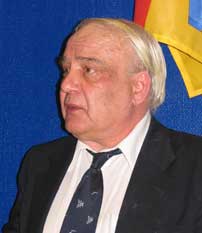
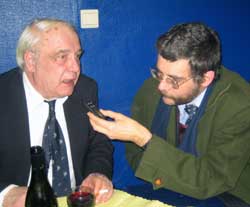
Bukovsky and Belien
Vladimir Bukovksy, the 63-year old former Soviet dissident, fears that the European Union is on its way to becoming another Soviet Union. In a speech he delivered in Brussels last week Mr Bukovsky called the EU a “monster” that must be destroyed, the sooner the better, before it develops into a fullfledged totalitarian state.

Mr Bukovsky paid a visit to the European Parliament on Thursday at the invitation of Fidesz, the Hungarian Civic Forum. Fidesz, a member of the European Christian Democrat group, had invited the former Soviet dissident over from England, where he lives, on the occasion of this year’s 50th anniversary of the 1956 Hungarian Uprising. After his morning meeting with the Hungarians, Mr Bukovsky gave an afternoon speech in a Polish restaurant in the Trier straat, opposite the European Parliament, where he spoke at the invitation of the United Kingdom Independence Party, of which he is a patron.

An interview with Vladimir Bukovsky about the impending EUSSR
In his speech Mr Bukovsky referred to confidential documents from secret Soviet files which he was allowed to read in 1992. These documents confirm the existence of a “conspiracy” to turn the European Union into a socialist organization. I attended the meeting and taped the speech. A transcript, as well as the audio fragment (approx. 15 minutes) can be found below. I also had a brief interview with Mr Bukovsky (4 minutes), a transcript and audio fragment of which can also be found below. The interview about the European Union had to be cut short because Mr Bukovsky had other engagements, but it brought back some memories to me, as I had interviewed Vladimir Bukovsky twenty years ago, in 1986, when the Soviet Union, the first monster that he so valiantly fought, was still alive and thriving.

Mr Bukovsky was one of the heroes of the 20th century. As a young man he exposed the use of psychiatric imprisonment against political prisoners in the former USSR (Union of Soviet Socialist Republics, 1917-1991) and spent a total of twelve years (1964-1976), from his 22nd to his 34th year, in Soviet jails, labour camps and psychiatric institutions. In 1976 the Soviets expelled him to the West. In 1992 he was invited by the Russian government to serve as an expert testifying at the trial conducted to determine whether the Soviet Communist Party had been a criminal institution. To prepare for his testimony Mr Bukovsky was granted access to a large number of documents from Soviet secret archives. He is one of the few people ever to have seen these documents because they are still classified. Using a small handheld scanner and a laptop computer, however, he managed to copy many documents (some with high security clearance), including KGB reports to the Soviet government.

An interview with Vladimir Bukovsky
Listen to it here

Paul Belien: You were a very famous Soviet dissident and now you are drawing a parallel between the European Union and the Soviet Union. Can you explain this?

bukovsky-2.jpg
Vladimir Bukovsky: I am referrring to structures, to certain ideologies being instilled, to the plans, the direction, the inevitable expansion, the obliteration of nations, which was the purpose of the Soviet Union. Most people do not understand this. They do not know it, but we do because we were raised in the Soviet Union where we had to study the Soviet ideology in school and at university. The ultimate purpose of the Soviet Union was to create a new historic entity, the Soviet people, all around the globe. The same is true in the EU today. They are trying to create a new people. They call this people “Europeans”, whatever that means.

According to Communist doctrine as well as to many forms of Socialist thinking, the state, the national state, is supposed to wither away. In Russia, however, the opposite happened. Instead of withering away the Soviet state became a very powerful state, but the nationalities were obliterated. But when the time of the Soviet collapse came these suppressed feelings of national identity came bouncing back and they nearly destroyed the country. It was so frightening.

PB: Do you think the same thing can happen when the European Union collapses?

VB: Absolutely, you can press a spring only that much, and the human psyche is very resilient you know. You can press it, you can press it, but don’t forget it is still accumulating a power to rebound. It is like a spring and it always goes to overshoot.

PB: But all these countries that joined the European Union did so voluntarily.

VB: No, they did not. Look at Denmark which voted against the Maastricht treaty twice. Look at Ireland [which voted against the Nice treaty]. Look at many other countries, they are under enormous pressure. It is almost blackmail. Switzerland was forced to vote five times in a referendum. All five times they have rejected it, but who knows what will happen the sixth time, the seventh time. It is always the same thing. It is a trick for idiots. The people have to vote in referendums until the people vote the way that is wanted. Then they have to stop voting. Why stop? Let us continue voting. The European Union is what Americans would call a shotgun marriage.

PB: What do you think young people should do about the European Union? What should they insist on, to democratize the institution or just abolish it?

VB: I think that the European Union, like the Soviet Union, cannot be democratized. Gorbachev tried to democratize it and it blew up. This kind of structures cannot be democratized.

PB: But we have a European Parliament which is chosen by the people.

VB: The European Parliament is elected on the basis of proportional representation, which is not true representation. And what does it vote on? The percentage of fat in yoghurt, that kind of thing. It is ridiculous. It is given the task of the Supreme Soviet. The average MP can speak for six minutes per year in the Chamber. That is not a real parliament.

Transcript of Mr Bukovsky’s Brussels speech
Listen to it here

In 1992 I had unprecedented access to Politburo and Central Committee secret documents which have been classified, and still are even now, for 30 years. These documents show very clearly that the whole idea of turning the European common market into a federal state was agreed between the left-wing parties of Europe and Moscow as a joint project which [Soviet leader Mikhail] Gorbachev in 1988-89 called our “common European home.”

The idea was very simple. It first came up in 1985-86, when the Italian Communists visited Gorbachev, followed by the German Social-Democrats. They all complained that the changes in the world, particularly after [British Prime Minister Margaret] Thatcher introduced privatisation and economic liberalisation, were threatening to wipe out the achievement (as they called it) of generations of Socialists and Social-Democrats – threatening to reverse it completely. Therefore the only way to withstand this onslaught of wild capitalism (as they called it) was to try to introduce the same socialist goals in all countries at once. Prior to that, the left-wing parties and the Soviet Union had opposed European integration very much because they perceived it as a means to block their socialist goals. From 1985 onwards they completely changed their view. The Soviets came to a conclusion and to an agreement with the left-wing parties that if they worked together they could hijack the whole European project and turn it upside down. Instead of an open market they would turn it into a federal state.

According to the [secret Soviet] documents, 1985-86 is the turning point. I have published most of these documents. You might even find them on the internet. But the conversations they had are really eye opening. For the first time you understand that there is a conspiracy – quite understandable for them, as they were trying to save their political hides. In the East the Soviets needed a change of relations with Europe because they were entering a protracted and very deep structural crisis; in the West the left-wing parties were afraid of being wiped out and losing their influence and prestige. So it was a conspiracy, quite openly made by them, agreed upon, and worked out.

In January of 1989, for example, a delegation of the Trilateral Commission came to see Gorbachev. It included [former Japanese Prime Minister Yasuhiro] Nakasone, [former French President ValĂ©ry] Giscard d’Estaing, [American banker David] Rockefeller and [former US Secretary of State Henry] Kissinger. They had a very nice conversation where they tried to explain to Gorbachev that Soviet Russia had to integrate into the financial institutions of the world, such as Gatt, the IMF and the World Bank.

In the middle of it Giscard d’Estaing suddenly takes the floor and says: “Mr President, I cannot tell you exactly when it will happen – probably within 15 years – but Europe is going to be a federal state and you have to prepare yourself for that. You have to work out with us, and the European leaders, how you would react to that, how would you allow the other Easteuropean countries to interact with it or how to become a part of it, you have to be prepared.”

This was January 1989, at a time when the [1992] Maastricht treaty had not even been drafted. How the hell did Giscard d’Estaing know what was going to happen in 15 years time? And surprise, surprise, how did he become the author of the European constitution [in 2002-03]? A very good question. It does smell of conspiracy, doesn’t it?

Luckily for us the Soviet part of this conspiracy collapsed earlier and it did not reach the point where Moscow could influence the course of events. But the original idea was to have what they called a convergency, whereby the Soviet Union would mellow somewhat and become more social-democratic, while Western Europe would become social-democratic and socialist. Then there will be convergency. The structures have to fit each other. This is why the structures of the European Union were initially built with the purpose of fitting into the Soviet structure. This is why they are so similar in functioning and in structure.

It is no accident that the European Parliament, for example, reminds me of the Supreme Soviet. It looks like the Supreme Soviet because it was designed like it. Similary, when you look at the European Commission it looks like the Politburo. I mean it does so exactly, except for the fact that the Commission now has 25 members and the Politburo usually had 13 or 15 members. Apart from that they are exactly the same, unaccountable to anyone, not directly elected by anyone at all. When you look into all this bizarre activity of the European Union with its 80,000 pages of regulations it looks like Gosplan. We used to have an organisation which was planning everything in the economy, to the last nut and bolt, five years in advance. Exactly the same thing is happening in the EU. When you look at the type of EU corruption, it is exactly the Soviet type of corruption, going from top to bottom rather than going from bottom to top.

If you go through all the structures and features of this emerging European monster you will notice that it more and more resembles the Soviet Union. Of course, it is a milder version of the Soviet Union. Please, do not misunderstand me. I am not saying that it has a Gulag. It has no KGB – not yet – but I am very carefully watching such structures as Europol for example. That really worries me a lot because this organisation will probably have powers bigger than those of the KGB. They will have diplomatic immunity. Can you imagine a KGB with diplomatic immunity? They will have to police us on 32 kinds of crimes – two of which are particularly worrying, one is called racism, another is called xenophobia. No criminal court on earth defines anything like this as a crime [this is not entirely true, as Belgium already does so – pb]. So it is a new crime, and we have already been warned. Someone from the British government told us that those who object to uncontrolled immigration from the Third World will be regarded as racist and those who oppose further European integration will be regarded as xenophobes. I think Patricia Hewitt said this publicly.

Hence, we have now been warned. Meanwhile they are introducing more and more ideology. The Soviet Union used to be a state run by ideology. Today’s ideology of the European Union is social-democratic, statist, and a big part of it is also political correctness. I watch very carefully how political correctness spreads and becomes an oppressive ideology, not to mention the fact that they forbid smoking almost everywhere now. Look at this persecution of people like the Swedish pastor who was persecuted for several months because he said that the Bible does not approve homosexuality. France passed the same law of hate speech concerning gays. Britain is passing hate speech laws concerning race relations and now religious speech, and so on and so forth. What you observe, taken into perspective, is a systematic introduction of ideology which could later be enforced with oppressive measures. Apparently that is the whole purpose of Europol. Otherwise why do we need it? To me Europol looks very suspicious. I watch very carefully who is persecuted for what and what is happening, because that is one field in which I am an expert. I know how Gulags spring up.

It looks like we are living in a period of rapid, systematic and very consistent dismantlement of democracy. Look at this Legislative and Regulatory Reform Bill. It makes ministers into legislators who can introduce new laws without bothering to tell Parliament or anyone. My immediate reaction is why do we need it? Britain survived two world wars, the war with Napoleon, the Spanish Armada, not to mention the Cold War, when we were told at any moment we might have a nuclear world war, without any need for introducing this kind legislation, without the need for suspending our civil liberaties and introducing emergency powers. Why do we need it right now? This can make a dictatorship out of your country in no time.

Today’s situation is really grim. Major political parties have been completely taken in by the new EU project. None of them really opposes it. They have become very corrupt. Who is going to defend our freedoms? It looks like we are heading towards some kind of collapse, some kind of crisis. The most likely outcome is that there will be an economic collapse in Europe, which in due time is bound to happen with this growth of expenses and taxes. The inability to create a competitive environment, the overregulation of the economy, the bureaucratisation, it is going to lead to economic collapse. Particularly the introduction of the euro was a crazy idea. Currency is not supposed to be political.

I have no doubt about it. There will be a collapse of the European Union pretty much like the Soviet Union collapsed. But do not forget that when these things collapse they leave such devastation that it takes a generation to recover. Just think what will happen if it comes to an economic crisis. The recrimination between nations will be huge. It might come to blows. Look to the huge number of immigrants from Third World countries now living in Europe. This was promoted by the European Union. What will happen with them if there is an economic collapse? We will probably have, like in the Soviet Union at the end, so much ethnic strife that the mind boggles. In no other country were there such ethnic tensions as in the Soviet Union, except probably in Yugoslavia. So that is exactly what will happen here, too. We have to be prepared for that. This huge edifice of bureaucracy is going to collapse on our heads.

This is why, and I am very frank about it, the sooner we finish with the EU the better. The sooner it collapses the less damage it will have done to us and to other countries. But we have to be quick because the Eurocrats are moving very fast. It will be difficult to defeat them. Today it is still simple. If one million people march on Brussels today these guys will run away to the Bahamas. If tomorrow half of the British population refuses to pay its taxes, nothing will happen and no-one will go to jail. Today you can still do that. But I do not know what the situation will be tomorrow with a fully fledged Europol staffed by former Stasi or Securitate officers. Anything may happen.

We are losing time. We have to defeat them. We have to sit and think, work out a strategy in the shortest possible way to achieve maximum effect. Otherwise it will be too late. So what should I say? My conclusion is not optimistic. So far, despite the fact that we do have some anti-EU forces in almost every country, it is not enough. We are losing and we are wasting time.

AttachmentSize
bukovsky-interview.mp31.76 MB
bukovsky-speech.mp37.11 MB

Anthony Esolen on Marcus Aurelius

here

IEP
The Meditations
Gutenburg.org
Perseus Project

Rome: Literary Resources