Sunday, December 10, 2006

More Gordon Ramsay


Pete Takeshi alerted me to the fact that he has several shows on BBC America. Too bad I don't have cable.

Ramsay's Kitchen Nightmares
Ramsay's F Word

Probably not new material, just the original BBC series being broadcast here in America. In Kitchen Nightmares he tries to turn failing restaurants around. Sounds like there are plenty of opportunities for him to give his brand of 'constructive criticism.' haha

His website. wiki. He has a food and drink column.

Apparently the original Hell's Kitchen in the UK featured celebrities learning how to cook. They should have done that here, because many of the people on the Fox version don't seem to know how to cook.

Pete wants to go to the Ramsay restaurant in NYC.

Another Gordon Ramsay...

Mixed martial arts

Something for the Philosopher... what do I think of it? Probably the same opinion I have of boxing. More some other time...

There's a feature on MMA on 60 Minutes right now... please don't call it combat, not with all of the rules that have been put into place.

MMAFighting.com
MMA-Fighter.com


Some contests:
K-1
K-1 Fans
Pride
Pride Fighting Championships Unofficial Website
UFC
UFC Fight news
wiki

On the Gracies:
Gracie Jiu-jitsu Academy
Brazilian Jiu-jitsu
Gracie USA
Royler Gracie
Carley Gracie
Rickson Gracie
Gracie Miami
Charles Gracie
Renzo Gracie
Carlson Gracie
Rodrigo Gracie
Royce Gracie
Ralph Gracie
Gracie Australia

How many grappling children are there in the family? And how many of them own their own dojos now?

Celtic Woman


Not to be confused with Celtic Women International. Their concerts have been playing on WGBH Boston--it's fundraising time again. Celtic Woman is a rather packaged presentation of [pseudo-]Celtic culture--I may like Enya, but come on, do her songs really represent the epitome of Celtic culture? It's like Riverdance. What does the New Scot make of all of this?

I think we can form an opinion of how much a culture/society is in decline by what its mass culture and by what is marketed... give me Natalie MacMaster and the Cape Breton dancers...

Still, Haley Westenra joined the ensemble. She will be performing at the Wang Center on March 9 and 10. I previously posted about her here. And it is true that members of Celtic Woman do play traditional songs with the fiddle and such, so it's not complete cheese.

Official gallery.


Her international website. Fan site.


more

check out this thread

Have I prayed for wisdom today?

We should learn from the example of the holy Fathers, saints,and Solomon and pray for the gift of wisdom, especially now during this time of confusion and uncertainty...

Liber Sapientiae, VI
12 Clara est et, quae numquam marcescit, sapientia;
et facile videtur ab his, qui diligunt eam,
et invenitur ab his, qui quaerunt illam.
13 Praeoccupat, qui eam concupiscunt,
ut prior se ostendat illis.
14 Qui de luce vigilaverit ad illam, non laborabit,
assidentem enim illam foribus suis inveniet.
15 Cogitare ergo de illa sensus est consummatio;
et, qui vigilaverit propter illam, cito securus erit.
16 Quoniam dignos se ipsa circuit quaerens
et in viis ostendit se illis hilariter
et in omni providentia occurrit illis.
17 Initium enim illius verissima est disciplinae concupiscentia,
cura vero disciplinae dilectio est,
18 et dilectio custodia legum illius est,
custoditio autem legum confirmatio incorruptionis est,
19 incorruptio autem facit esse proximum Deo;
20 concupiscentia itaque sapientiae deducit ad regnum.
21 Si ergo delectamini sedibus et sceptris, o reges populi,
colite sapientiam, ut in perpetuum regnetis.
22 Quid est autem sapientia et quemadmodum facta sit, referam
et non abscondam a vobis sacramenta Dei,
sed ab initio nativitatis investigabo
et ponam in lucem scientiam illius
et non praeteribo veritatem.
23 Neque cum invidia tabescente iter habebo,
quoniam ista non erit particeps sapientiae.
24 Multitudo autem sapientium sanitas est orbis terrarum,
et rex sapiens stabilimentum populi est.
25 Ergo accipite disciplinam per sermones meos,
et proderit vobis.

VII
1 Sum quidem et ego mortalis homo similis omnibus
et ex genere terreni illius, qui prior factus est,
et in ventre matris figuratus sum caro;
2 decem mensium tempore coagulatus in sanguine
ex semine viri et delectamento somni conveniente.
3 Et ego natus traxi communem aerem
et decidi in terram, quae omnia similiter patitur,
prima voce simili omnibus pariter plorans.
4 In involumentis nutritus sum et curis;
5 nullus enim rex aliud habuit nativitatis initium.
6 Unus autem introitus est omnibus ad vitam,
et similis exitus.
7 Propter hoc optavi, et datus est mihi sensus;
et invocavi, et venit in me spiritus sapientiae.
8 Praeposui illam regnis et sedibus
et divitias nihil esse duxi in comparatione illius;
9 nec comparavi illi lapidem pretiosum,
quoniam omne aurum in comparatione illius arena est exigua,
et tamquam lutum aestimabitur argentum in conspectu illius.
10 Super salutem et speciem dilexi illam
et proposui pro luce habere illam,
quoniam inexstinguibile est lumen illius.
11 Venerunt autem mihi omnia bona pariter cum illa,
innumerabiles divitiae in manibus illius,
12 et laetatus sum in omnibus, quoniam sapientia antecedit ista,
et ignorabam quoniam horum omnium mater est;
13 quam sine fictione didici et sine invidia communico;
divitias illius non abscondo.
14 Infinitus enim thesaurus est hominibus;
quem qui acquisierunt, ad amicitiam in Deum se paraverunt
propter disciplinae dona commendati.
15 Mihi autem det Deus dicere secundum sententiam
et sentire digna horum, quae mihi data sunt,
quoniam ipse sapientiae dux est
et sapientium emendator;
16 in manu enim illius et nos et sermones nostri
et omnis sapientia et operum scientia.
17 Ipse enim dedit mihi horum, quae sunt, scientiam veram,
ut sciam dispositionem orbis terrarum et virtutes elementorum,
18 initium et consummationem et medietatem temporum,
vicissitudinum permutationes et commutationes temporum,
19 anni cursus et stellarum dispositiones,
20 naturas animalium et iras bestiarum,
vim spirituum et cogitationes hominum,
differentias virgultorum et virtutes radicum.
21 Et, quaecumque sunt absconsa et manifesta, didici;
omnium enim artifex docuit me sapientia.
22 Est enim in illa spiritus intellegens, sanctus,
unicus, multiplex, subtilis,
mobilis, perspicuus, incoinquinatus,
lucidus, innocens, amans bonum, acutus,
23 quem nihil vetat, benefaciens, humanus, benignus,
stabilis, certus, securus,
omnem habens virtutem, omnia prospiciens
et penetrans omnes spiritus
intellegibiles, mundos, subtilissimos.
24 Omni enim motu mobilior est sapientia;
pertransit autem et penetrat omnia propter munditiam.
25 Halitus est enim virtutis Dei
et emanatio claritatis Omnipotentis sincera;
ideo nihil inquinatum in eam incurrit:
26 candor est enim lucis aeternae
et speculum sine macula Dei potentiae
et imago bonitatis illius.
27 Et, cum sit una, omnia potest;
et in se permanens, omnia innovat
et per generationes in animas sanctas se transferens
amicos Dei et prophetas constituit.
28 Nihil enim diligit Deus,
nisi eum, qui cum sapientia inhabitat.
29 Est enim haec speciosior sole
et super omnem dispositionem stellarum;
luci comparata invenitur splendidior:
30 illi enim succedit nox,
sapientiam autem non vincit malitia.


For his actual prayer, see chapters 9.

The reform of primary and secondary education

Even if peak oil and the pending implosion of the economy were not a concern, the overhaul of education is an urgent task for our societies. Too long have colleges and universities been able to exploit fool students and parents into spending great amounts of money for what is advertised as a quality education, one which actually leaves most students unable to reason well and to critically evalute what is presented to them. So much of what is covered in colleges and universities should be taught in secondary school. Perhaps it would be more proper to say that secondary schools should be eliminated, and college education should begin earlier, when it comes to the arts and sciences. Thus for those who have the ability, they would begin learning the Trivium and Quadrivium, plus Aristotelian logic, at the age of 13 or 14, supplemented with the appropriate texts for literature and history--the reading and study of which would not be weighted equally with the study of the sciences. Grades would be eliminated as much as possible; any impression that subjects or disciplines are equal should be avoided. Rather, the curriculum will follow a proper order of learning, incorporating the best of the humanistic education into an Aristotelian framework and combined with Aristotelian pedagogy.

Now, given that many within education (and the corporations) have a vital interest in maintaining the status quo, it seems to me that an overhaul of public education is virtually impossible. State legislation currently in place requires that certain things be taught in secondary school, and without any sort of sound pedagogy in place. With respect to public colleges and universities, part of the entrance requirements include a high school diploma or a GED. But is it the case that students can enter into a properly accredited college or university without a such a certificate, if the college does not require it? I think private colleges and univesities are free to admit whomever they want--the question is whether an independent system of colleges and universities can defend the worth of their degree to employers if they are admitting13- and 14-year-olds. "The proof of the pudding is in the eating" may not be enough to convince employers. Then again, perhaps it is not as difficult as I think it is.

Are private secondary schools bound to the same requirements as public secondary schools? How can those devoted to education reform (and all Catholics who care about the harmony of faith and reason should be concerned with education reform) work around state requirements?
And what sort of standards need to be maintained for an alternative accreditation system to be credble? Certainly those teaching lower level courses need at least a M.A. degree, but the right kind of M.A. degree. This should alert us to the fact that reform of education needs to be undertaken at all levels, and needs to start with college and graduate education--if a few universities and colleges can provide a true and comprehensive liberal arts education for teachers in training, the effects can trickle down to the other levels, if there is a concerted effort at reform. If anyone can pull this off, it should be Catholics, since they have the resources and numbers to thumb their nose at the secular establishment.

But if they cannot get their act together, should they not be judged accordingly?

2 via Drudge

Via the Drudge Report

Chile's Pinochet dead: television
Sun Dec 10, 2006 12:54pm ET

SANTIAGO, Chile (Reuters) - Ex-dictator Augusto Pinochet, who ruled Chile from 1973-1990 and spent his old age fighting human rights, fraud and corruption charges, died on Sunday a week after suffering a heart attack, Chilean television reported.

Pinochet, 91, grabbed power in a coup and went on to become the best known of the South American dictators of the 1970s and 1980s. Under his regime more than 3,000 people died in political violence, many at the hands of repressive secret police.

He was accused of dozens of human rights violations but a lengthy effort to bring him to trial in Chile failed as his defense lawyers successfully argued that he was too ill to face charges.

Despite Pinochet's human rights record, many Chileans loved him and said he saved Chile from Marxism.

But even many loyal supporters abandoned him after it came out in 2004 that he had stashed some $27 million in secret off-shore bank accounts that were under investigation at the time of his death.


If the report is true, Gen. Pinochet will now be facing his Lord and Judge--may God have mercy on his soul.

Gulf summit opens with warning of regional explosion

by Suleiman Nimr and Wissam Keyrouz Sat Dec 9, 3:22 PM ET

RIYADH (AFP) - Saudi King Abdullah opened the annual summit of Gulf leaders with a warning that the Arab world was on the brink of exploding because of conflicts in the Palestinian territories,Iraq and Lebanon.

"Our Arab region is besieged by a number of dangers, as if it was a powder keg waiting for a spark to explode," he told the rulers of the oil-rich monarchies gathered in Riyadh for a two-day meeting to the backdrop of mounting sectarian violence in neighboring Iraq.

The Palestinians were reeling from "a hostile and ugly occupation" by
Israel while the international community watched their "bloody tragedy like a spectator," Abdullah said.

But "most dangerous for the (Palestinian) cause is the conflict among brethren," he said in a reference to the differences between Palestinian president Mahmud Abbas's
Fatah faction and the Islamist Hamas movement that have blocked the formation of a unity government.

In Iraq "a brother is still killing his brother," Abdullah said of the tit-for-tat killings between the Sunni Arab former elite and the ruling Shiite majority.

Abdullah also warned that Lebanon, which was rocked by civil war in 1975-1990, risked sliding into renewed civil strife as a result of the current standoff between pro- and anti-Syrian camps.

"In Lebanon, we see dark clouds threatening the unity of the homeland, which risks sliding again into... conflict among the sons of the same country," he said.

The heads of state of Gulf Cooperation Council members Bahrain, Kuwait, Oman, Qatar and the United Arab Emirates were present alongside the Saudi monarch, the first time in several years that all six rulers have attended the bloc's year-end summit.

Gulf Arab leaders are also concerned about Shiite
Iran's growing role in Iraq and its standoff with the West over Tehran's nuclear program, although GCC Secretary General Abdulrahman al-Attiyah said the GCC states do not feel threatened by the Islamic republic.

"The United States talks openly of the danger of Iranian military activity in the region, but our countries do not feel threatened by Tehran. Iranian officials assure us that their nuclear program is peaceful," Attiyah said.

In his opening speech, King Abdullah said there remained "outstanding issues" and "ambiguity surrounding some policies" in the Gulf.

He did not elaborate, but called for the GCC states to "stand as one" to tackle the problems confronting the Arab world.

A GCC source told AFP that the recommendations put forward to the heads of state by the bloc's ministerial committees focus on the potential fallout of the mayhem in Iraq.

The recommendations call for "instructing security agencies (of GCC states) to draft a joint plan of action" to deal with the risks arising from the situation in Iraq, including "population displacement, terrorist and criminal acts and the smuggling of weapons... and infiltration (of militants)" across common borders.

The recommendations also call for protecting the GCC states from the potential "sectarian repercussions" of the conflict in Iraq.

The Sunni-dominated Gulf Arab states have Shiite minorities of various sizes -- except Bahrain where Shiites form a majority.

Attiyah earlier told AFP that repercussions of "developments in Iran's nuclear program and the dangerous security situation in Iraq on the six GCC members will be the focus of the summit."

GCC officials have said in the past they fear a radioactive leak from Iran's nuclear facilities would be catastrophic for the Gulf environment.

"Gulf states are worried by the possibility of a US-Iranian confrontation" over Tehran's nuclear ambitions, the GCC source said Saturday, adding that "a strike on Iran's nuclear facilities would create environmental dangers" for the region.

During their summit, GCC leaders will also discuss steps toward economic integration, chiefly moves to establish a common market by 2007 and launch a monetary union and a single currency by early 2010.

Divine Word College

SF Gate article; college website
via Amy Welborn

There was an open position in philosophy for this academic year; apparently it has been filled. Khoa from soompi had been accepted to the program, but I found out from Nathan that his plans had changed after he found a gf over the Summer...

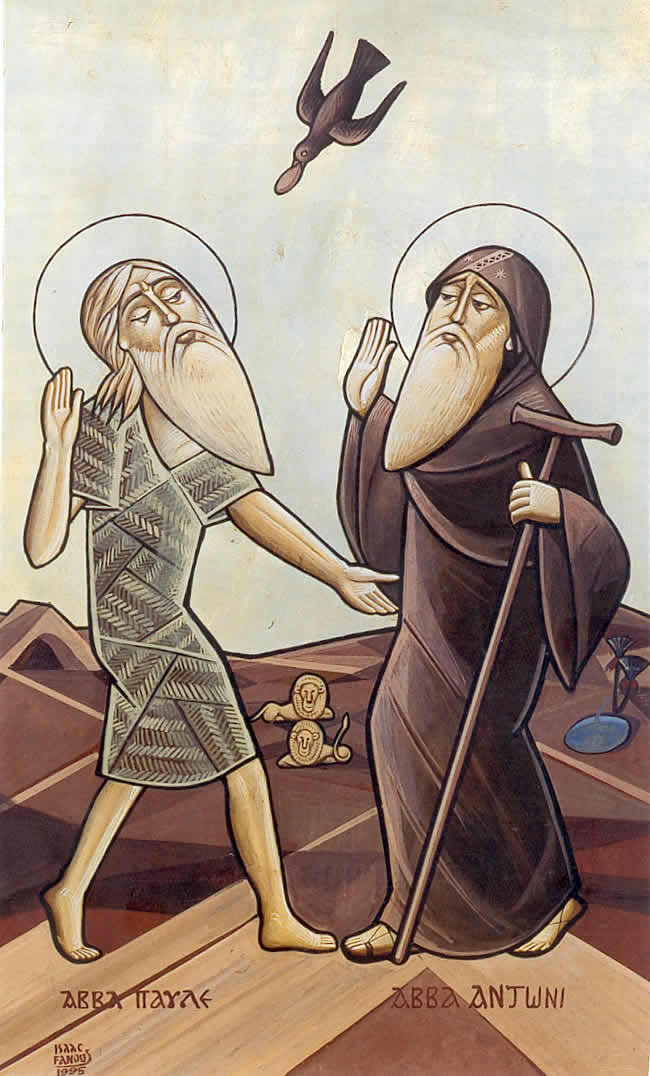
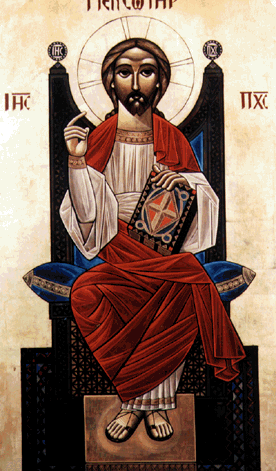
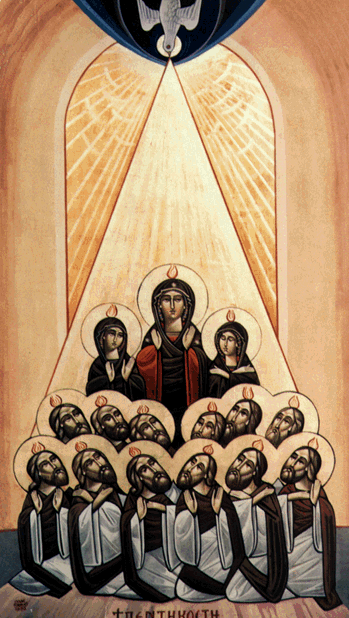
Icons written by Isaac Fanous

Ok, I found a page specifically for icons by Isaac Fanous at CopticChurch.org. Dr. Fanous is considered to be the father of modern Coptic iconography, founder of the School of Iconography in Cairo, Egypt.


Another site
The Ascension

Saint Anthony the Great and Paul the Hermit

The Hospitality of Abraham

St. Athanasius


Links
A direct link with the past
Interview with Dr. Fanous (in French)
A post on Dr. Fanous at Egyptology Blog
Sacred Iconography: A Living Tradition
Etudes sur l'Orthodoxie Copte en France
Coptic Art Studio
Encyclopedia Coptica
Nasef Lateef

Links for the Coptic Church
Pope Shenouda III
St. Mark Orthodox Church, Cairo, Egypt [looks a lil bit like the Vatican page... hrm!]

CopticChurch.net
The Coptic Orthodox Church
The web site of St. Mary & St. Anthony Coptic Orthodox Church
Home - Coptic Orthodox Church of St. Mark, Jersey City, New Jersey
The Coptic Orthodox Church Of Australia
Coptic Church
Coptic Orthodox Church -- Diocese of Los Angeles
Southern United States
Coptic-Church.net
My Coptic Church
Sydney
Coptic Orthodox Church of Brighton
St. Mark, Cleveland
St. Mark, Toronto
St. George, San Jose
St. George, Brooklyn

St. George
SS. George and Joseph, Montreal
St. Antonius
St. Mina
SS. Mercurius and Abraam

St. Takla

Misc
Monachos.net

Coptic icons

St. Mary Coptic Icon Gallery


Source


From Coptic Network:


More from Coptic Network


Icon: The Assumption of Mary


Coptic Icon E-gallery


From pluralism.org, St. Mary Coptic Church, Roswell, GA
neo-Coptic iconostasis at St. Mary


St. Paul Church


From Matt Stone, Christ and Menas, Egypt (Coptic, Louvre) c. 550:


St. Athanasius


Links:
Coptic Icons: Their History and Significance

Adel Nassief
Awatef Farahat coptic icons
Coptic Centre, UK
theotokos.org Coptic Icons; Icons written by Dr. Isaac Fanous
Coptic Christian paintings
Coptic icons and texts
CopticChurch.org

Coptic Sources
wiki
Coptic Icons

Check out this flickr page.
St. Mary Church links

Cappella Romana

From NLM

Cappella Romana presents Mt. Sinai: The Frontier of Byzantium

Date: Sunday, December 10, 2006
Time: 3:00 p.m.
Location: Getty Center, Harold M. Williams Auditorium

Explore the rich musical world of Saint Catherine's Monastery with this special performance from Cappella Romana, a vocal chamber ensemble dedicated to combining passion with scholarship in its exploration of the musical traditions of the Christian East and West. By presenting Slavic and Byzantine choral music in the original languages, the ensemble makes accessible two great musical traditions that are little known in the West.

For this appearance, the ensemble presents a virtuosic program of medieval chants for Saint Catherine, Christmas, and Epiphany drawn from centuries-old Greek manuscripts held at the library of Saint Catherine's. This all-new program is designed to complement the current exhibition Holy Image, Hallowed Ground: Icons from Sinai.

[This brings up some related publications which look to be quite interesting.]

Holy Image, Hallowed Ground: Icons from Sinai

Edited by Robert S. Nelson and Kristen M. Collins
With contributions by Thomas F. Mathews, David Jacoby, and Father Justin Sinaites. Foreword by His Eminence Archbishop Damianos of Sinai, Abbot of the Holy Monastery of Saint Catherine at Sinai.

J. Paul Getty Museum
320 pages, 9 x 12 inches
168 color and 47 b/w illustrations, 2 maps
ISBN 0-89236-855-1

Isolated in the remote Egyptian desert, at the base of Mount Sinai, sits the oldest continuously inhabited monastery in the Christian world. The Holy Monastery of Saint Catherine at Sinai holds the most important collection of Byzantine icons remaining today. This catalogue, published in conjuction with the exhibition Holy Image, Hallowed Ground: Icons from Sinai, on view at the J. Paul Getty Museum from November 14, 2006, to March 4, 2007, features forty-three of the monastery's extremely rare‹and rarely exhibited‹ icons and six manuscripts still little-known to the world at large.

The exhibition and catalogue bring to life the central role of the icon in Byzantine religious practices. Themes include the icon's status as holy object, the ways in which the icon sanctified the place of worship, and the monks' quest for the holy. The Greek Orthodox monastery at Mount Sinai not only functioned as a major pilgrimage site for centuries but was also a cultural crossroads at the center of the shifting sands of ecclesiastical and secular politics. The accompanying essays explore how the monastery's contact with the outside world, through pilgrimage, resulted in aesthetic exchanges between the monastery and Coptic, Crusader, and Islamic art and between the Greek Orthodox and Roman Catholic communities in Europe.


Unfortunately the Getty is in L.A. and I'm in Boston... if I were living in L.A. I would try to attend. From the Getty page:


Capella Romana's homepage


Check out their CDs.

Former MA Catholic church sold, to be turned into mosque

Former Massachusetts Catholic church sold, slated to become a mosque

Venice's St Mark's Square under water with new 'acqua alta'

Venice's St Mark's Square under water with new 'acqua alta'

Sat Dec 9, 5:25 PM ET

ROME (AFP) - Venice's historic St Mark's Square was under water as a new episode of "acqua alta" struck the city with the convergence of high tides and a strong sirocco.

The city's tide monitoring center put residents on alert and raised walkways were put in place on main streets to allow people to get around the city, five percent of which was under water with levels up to 103 centimeters (3.3 feet).

The highest "acqua alta" of the year occurred on October 24, at 112 centimeters.

The record "aqua alta" in the Renaissance canal city remains November 4, 1966, when the waters reached 1.94 meters amid severe flooding throughout Italy.

The government launched the multi-billion-euro "Moses" plan in 2003 to build 78 mobile dikes together to be situated at either end of Venice's lagoon.

The work is scheduled for completion in 2012.

Venice has become increasingly vulnerable over time, suffering more than 50 significant floods between 1993 and 2002 and sinking about 23 centimeters over the course of the 20th century.

Nobel laureate: Poverty fight essential

Nobel laureate: Poverty fight essential

By KARL RITTER, Associated Press Writer Sun Dec 10, 9:26 AM ET

STOCKHOLM, Sweden - Bangladeshi economist Muhammad Yunus accepted the Nobel Peace Prize on Sunday, saying he hoped the award would inspire "bold initiatives" to fight poverty and eradicate the root causes of terrorism.
ADVERTISEMENT

Yunus, 66, shared the award with his Grameen Bank for helping people rise above poverty by giving them microcredit — small, usually unsecured loans.

"I firmly believe that we can create a poverty free world if we collectively believe in it," Yunus said after accepting the prize at City Hall in Oslo, Norway. "The only place you would be able to see poverty is in a poverty museum."

The Nobel Prizes, announced in October, are always presented in Oslo and Stockholm, Sweden, on Dec. 10 to mark the anniversary of the 1896 death of their creator, Alfred Nobel, a Swedish industrialist who invented dynamite and stipulated the dual ceremonies in his will.

The winners for literature, medicine, physics and economics will receive their awards later Sunday at a royal ceremony in Stockholm's blue-hued concert hall. Each award carries a purse of $1.4 million, a diploma and a gold medal. The first prizes were handed out in 1901.

This year's laureates include a novelist who explored Turkey's clash of cultures and American scientists who helped cement the big-bang theory of the universe and broke new ground in genetic research.

Yunus said ending poverty was the best way to fight terrorism.

"We must address the root causes of terrorism to end it for all time," he said. "I believe putting resources into improving the lives of poor people is a better strategy than spending it on guns."

Grameen Bank, set up in 1983, was the first lender to provide microcredit, giving very small loans to poor Bangladeshis who did not qualify for loans from conventional banks. No collateral is needed, and repayment is based on an honor system, with a nearly 100 percent repayment rate.

Yunus said the idea has spread around the world, with similar programs in almost every country.

Clad in a traditional Bangladeshi sleeveless jacket, Yunus accepted his half of the $1.4 million prize from awards committee chairman Ole Danbolt Mjoes.

Board member Mosammat Taslima Begum, wearing a traditional dress in red with a green shawl, accepted the other half of the award on behalf of Grameen bank, saying she dedicated it to all Bangladeshis.

Mjoes said the award was an outstretched hand to the Islamic world in an era where Muslims are often demonized because of terrorism.

"The peace prize to Yunus and Grameen Bank is also support for the Muslim country of Bangladesh, and for the Muslim environments in the world that are working for dialogue and collaboration," Mjoes said

Turkish writer Orhan Pamuk won the literature prize for a body of work that illustrates the struggle to find a balance between East and West.

U.S. researchers have long dominated the science awards, and swept them all this year for the first time since 1983.

The Nobel Prize in medicine went to Andrew Z. Fire and Craig C. Mello for discovering a powerful way to turn off the effect of specific genes. John C. Mather and George F. Smoot won the physics prize for work that helped cement the big-bang theory of how the universe was created.

Roger D. Kornberg won the prize in chemistry for his studies of how cells take information from genes to produce proteins, a process that could provide insight into defeating cancer and advancing stem cell research.

Economics winner Edmund S. Phelps was cited for research into the relationship between inflation and unemployment, giving governments better tools to formulate economic policy. The economics award is not an original Nobel Prize, but was created by the Bank of Sweden in 1968.

Pamuk, whose trial last year for "insulting Turkishness" made headlines worldwide, was honored for exploring "new symbols for the clash and interlacing of cultures." His novels include "Snow" and "My Name Is Red." The charges against Pamuk were eventually dropped.

___

On the Net:

http://www.nobelprize.org

China: Main challenge of Communist Party lies in social unrest

Main challenge of Communist Party lies in social unrest
This was maintained by Xinhua, the government’s semi-official news agency. In an editorial that appeared one year after the massacre in Dongzhou, when police opened fire and killed three people protesting against Party corruption. Human rights activists and lawyers were also criticized for "fomenting revolt".

Beijing (AsiaNews/Agencies) – The rising number of protests and violent clashes in China “has become the most destabilizing factor in the country, posing a challenge to the Communist Party's ability to rule,” China’s official news agency, Xinhua, said yesterday.

The article urges Communist leaders to use public force “prudently” when tackling “mass incidents”, a euphemism to describe popular unrest and clashes with police. The appeal was made to Beijing one year after the Dongzhou tragedy, when police shot dead at least three demonstrators who were protesting against the corruption of their village leaders.

The last three decades of economic reform have improved the economy both at home and abroad but they have also widened the gap between rich and poor, and urban and rural areas. This has led to strong resentment among the people, who are embittered by illegal seizure of their farm land, pollution of land and water, and redundancies in state companies that were gradually privatized.

The Xinhua editorial said: “The huge number and broad scope of mass incidents has become the most outstanding problem that seriously impacts social stability. They reflect the various social conflicts and problems coming up at this crucial stage of our reforms."

China is “harmonious and stable in general, but dealing appropriately with mass incidents against the background of profound changes in social and economic structures is a major test of the leadership's rule.”

Moreover, “some incidents, economic disputes, have been politicized, while some have become increasingly violent.”

The article also criticized “Chinese lawyers and human rights activists, as well as foreign journalists”, who have been harassed, beaten or detained for following protests and riots. They represent “hostile forces and elements inside and outside China that have tried whatever they can to intervene in and take advantage of the mass incidents in an attempt to instigate and create turbulence.”

Beijing is failing to prevent anti-government rallies that often degenerate into clashes with police. Public Security Minister Zhou Yongkang has said they are on the rise: in 1994, there were 10,000 and in 2004, there were more than 74,000. In 2005, more than 87,000 public protests took place in China.

Everyday, Beijing records between 120 and 230 protests, mostly in rural areas. Local administrators seize land and sell them to companies and industries eager to expand production or to implement ostentatious projects. Residents stripped of their land and badly compensated have no other way but to protest, often violently.

The government fears this trend and is continually organizing anti-corruption campaigns: the latest, launched on 13 November, demands that local officials manage the relocation of evicted people fairly.

Dawn Eden on Jane maagazine

New York Daily News

via GodSpy

Soul Mates

From: Finding a Husband
Check your expectations

The annual State of Our Unions report for 2002 detailed a trend among single men who date for recreation with one eye open for someone else. They have sex with their girlfriends but admit they'll never marry these girls because they're not "soul mates."

Most people want a mate who knows them at their deepest points and loves them fully. But the problem with the soul mate expectation is that you risk setting yourself up for failure. When asked to describe their soul mate, many singles imagine a person who "completes them," and vice versa. They assume their soul mate will love them exactly as they are and never ask them to change. But what happens when those two soul mates encounter the turbulence of marriage? These expectations cause them to doubt that they've found their "soul mate" after all.

Human relationships will always be flawed because we're fallen creatures. To expect otherwise is a setup for divorce.

Despite fantasies of marriage as an endless date, a lifelong partnership is actually about thriving in the day-to-day stuff of life: raising kids, paying the bills, cleaning the house, etc. A lasting marriage requires commitment, no matter what. You have to go into it expecting highs and lows. A good marriage can make the lows a lot more bearable, though.

Hoping for a Soul Mate

“Nothing has produced more unhappiness than the concept of a soul mate.”

That’s the opinion of Atlanta psychiatrist Frank Pittman in the March 2004 issue of Psychology Today. For the article “Great Expectations,” Polly Shulman interviewed Pittman and several other marriage experts who are concerned that the growing expectation for a perfect match is frustrating singles needlessly and threatening their chances of a satisfying marriage.

More on Soul Mates at Boundless.

Counterpoint

Wiki

In music, counterpoint is a texture involving the simultaneous sounding of separate melodies or lines "against" each other, as in polyphony. It has most commonly been identified in Western music, developing strongly in the Renaissance, and also dominant in much of the common practice period, especially in Baroque music. The term comes from the Latin punctus contra punctum ("note against note"). The adjectival form contrapuntal shows this Latin source more transparently.
Principles of counterpoint
Musical forms
CE
Dolmetsch Online - Music Theory Online - Counterpoint
Counterpoint for Everyone

Polyphony
wiki
13th century polyphony

Medieval music: birth of polyphony


Misc
Counterpoint Chamber Chorus
Polyphony choir and orchestra
University of Chicago Graduate Music Society
Palestrina choir