Wednesday, May 20, 2009

The gentle art of non-gardening
Gene Logsdon, Dave Smith, OrganicToBe.org
The most amazing aspect of it, and I don’t know why, is that this “wild” lettuce is ready to eat before the lettuce that I plant early in the cold frame, coddled with compost and protected with a plastic cover on cold nights. The “wild” lettuce grows faster. If I had any brains, I would quit the cold-frame lettuce, but so far I just don’t have enough faith in nature to do it.

(original)

NLM: Usus Antiquior Journal: Subscriptions Now Open and How Important Is Ceremony? and Russian Orthodox Theologian Weighs in on the Liturgical Reform after Vatican II.
Results for the special election yesterday. Looks like No on 1A-1E and Yes on 1F.

Michael Shedlock: Huge Deficit Stuns Cincinnati; California Faces Cash Crisis
Crunchy Con: McArdle to bankrupt California: Drop dead
California rejects Gov. Schwarzenegger's budget measures

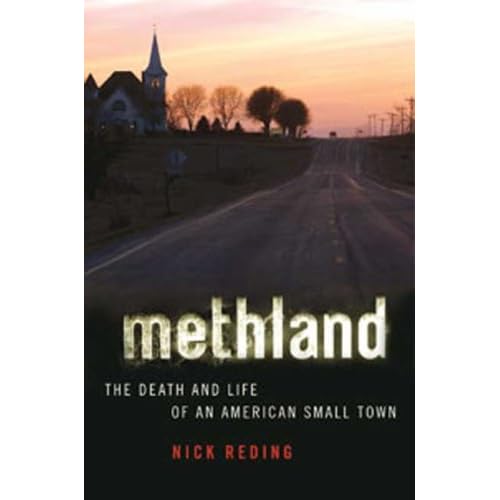
John Robb thinks Methland will be good: JOURNAL: Methland. (The prologue for the book is online.)

Two more from Alamire--Hec est precalrum


and Attolite portas

Tuesday, May 19, 2009

Patrick Deneen, What Is to be Done?

Professor Deneen explains the purpose of Front Porch Republic.

So, this site is at least this much: an effort to change our self-understanding - the selves we are, the selves and communities we might be. Many observe rightly that its arguments are almost everywhere and always paradoxical, if not contradictory - arguing on behalf of communities and a culture in which choice and escape and individual self-assertion is subordinated, yet urging the embrace of these ways as a matter of choice and self-assertion. This paradox is forced upon anyone making these arguments by a culture that renders everything into a choice. Still, ultimately a people persuaded by the wisdom of such a course will begin to enact some of its basic presuppositions into law, and thus slowly create a “virtuous circle” in which the law emanates from culture, and culture is in turn strengthened by law. Some of us will act as individuals within communities, stepping out of the mainstream to preserve or create a distinctive alternative for our families or small communities of families. Others of us - and here, I would include myself - will call for citizens to begin to consider public acts large and small that will begin to offer us a different way to live.

But will academia lose its credibility when its ties to and dependence upon the current system become better known?

In the combox he writes:

There is the temptation to anarchistic romanticism that pervades the “libertarian” inclination among some FPR-sympathizers. I, for one, think (following Aristotle) that man is by nature the political animal, or (following the Bible) that our fallenness does not permit us to live outside law. Recognizing that, we need to think politically, and your sympathies are shared considerably by me as well, as you know. Much of a political program will involve urging the national State to act less; but some measure will require the national State to act - albeit differently - to at least reverse some of the damage it has done, and even beyond that, to tame the commercial realm to become far more friendly to local and community settings.


This seems to me to be naive. Even if a coalition between 'left' and 'right' communitarians can be formed, I do not think they have the numbers to change the National Government and its favor of oligarchy. Can resistance be organized by individual states? That may be more likely, but even then perhaps the resistance cannot be sustained for long.
First Things: At the Gates of Notre Dame
by Joseph Bottum
First Things Joseph Bottum discusses the controversy at Notre Dame. Interview Available

Catholic Culture and the Notre Dame Protests
By Joseph Bottum

(see also Celebration of the Teachings of the Catholic Church by Raymond L. Burke)
New, from PIMS:

GUY BEDOUELLE, The Reform of Catholicism, 1480–1620
Translated and annotated by James K. Farge
Studies and Texts 161, Catholic and Recusant Texts 1.
2008. xii, 172 pp.2008 • ISBN 978–0–88844–161–4 • $24.95

prelims and contents (pdf)

Description from the 2009 catalog:

Guy Bedouelle's Reform of Catholicism, 1480-1620, demonstrates how reform within the Roman Church owed much to a ferment and coordination of action emanating from its traditional geographic and jurisdictional centre, Rome. But, after showing how the Council of Trent legislated reform in the Church and empowered structures to carry it out, Bedouelle also highlights the actions that brought about a renewed spirit in the Church and in society -- a "Catholicism" which, in some aspects, paralleled the way other Christians constituted a "Lutheranism," a "Calvinism," or an "Anglicanism."
John Médaille, The Economics of Distributism II: Political Economy as a Science
Sandro Magister, Eurabia Has A Capital: Rotterdam
Here entire neighborhoods look like the Middle East, women walk around veiled, the mayor is a Muslim, sharia law is applied in the courts and the theaters. An extensive report from the most Islamized city in Europe
Peter Hitchens weighs in on President Obama at Notre Dame: 'Stop killing our children!’ cried the hecklers. ‘Yes, we can’ chanted the Obama fans

Some of you will have seen that Saint Barack ran into the first serious public hostility of his career on a visit to Notre Dame University, an old-established Roman Catholic college of some reputation, in South Bend, Indiana. The headline on this posting refers to the shouts which echoed across the hall as he addressed the student body and picked up an honorary degree, against the opposition of many American Roman Catholics. They are right to oppose these unjustified and mistaken compliments. I do not think Mr Obama seeks genuine compromise with this great Christian institution. I think on the contrary that he hopes to co-opt it into his machine, and compromise it so that it moderates its opposition to him.

I also do not think that 'Yes, we can' is much of a response to the accusations of abortion opponents. It reminds me of the general empty-headed rock-star worship which became such a feature of Mr Obama's campaign. What, in this instance, does it mean? So far as I know Mr Obama's attitude towards abortion is at the extreme end of permissive, as he will no doubt show when he picks his candidates for the Supreme Court, the USA's potent and unelected third legislative chamber.

(I'm always amused when people attack our House of Lords, which in recent years has been an outpost of independence and free thought, while calling for a US-style constitution, which would enthrone such a court here, autocratic and chillingly liberal.)

'Yes, we can' certainly doesn't mean that Mr Obama can fulfill all his promises. His recent decisions, on military tribunals and the publication of pictures of prisoner abuse, really ought to have given his more gullible supporters reason to doubt. Time he was treated as a normal human being - as he always should have been.

PJB, Bibi’s Dead End


For, as John Mearsheimer, author of The Israel Lobby and U.S. Foreign Policy, writes in the May 18 American Conservative, if there is no Palestinian state, there are only three possible alternatives.

All involve “creating a ‘greater Israel’ … that effectively controls the West Bank and Gaza, or all of what was once called Mandatory Palestine.”

What are Bibi’s three remaining options?

The first is annexation of the West Bank. But this would bring 2.4 million Palestinians into Israel, giving her a population 40 percent Arab. With a higher birth rate, Palestinians would soon outnumber Jews and vote to abolish the Jewish state, thus creating a bi-national state.

That would mean the end of the Zionist dream.

The second option is the Meir Kahane solution. The late rabbi urged the expulsion of the Palestinians from the occupied territories. But the ethnic cleansing of hundreds of thousands or millions of Palestinians would mean innumerable casualties, a severing of all ties to the Arab world, the moral isolation of Israel and a break with the United States. America could not stand by and let such a human rights atrocity take place.

The third option is the Netanyahu option: no annexation, no ethnic cleaning, no Palestinian state — but permanent control of the West Bank to assure the “Hamastan” in Gaza is never replicated on the West Bank.

Peter Hitchens, The two-state solution is dead

Religio Philologi: The Epistle of James by Thomas Fleming
Mike Whitney, The Real Lesson of the Financial Crisis

The faux-prosperity of the last decade was largely the result of a wholesale credit system which created a humongous amount of credit via sketchy debt instruments, off-balance sheet operations, massive leverage and derivatives. (The Fed's liquidity and conventional bank loans play a very small part in the modern credit system) Securitization--which is the conversion of pools of loans into securities--is at the center of the storm. It formed the asset-base upon which the investment banks and hedge funds stacked additional leverage creating an unstable debt-pyramid that couldn't withstand the battering of a slumping market. After two Bear Stearns funds defaulted 20 months ago, the securitization markets froze, credit dried up and the broader economy went into a tailspin. Now that investors know how risky securitized instruments really are, there's little chance that assets will regain their original value or that the market for structured debt will stage a comeback.
It was been hot this past weekend, almost as bad as that one week in April. When we got some rain in March, the hills to the east of Milpitas were rather green. Greener than I had ever seen for a long time. Now they are browning rapidly. We don't have a problem with hillside fires here in the South Bay, but over in Oakland and Berkeley there will probably be regular fire alerts, as usual. What can be done about California? Not much, I would guess.

California's broken system for water delivery‎

The statewide special election is this coming Tuesday today. Don't forget to vote! I almost did. I should drop by Trader Joe's afterwards. I think I'll be following Michael Shedlock's recommendations.

Today the priest's homily mentioned friendship, and the etymological link of friend to the old English word for "love," just as there is a link in Greek between philos and philia. I didn't write the word down, but according to the Online Etymology Dictionary, it is freogan. I think it is safe to say that we have lost the awareness of this connection. Most of us associate friend with the first two kinds of friendship listed by Aristotle in the Nicomachean Ethics. We have a more self-centered view of friendship; often it's about my emotional needs, if not the shared good that the friends seek. How many of us have show the virtue of loyalty by making an effort to maintain friendship? While we may have some affection for our friends, we do not make the friendship a priority.

This sort of linguistic associations between words can provide a community with a deposit of wisdom, even if it is not fully realized in philosophical or theological reflection and the mastery of definitions. They would continually invite the intellectually curious to think about these connections. (I believe this underscores the importance of language to culture and philosophy -- and how one does not begin philosophy in a vacuum, but by first reflecting upon what one already knows, as it is mediated through language.)

Is it possible that some worldviews are more limited than others because of the languages upon which they depend are different, and as means of conveying reality differ in their "effectiveness" or "fullness"? (What does the example of Brazil's Pirahă Tribe reveal to us about human language and knowledge?)


(source)

Last week, I was observing how check-out clerks at supermarkets behave. I couldn't help but think that young people these days receive more training in manners from supervisors and those who are training them than from their parents. It is as if large segments of the population did not receive their How to Parent books. Politeness "never goes out of style." For how much longer will the South be able to retain this valuable part of their culture?

If very few members of a society behave in accordance with certain norms, wouldn't we say that those norms are not a part of their culture? If [moral] culture does not exist except in individuals (and their behavior), and a society does not observe certain norms of etiquette (or anything comparable), isn't that society less civilized than one that does? And if these norms are followed by certain minority within that society, but not by the majority, do they share the same culture? Not really. They may have the same heritage, the same stories and artefacts, but with respect to what really counts -- moral (or humane?) culture -- the answer seems to be no.

And so: What impact does a divergence in culture within the same community have on identity?

Begun on May 17.
Top 10 Ways To Woo Your Lady Love#1, Be Unpredictable
by Sex Guru Shiva (As told to Sonal Ved)

(via LRC)

List of alpha behaviors, it seems.

Monday, May 18, 2009

BBC Early Music Show: Thomas Campion


Catherine Bott reflects on the life, poetry and music of the Elizabethan/Jacobean London-based physician Thomas Campion. He was as celebrated for his poems as for his many songs, and his most famous piece is considered to be Never Weather-Beaten Saile, which was familiar as a hymn for many years after his death.

Campion's legacy of love songs and a large collection of poetry and pamphlets on music and literature, as well as his many masques, have made him an important figure in the history of Renaissance art, even if he is perhaps less well-known than his contemporary John Dowland.

The programme includes a wide selection of recordings of Campion's music alongside readings from his poetry and his masques.

Playlist:

Thomas Campion: Never weather-beaten saile
Drew Minter (countertenor)
Paul O'Dette (lute)
Harmonia Mundi HMU 907023
Track: 22

Thomas Campion: Come cheerful day
Rachel Elliott (soprano)
Mark Padmore (tenor)
Peter Harvey (baritone)
Nigel North (lute)
Linn CKD 105
Track: 1

Thomas Campion: Turn back you wanton flyer; It fell on a summers day
Michael Chance (countertenor)
Nigel North (lute)
Linn CKD 105
Tracks: 3 and 4

Reading: Canto Primo by Thomas Campion
(narrated by Malcolm Raeburn)

Thomas Campion: I care not for these ladies
Robin Blaze (countertenor)
Elizabth Kenny (lute)
HYPERION CDA 67268
Track: 2

Segue

Thomas Campion: Come let us sound with melody
Steven Rickards (countertenor)
Dorthoy Linell (lute)
NAXOS 8.553380
Track: 1

Reading: Rose Cheekt Lawra, Come by Thomas Campion
(narrated by Malcolm Raeburn)

Thomas Campion: My love hath vowd
Rachel Elliott (soprano)
Nigel North (lute)
Linn CKD 105
Track: 7

Thomas Campion: Now hath Flora robbed her bowers
Robin Blaze (countertenor)
Elizabeth Kenny (lute)
David Miller (theorbo, lute)
Joanna Levine (consort bass viol)
Mark Levy (lyra bass)
HYPERION CDA 67268
Track: 7

Segue

Reading (excerpt from Lord Hay's Masque by Thomas Campion)

Thomas Campion: Mr Confess's Coranto
Elizabeth Kenny (lute)
HYPERION CDA 67268
Track: 8

Segue

Reading (excerpt from Lord Hay's Masque by Thomas Campion)

Thomas Campion: Lord Hayes Masque
Elizabeth Kenny (lute)
David Miller (theorbo, lute)
Joanna Levine (consort bass viol)
Mark Levy (lyra bass)
HYPERION CDA 67268
Track: 10

segue

Thomas Campion: Move now with measured sound
Robin Blaze (countertenor)
Elizabeth Kenny (lute)
David Miller (theorbo, lute)
Joanna Levine (consort bass viol)
Mark Levy (lyra bass)
HYPERION CDA 67268
Track: 9

Thomas Campion: The cypress curtain of the night
Michael Chance (countertenor)
Nigel North (lute)
Linn CKD 105
Track: 23

Thomas Campion: The peacefull westerne winde
Rachel Elliott (soprano)
Mark Padmore (tenor)
Peter Harvey (baritone)
Nigel North (lute)
Concordia
Linn CKD 105
Track: 2

Thomas Campion: Author of Light (4th Book)
Robin Blaze (countertenor)
Elizabeth Kenny (lute)
David Miller (theorbo, lute)
HYPERION CDA 67268
Track: 22.
More on Thomas Campion:
Thomas Campion (1567-1620)
HOASM: Thomas Campion (Campian)
Poets' Corner - Thomas Campion - Selected Works
Thomas Campion: Poetry Foundation [author]
Classical Archives: Composer: Thomas Campion
The Cambridge History of English
wiki

Fain would I wed by Thomas Campion (1567-1620)


Never Weather-beaten Sail - Thomas Campion


What if a day
Damian Thompson: Trendy liturgists have made Catholic parish music a 'laughing stock', James MacMillan tells new Archbishop of Westminster
Michael Pollan: Deep Agriculture (video)
The Long Now Foundation via FORA.tv

Summary
Farming has become an occupation and cultural force of the past. Michael Pollan's talk promoted the premise -- and hope -- that farming can become an occupation and force of the future. In the past century American farmers were given the assignment to produce lots of calories cheaply, and they did. They became the most productive humans on earth. A single farmer in Iowa could feed 150 of his neighbors. That is a true modern miracle.
"American farmers are incredibly inventive, innovative, and accomplished. They can do whatever we ask them, we just need to give them a new set of requirements."

Speaker
Michael Pollan - Michael Pollan is the author of The Omnivore’s Dilemma: A Natural History of Four Meals, a New York Times bestseller. His previous books include The Botany of Desire: A Plant’s-Eye View of the World (2001); A Place of My Own (1997); and Second Nature (1991). A contributing writer to The New York Times Magazine, Pollan is the recipient of numerous journalistic awards, including the James Beard Award for best magazine series in 2003 and the Reuters-I.U.C.N. 2000 Global Award for Environmental Journalism. Pollan served for many years as executive editor of Harper’s Magazine and is now the Knight Professor of Science and Environmental Journalism at UC Berkeley. His articles have been anthologized in Best American Science Writing 2004, Best American Essays 2003, and the Norton Book of Nature Writing. He lives in the San Francisco Bay Area with his wife, the painter Judith Belzer, and their son, Isaac.(May 2009)

(via EB)

From Counterpunch: Dave Lindorff, The US is Using White Phosporous in Afghanistan
Patrick Cockburn, These Killings Will Only Strengthen the Taliban
Ben Rosenfeld, Police Violence: How Many Kicks to the Head Does It Take?
Eugenia Tsao, On the Devaluation of Labor
Ralph Nader, They Want It All: New Tricks From the Old Energy Lobby

Church forum discusses Father Matteo Ricci's work in China (via the Western Confucian)
Amy Welborn: A ferment of liberation

The MACAU RICCI INSTITUTE 澳門利氏學社
TAIPEI RICCI INSTITUTE

More on Fr. Ricci:
CATHOLIC ENCYCLOPEDIA: Matteo Ricci
Matteo Ricci, S.J
Chinese Cultural Studies: Matteo Ricci: On Chinese Government
The University of Scranton - Matteo Ricci, S.J.
The Memory Palace of Matteo Ricci by Jonathan D. Spence
Father Matteo Ricci: model for dialogue with China
USF Ricci Institute

The Chinese Rites Controversy:
Liam Brockey, Of Rites and Wrongs
Modern History Sourcebook: The Chinese Rites Controversy
Defending Our Rites: A Fujian Convert Speaks Out in the Rites Controvesy (abstract, pdf)
“ The Chinese Rites Controversy: A Long-Lasting Controversy in Sino-Western Cultural History ” (pdf)
The Chinese Rites Controversy
mission

More reactions to Obama at Notre Dame

Daniel Larison: Doubt And Certainty
Fr. Z: My take on Sunday at Notre Dame
Archbishop Chaput
Dr. Fleming: The New Rodney King
Tom Piatak: What Notre Dame Taught
Christopher Check: Don’t back Catholic schools that lose way
Crunchy Con: Obama's weak Notre Dame speech
George Neumayr: Two Models of Hope
Insight Scoop: Pres. Obama's ND appearance: Links, commentary, analysis
Wesley J. Smith, For Obama, Talk is Cheap About Mutual Respect on the Life Issues

The American Papist: Huh? L'Osservatore Romano takes Obama's side and Text: Fr. Jenkins' Obama introduction and Post-op: Obama at Notre Dame, which links to Dr. McInerny's A House Divided

Edit. Patrick Deneen, Obama at Notre Dame

Sunday, May 17, 2009

Willie Nelson, "My Heroes Have Always Been Cowboys"


Willie Nelson has a somewhat bad reputation because of his drug abuse, and so for a while I was not inclined to listen to his music, but I heard this song a couple of weeks ago, and it is all right.

The version by Waylon Jennings
Asia Times: Bruce who? Wing Chun Warrior by Ken Ing
Reviewed by Kent Ewing

A rival Yip Man biopic, directed by Wong Kar-wai and starring Tony Leung Chiu-wai, is scheduled for release this year.

On the Holy Land

On the Holy Land

"Symbol of God’s Love for His People and for the Whole of Humanity"

VATICAN CITY, MAY 17, 2009 (Zenit.org).- Here is a translation of the address Benedict XVI gave today to those gathered in St. Peter's Square for the praying of the midday Regina Caeli.

* * *

Dear brothers and sisters!

I returned from the Holy Land [on Friday]. I plan to speak to you about this pilgrimage at greater length during the general audience on Wednesday. Now, I would like to thank the Lord, above all, who granted me the possibility of completing this very important apostolic voyage. I also thank all of those who offered their assistance: the Latin patriarch and the pastors of the Church in Jordan, Israel and the Palestinian territories; the Franciscans of the Holy Land Custody, the civil officials of Jordan, Israel and the Palestinian territories; the organizers and the security forces. I thank the priests, religious and faithful who welcomed me with such affection and those who accompanied and supported me with their prayers. Thanks to all from the depths of my heart!

This pilgrimage to the holy places was also a pastoral visit to the faithful who live there, a service to Christian unity, to dialogue with the Jews and Muslims, and to the building up of peace. The Holy Land, symbol of God’s love for his people and for the whole of humanity, is also a symbol of the freedom and the peace that God wants for all his children. In fact, however, the history of yesterday and today shows that precisely that Land has become the symbol of the opposite, that is, of divisions and interminable conflicts between brothers. How is this possible? It is right that such a question should enter our hearts, since we know that God has a mysterious plan for that Land where -- as St. John writes -- God “sent his son as a victim for the expiation of our sins (1 John 4:10). The Holy Land has been called a “fifth Gospel,” because here we see, indeed touch, the reality of the history that God realized together with men -- beginning with the places of Abraham’s life to the places of Jesus’ life, from the incarnation to the empty tomb, sign of his resurrection. Yes, God came to this land, he acted with us in this world. But here we can say still more: the Holy Land, because of its very history, can be considered a microcosm that recapitulates in itself God’s arduous journey with humanity. A journey that implicates even the cross with sin, but -- with the abundance of divine love -- the joy of the Holy Spirit too, the resurrection already begun, and it is the journey, through the valley of our suffering, to the Kingdom of God, the kingdom that is not of this world, but that lives in this world and must penetrate it with its power of justice and peace.

Salvation history begins with the election of one man, Abraham, and of people, Israel, but its aim is universality, the salvation of all nations. Salvation history is always marked by this intersection of particularity and universality. We see this nexus well in the first reading of today’s liturgy: St. Peter seeing the faith of the pagans in Cornelius’ household and their desire for God says: “Truly I am beginning to see that God does not distinguish between persons, but welcomes those who, from whatever nation, fear him and practice justice” (Acts (10:34-35). Learn to fear God and practice justice and in this way you will open the world to the Kingdom of God: this is the deeper purpose of every interreligious dialogue.

I cannot conclude this Marian prayer without turning my thoughts to Sri Lanka, to assure those civilians who find themselves in the combat zone in the northern part of the country of my affection and spiritual nearness. There are thousands of children, women, and elderly there from whom the war has taken away years of life and hope. In this respect, I would like once again to address an urgent invitation to the opposing sides to facilitate the evacuation [of the civilians] and join my voice to that of the United Nations’ Security Council which just some days ago asked for guarantees of their safety and security. Furthermore, I ask the humanitarian organizations, including Catholic ones, to do all they can to meet the refugees urgent food and medical needs. I entrust that dear country to the maternal protection of Holy Virgin of Madhu, loved and venerated by all Sri Lankans, and I lift up my prayers to the Lord that he will hasten the day of reconciliation and peace.

[Translation by Joseph G. Trabbic]

[The Holy Father then addressed the faithful in various languages. In English, he said:]

I warmly greet all the English-speaking pilgrims and visitors present for this "Regina Caeli" prayer. In today’s Gospel Jesus invites his disciples to remain in his love by their love for one another. These words of the Risen Lord have a special resonance for me as I reflect on my recent pilgrimage to the Holy Land. I ask all of you to join me in praying that the Christians of the Middle East will be strengthened in their witness to Christ’s victory and to the reconciling power of his love. Through the prayers of Mary, Queen of Peace, may the Christians of the Holy Land, in cooperation with their Jewish and Muslim neighbours, and all people of good will, work in harmony to build a future of justice and peace in those lands. Upon them, and upon all of you, I invoke an abundance of Easter joy in Christ our Saviour.

© Copyright 2009 - Libreria Editrice Vaticana