I would maintain that before there is a regime, and before there is a polity, there is a country to which we have obligations that come first and which may come into conflict with our duties as citizens of a polity and as subjects of a regime. That is, patriotism is among our pre-political obligations, and one in which we initially have the least choice. Constitutional patriotism is slightly different, in that it takes into account the nature of the regime and the regime’s effect on the polity’s well-being. Constitutional patriotism permits dissent and even resistance against a regime when it begins to threaten the established constitutional order, because it tends to assume that the country and its formal political constitution are closely tied together. Behind even constitutional patriotism, though, is a recognition that it is the country, and not even the political constitution, that is most deserving of love and loyalty.
Wednesday, April 29, 2009
Daniel Larison responds to Noah Millman in Regime, Polity And Country and clarifies his earlier post.

Steve Sailer: too much of a race reductionist?
In his post he refers to Race and Education: 1954-2007 by Raymond Wolters, who cites the research of James S. Coleman.
Where Mr. Sailer sees race (and genetic inheritance) as the explanation, I see [family] culture, and possibly a problem with pedagogy. Parents who are active in their children's learning, and whose language arts are strong, can compensate for bad teachers (or for a lack of teaching due to other factors) in the public schools.
Did the same teachers who had more years of formal education also lag? Or only those with less years?
As for Mr. Sailer's conclusion, that having more better teachers means that we need more white teachers -- I've seen plenty of white teachers who are not strong in language arts. (And non-white teachers as well.) Perhaps we should be encouraging more home-schooling instead, since we continue to churn out so many college graduates. If parents are taking less of an active role in their children's learning, and sound pedagogy has been replaced by novel but ineffective techniques, should we not see a drop in achievement scores accordingly?
Related links:
James Samuel Coleman
James S. Coleman (1926–1995)
James S. Coleman American Sociological Association
Johns Hopkins Magazine -- April 2000
Equality of Educational Opportunity (COLEMAN) Study (EEOS), 1966
VDARE: Race and Education: An Interview With Professor Raymond Wolters
In his post he refers to Race and Education: 1954-2007 by Raymond Wolters, who cites the research of James S. Coleman.
The achievement gap troubled Coleman. As a sociologist he was inclined to ascribe the differences in black and white test scores to the influence of the social environment, and he also knew that attributing even part of the difference to racial inheritance would place him outside the pale of his profession and render him ineligible for future grants. For Coleman and for many other educators and sociologist who studied his report, the key variables were family background and neighborhood. There was no correlation between test scores and per-pupil spending, age of textbooks, and a host of other measures. But there was a correlation with family background, the education and occupations of parents, and the number of books in the home. ...
Where Mr. Sailer sees race (and genetic inheritance) as the explanation, I see [family] culture, and possibly a problem with pedagogy. Parents who are active in their children's learning, and whose language arts are strong, can compensate for bad teachers (or for a lack of teaching due to other factors) in the public schools.
For Coleman, these findings were unwelcome. Personally, he favored more spending for education. And Coleman's dismay was compounded by another correlation that emerged from the data. Both black and white children seemed to do better on tests if their teachers had done well on a standard test of vocabulary. This was especially problematical because black teachers were "on the whole less well prepared, less qualified, with lower verbal skills, than their white counterparts." This led to "the conjecture that [students] would do less well on average under black teachers than under white teachers." If so, "a major source of inequality of educational opportunity for black students was the fact they were being taught by black teachers." Yet this possibility was so heterodox that the Coleman report did not pursue the matter. In 1991 Coleman expressed regret over the decision "not to ask the crucial question." "A dispassionate researcher," he wrote, "would have gone on to ask the question we did not ask." ...
Poring over the statistics, he noted that African American teachers, on average, had slightly more years of formal education than their white counterparts. But the black teachers lagged behind whites in vocabulary and reading comprehension.
Did the same teachers who had more years of formal education also lag? Or only those with less years?
As for Mr. Sailer's conclusion, that having more better teachers means that we need more white teachers -- I've seen plenty of white teachers who are not strong in language arts. (And non-white teachers as well.) Perhaps we should be encouraging more home-schooling instead, since we continue to churn out so many college graduates. If parents are taking less of an active role in their children's learning, and sound pedagogy has been replaced by novel but ineffective techniques, should we not see a drop in achievement scores accordingly?
Related links:
James Samuel Coleman
James S. Coleman (1926–1995)
James S. Coleman American Sociological Association
Johns Hopkins Magazine -- April 2000
Equality of Educational Opportunity (COLEMAN) Study (EEOS), 1966
VDARE: Race and Education: An Interview With Professor Raymond Wolters
Paul Gottfried, Neocons on the Danube
Anyhow the Germans have taken the necessary steps to becoming post-national and may soon cease to exist as an ethnic nation. For example, Germans no longer reproduce their evil seed, although Habermas hopes that his people will stay around long enough to make an impression as inconsolable penitents before the rest of the world. Furthermore, the Germans are happily allowing their government to hand them over to an EU super-state, even without a popular vote. And then there’s the ultimate act of German national suicide, which consists of handing over inner cities to mostly uneducated and often fanatically Muslim immigrants. One can thereby eliminate German fascism and illiberal German nationalism both at the same time by getting rid of the people in question.
Kevin R. C. Gutzman, A Dubious Victory
With its decision in Nordyke v. King last week, in which the recent Supreme Court Heller decision was applied to state law, the Ninth U.S. Circuit Court of Appeals took another step down the long road of “incorporating” the Bill of Rights into the Fourteenth Amendment’s Due Process Clause. In doing so, it continued down the path toward completely inverting the model of government to which The People agreed when they ratified the Constitution.Would the decision work for the benefit of Californians? (Or people living in New York or Illinois?) If California were to somehow ban the sale of guns I would consider leaving the state. But if the 'majority' want a state where this is the norm, shouldn't they be allowed to make that decision? (Even if it goes against the Anglo-American political tradition. It's not like California is an outstanding example of a state that bears this heritage.)

Henry's Music: Motets from a Royal Choirbook / Songs by Henry VIII

It's the first I've heard of Alamire, but I'm looking forward to listening to the CD.
The CD is from Obsidian Records; it is distributed in the United States by Naxos. The CD was featured on last Sunday's Early Music Show, and will be released here in the United States on May 1 (it is available for pre-order at Amazon). The program for the Henry's Music tour:

Obsidian looks like a promising new label -- can it survive the economic crisis?
HENRY VIII at Arundel: ALAMIRE celebrates 1509-2009
alt
See also:
Henry VIII: The Mind of a Tyrant - Interviews - Video Interview
Mikhail Karikis
S o u n d L A B 2009 » Interview: Mikhail Karikis
Mikhail sings 'For you, only you' with Alamire Choir, live at Druncliffe Chapel, Ireland, 2008
Mikhail and Alamire Choir perform For R.S. live
Mikhail Karikis with Alamire Choir at Sligo Abbey, Ireland, November 2008
(The mix might sound interesting... but I can't say that I enjoy it.)
FPR: Causes and Lessons of the Current Economic Crisis by Michael Federici
My reaction to our recent economic troubles is influenced by several thinkers who are known less for their technical contributions to the field of economics than they are for their imaginative conception of economic life. They include: Wendell Berry, Wilhelm Röpke (A Humane Economy), Joseph Schumpeter (Capitalism, Socialism and Democracy), E. E. Schumacher (Small is Beautiful), Karl Polanyi (The Great Transformation), and Pope Leo XIII (Rerum Novarum).
Just missed this concert... that's what I get for not looking up the current season (just ended!) of the SF Early Music Society.
From the SFEMS:
THE CATACOUSTIC CONSORT: Cincinnati Ohio Baroque Music Ensemble - Cincinnati Chamber Music
THE CATACOUSTIC CONSORT San Francisco Classical Voice
From the SFEMS:
THE CATACOUSTIC CONSORT
Annalisa Pappano, artistic director, pardessus de viole; Joanna Blendulf, pardessus de viole; Daniel Zuluaga, theorbo;Youngmi Kim, soprano
—The Secret of the Muse—
Music for the Pardessus de Viole
Discover the intimate and clever music of the French Baroque for the rare pardessus de viole, a hybrid that blends violin and viola da gamba. While the viola da gamba first appeared around 1480 in Italy, the pardessus did not appear until the early 1700s in France, when it became a feature of the glory days of Versailles. Music that has not been heard since the time of Marie Antoinette will showcase the unique sonority of the pardessus.
Friday, April 17, First Lutheran Church, Palo Alto, 8:00
Saturday, April 18, St. John's Presbyterian Church, Berkeley, 7:30
Sunday, April 19, St. Mark's Lutheran Church, 1111 O'Farrell Street, San Francisco, 4:00
THE CATACOUSTIC CONSORT: Cincinnati Ohio Baroque Music Ensemble - Cincinnati Chamber Music
THE CATACOUSTIC CONSORT San Francisco Classical Voice
Curses are real.
And Korean shamanism is not a benign practice or 'religion'. Is this true of all forms of shamanism? I suppose it depends on what is believed -- is there an omnipotent God who is the source of all that is good? Or do humans somehow have the ability to command spirits to do their bidding, and to perform 'magic'? Is magic seen to be a neutral instrument? I once got into an online debate with a Wiccan about the use of magic and spells. She claimed that spells were nothing more than 'prayers,' but in her worldview, why would spirits even bother with humans? Don't they have anything better to do? Why would they help a human attain some sort of temporal good? And if a spell is nothing more than a prayer, how can this be reconciled to claims of efficacy? A petition can always be refused. But perhaps we can bribe the spirits to do as we ask or wish...
I was thinking about curses and Korean shamanism this morning, since a dear friend's family was cursed by a woman through the help of a Korean shaman, and she even died during the process. (It was unclear to me if the death was intentional, as a means of finalizing the curse, a perverse form of sacrifice -- but it sounds quite diabolical, does it not? And what sort of morality would permit curses like that to be put on someone else?) As a result of the curse, her family has suffered greatly (especially physical ailments).
This probably has had no small impact on their religious orientation. (Especially when turning to Christianity seems ineffectual.)
Recently one of her brother-in-laws lost his job, and has become ill. She doesn't know what illness it is, but it seems rather serious. I didn't say anything to her at the time, but perhaps she was thinking that it was another effect of the curse. She has been having bad flashbacks recently as well...
Please pray for them and all victims of Satanic activity. St. Michael the Archangel, pray for us.

(source)
wiki
Faces in Shamanism of Korea
I was thinking about curses and Korean shamanism this morning, since a dear friend's family was cursed by a woman through the help of a Korean shaman, and she even died during the process. (It was unclear to me if the death was intentional, as a means of finalizing the curse, a perverse form of sacrifice -- but it sounds quite diabolical, does it not? And what sort of morality would permit curses like that to be put on someone else?) As a result of the curse, her family has suffered greatly (especially physical ailments).
This probably has had no small impact on their religious orientation. (Especially when turning to Christianity seems ineffectual.)
Recently one of her brother-in-laws lost his job, and has become ill. She doesn't know what illness it is, but it seems rather serious. I didn't say anything to her at the time, but perhaps she was thinking that it was another effect of the curse. She has been having bad flashbacks recently as well...
Please pray for them and all victims of Satanic activity. St. Michael the Archangel, pray for us.
(source)
wiki
Faces in Shamanism of Korea
An update to this post... no response to my greeting so far. It shouldn't be surprising? But I still think it is rude, nonetheless.
I've received only response at CM so far -- perhaps some people think that it is better to not send a response than to overtly reject someone, but I think the opposite is the case, at least when it comes to evaluating their character.
I've received only response at CM so far -- perhaps some people think that it is better to not send a response than to overtly reject someone, but I think the opposite is the case, at least when it comes to evaluating their character.
Tuesday, April 28, 2009
Daniel Larison, Radical Critique
In a less extreme way, Kennan’s patriotism and his common-sense recognition of what Montesqieu and Antifederalists knew over two centuries ago–that an extended republic cannot survive as a genuine republic–required him to question the status quo of a continental nation-state that had grown too large for the kind of self-government that had once been ours. This is not a “critique of America itself,” but a critique of a kind of polity, one that is actually far removed from much of the American experience. “America itself” is different from and more than its polity. The nature of America is not in its government, or at least not entirely or primarily in its government. Indeed, “America itself” contains the elements of many different Americas that found greater expression in a more genuinely federalist system, and which might once again find full expression in a more decentralized political order. It is natural that regimes would want to define loyalty to country as disloyalty, because loyalty to country threatens the regime’s monopoly on loyalty, but it is not required that we go along with it.I think Dr. Larison is emphasizing the difference between a country (or the people who compose it) and the polity (and its constitution or perhaps its political economy). All this talk about George F. Keenan by conservatives such as Drs. Larison and Bacevich makes me interested in reading more about and by him.
Asia Times: Eileen Chang's fractured legacy
In her lifetime, Chinese icon Eileen Chang could not bring herself to publish the autobiographical Little Reunion, written under the pain-filled shadow of her ex-husband. That it was published this year and is flying off the shelves is an odd fate for the writings of an elitist, introspective and apolitical author who penned her greatest works in Shanghai in the 1940s and died alone in Los Angeles in 1995. - Peter Lee
In her lifetime, Chinese icon Eileen Chang could not bring herself to publish the autobiographical Little Reunion, written under the pain-filled shadow of her ex-husband. That it was published this year and is flying off the shelves is an odd fate for the writings of an elitist, introspective and apolitical author who penned her greatest works in Shanghai in the 1940s and died alone in Los Angeles in 1995. - Peter Lee
Thomas Berry: Living in harmony with nature
Morgan Josey Glover, goGreenTriad.com
(original)
Uh-oh.
Morgan Josey Glover, goGreenTriad.com
At 94 years, cultural historian and Catholic priest Thomas Berry is a leading ecological thinker in America who has been called a global prophet, a visionary and a spokesman for the Earth. He has worked for decades to develop and promote his vision of an Ecozoic Era, a future historical period defined by humanity’s move away from exploitation of the natural world to a harmonious relationship with other living beings.
(original)
His ideas are heavily influenced by childhood nature experiences, Asian and indigenous religious traditions, French philosopher Pierre Teilhard de Chardin , and modern evolutionary theory. He moved back to Greensboro in 1995.
Uh-oh.
S. Nuno Alvares Pereira
Vatican.va: Nuno De Santa Maria Álvares Pereira (1360-1431) - Biography
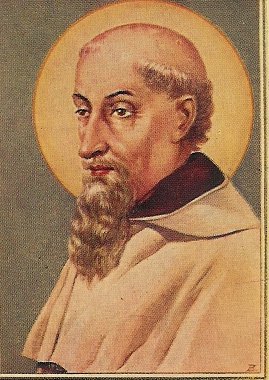
(source)
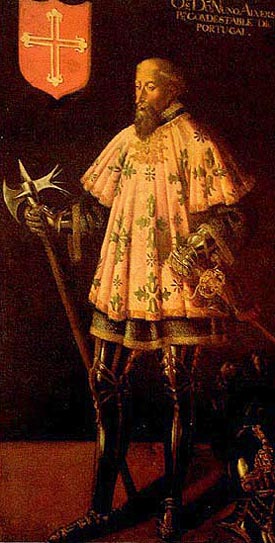
(source)

(source)
Biography of Blessed Nuno of St. Mary
More:
NUNO OF ST. MARY (Nuno Alvares Pereira, The Holy Constable, 1360-1431) (pdf)
wiki & PT wiki
Bl. Nuno Alvarez Pereira, O.Carm.
Blessed Nuno Alvares Pereira, Religious
RORATE CÆLI: All hail the Holy Constable
(source)
(source)
(source)
Biography of Blessed Nuno of St. Mary
More:
NUNO OF ST. MARY (Nuno Alvares Pereira, The Holy Constable, 1360-1431) (pdf)
wiki & PT wiki
Bl. Nuno Alvarez Pereira, O.Carm.
Blessed Nuno Alvares Pereira, Religious
RORATE CÆLI: All hail the Holy Constable
Zenit: Benedictines Celebrate Brother's Canonization

(source)

(source)
Vatican.va: Bernardo Tolomei (1272-1348) - Biography
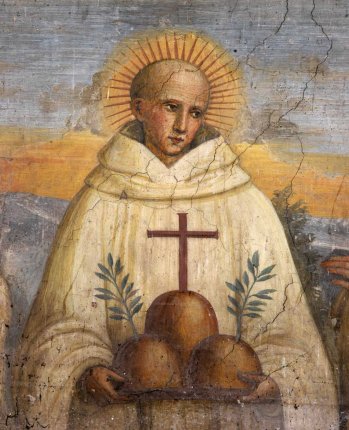
(source)
idle speculations: Bernardo Tolomei
Italian website
blog
VATICAN The Eucharist as the response to the crisis and loss of meaning of our time
Benedict XVI. Saints proclaim the Glory of God
Benedict XVI Offers 5 New Saints as Role Models
Pope creates 5 saints including Portuguese warrior
Pope Proclaims Saints at Vatican Ceremony

Pope Benedict XVI gestures on his arrival at the Canonization of Blesseds Italians Arcangelo Tadini, Bernardo Tolomei, Geltrude Comensoli, Caterina Volpicelli and Portoguese Nuno de Santa Maria Alvares Pereira in St. Peters' square at the Vatican on April 26, 2009. (Getty/Daylife)

Tapestries depicting five new saints hang from Saint Peter's facade at the Vatican during a canonisation mass led by Pope Benedict XVI April 26, 2009. The five new saints include Portugal's national hero Nuno Alvares Pereira (2nd L), Italy's Arcangelo Tadini (C), Bernardo Tolomei (2nd R), Geltrude Comensoli (L) and Caterina Volpicelli (R). (Reuters/Daylife)

Pope Benedict XVI arrives to lead an open-air canonization ceremony for five new saints, in St. Peter's Square at the Vatican Sunday, April 26, 2009. Benedict XVI canonized five new saints, including Portugal's 14th century independence leader and an Italian monk who died of the plague after tending to the sick. (AP/Daylife)

Pope Benedict XVI (C) arrives to lead a canonisation mass of five new saints at the Saint Peter's square in Vatican April 26, 2009. Pope Benedict created five new saints on Sunday, including Portugal's national hero Nuno Alvares Pereira, a medieval warrior-friar credited with securing Portugal's independence from Castile. The pope told pilgrims at the canonisation in the Vatican that the 14th-century nobleman had shown that "in any situation, even of a military and warlike nature, it is possible to act and live out the values and principles of Christian life". (Reuters/Daylife)
(source)
(source)
Vatican.va: Bernardo Tolomei (1272-1348) - Biography
(source)
idle speculations: Bernardo Tolomei
Italian website
blog
VATICAN The Eucharist as the response to the crisis and loss of meaning of our time
Benedict XVI. Saints proclaim the Glory of God
Benedict XVI Offers 5 New Saints as Role Models
Pope creates 5 saints including Portuguese warrior
Pope Proclaims Saints at Vatican Ceremony
Pope Benedict XVI gestures on his arrival at the Canonization of Blesseds Italians Arcangelo Tadini, Bernardo Tolomei, Geltrude Comensoli, Caterina Volpicelli and Portoguese Nuno de Santa Maria Alvares Pereira in St. Peters' square at the Vatican on April 26, 2009. (Getty/Daylife)
Tapestries depicting five new saints hang from Saint Peter's facade at the Vatican during a canonisation mass led by Pope Benedict XVI April 26, 2009. The five new saints include Portugal's national hero Nuno Alvares Pereira (2nd L), Italy's Arcangelo Tadini (C), Bernardo Tolomei (2nd R), Geltrude Comensoli (L) and Caterina Volpicelli (R). (Reuters/Daylife)
Pope Benedict XVI arrives to lead an open-air canonization ceremony for five new saints, in St. Peter's Square at the Vatican Sunday, April 26, 2009. Benedict XVI canonized five new saints, including Portugal's 14th century independence leader and an Italian monk who died of the plague after tending to the sick. (AP/Daylife)
Pope Benedict XVI (C) arrives to lead a canonisation mass of five new saints at the Saint Peter's square in Vatican April 26, 2009. Pope Benedict created five new saints on Sunday, including Portugal's national hero Nuno Alvares Pereira, a medieval warrior-friar credited with securing Portugal's independence from Castile. The pope told pilgrims at the canonisation in the Vatican that the 14th-century nobleman had shown that "in any situation, even of a military and warlike nature, it is possible to act and live out the values and principles of Christian life". (Reuters/Daylife)
I believe Holy Transfiguration Skete has updated their website. I've passed by the Society of St. John the Evangelist in Cambridge, but never actually entered their monastery--I believe it's Anglican/Episcopalian. (The New Scot pointed it out while we were driving by, iirc.)
Wives and Daughters


I've been enjoying Wives and Daughters and Justine Waddell's performance as Molly Gibson the past few days. I've never seen all of it before, even though it was an 'instant favorite' when I first saw part of it on Masterpiece Theater. I think it was first aired in 1999, and it was during Lent or Holy Week, and I was at Christendom at that time. The TV room at the school wasn't that great, and it was usually occupied. Sarge, Pete Takeshi, CC, and I did get a chance to watch a part of it while we were in Scranton for the Triduum, staying at a priest's residence. (That was the year we attended the liturgies in Shohola, with the now-infamous Society of St. John. (Apparently their website is no longer being maintained. Neither is the website for the College of St. Justin Martyr.) Lot of memories about that trip, but I'll save that for another post in the future, if I do write about it.
One of these days I'll read the novel by Elizabeth Gaskell.
I wanted to find a photo of Roger Hamley's hat, but no luck so far. It's a great-looking hat. You can see it in some of the fan-made videos, though.
Look After You - Wives and Daughters - A Molly and Roger music video - The Fray
You can see the hat at 2:08 and 3:25.
I have to admit that I prefer the vest and the longer coat -- I think it's much better than the modern coat...
Another Wives and Daughters fashion site.
Iain Glen page.

A blog dedicated to Justine Waddell. (It hasn't been updated in a while.) I should re-watch Great Expectations (which also stars Ioan Gruffudd).

I haven't seen her version of Tess of the D'urbervilles. (Done in 1998, not the 2008 one.)
Does she have a South African accent in real life? 2 photos here, in the Life archive.

Anthony Howell plays Roger Hamley.
German fansite; another fansite
Masterpiece Theatre Foyle's War Who is Christopher Foyle?
He looks somewhat different in Foyle's War.
Some more fan vids:
Wives and Daughters
Wives and Daughters - Roger and Molly
Wives and Daughters, Molly and Roger
And some love advice from the adaptation: Take the Squire's Advice
Fr. Z: Ziegelstein auf Ziegelstein
The post is actually something sent in by a reader--there is a photo of a Servi Jesu et Mariae priest celebrating the Extraordinary Form at the International Theological Institute.
The post is actually something sent in by a reader--there is a photo of a Servi Jesu et Mariae priest celebrating the Extraordinary Form at the International Theological Institute.
The Secessionist's Bookshelf by Bill Buppert.
While the author offers this list because he is a paleolibertarian, the books should be read by anyone who deems himself to be an American conservative.
While the author offers this list because he is a paleolibertarian, the books should be read by anyone who deems himself to be an American conservative.
The 200th anniversary of Joseph Haydn's death


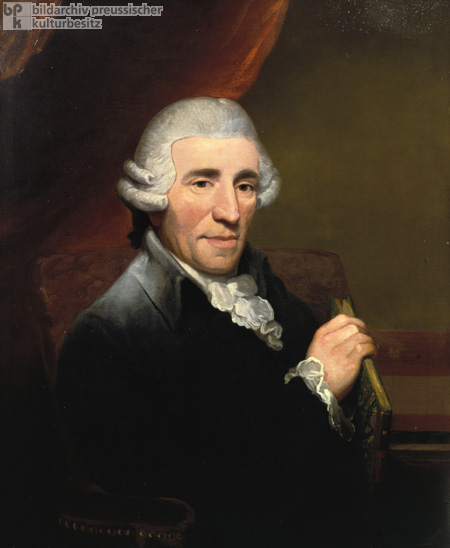
BBC Composers of the Year: Haydn (You can see the links for the other Composers of the Year, whose special anniversaries are being celebrated this year, at the top of the page.)
CATHOLIC ENCYCLOPEDIA: Franz Joseph Haydn
Karadar entry
Joseph Haydn - an overview of the classical composer
Joseph Haydn (1732-1809)
Naxos biography
BBC - Music - Joseph Haydn
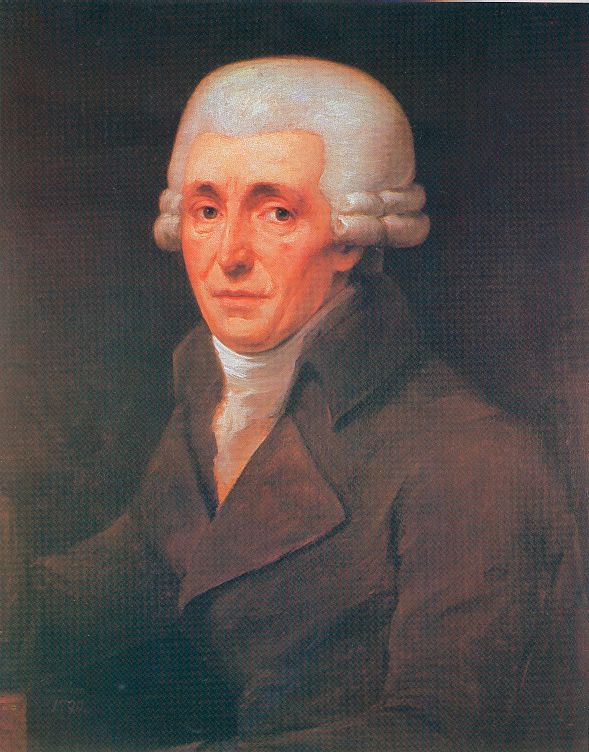
HOASM: (Franz) Joseph Haydn
Croatian composer Joseph Haydn, by William H. Hadow
Essentials of Music - Composers
Classical Music Pages: Joseph Haydn
Classical Archives: Composer: Franz Joseph Haydn
Franz Joseph Haydn Classical Composers Database
Franz Joseph Haydn ArkivMusic
wiki
Subscribe to:
Posts (Atom)