Prostitution: Legal Work or Slavery?
A Failed Attempt at Defending Women’s Dignity
By Father John Flynn, L.C.
ROME, OCT. 15, 2007 (Zenit.org).- Legalizing prostitution is under debate in a number of countries.
Hungary recently decided to legalize it, apparently in part due to the government’s desires to exact revenue from an activity they calculate could generate around $1 billion a year, reported the Associated Press, Sept. 24.
Bulgaria, however, took a step in the opposite direction, reversing a plan to legalize prostitution, according to the New York Times, Oct. 6.
“We should be very definite in saying that selling flesh is a crime,” Rumen Petkov, the interior minister, said during a recent forum on human trafficking, the article reported. The New York Times also commented that last year, Finland made it illegal to buy sex from women brought in by traffickers, while Norway is reportedly planning on imposing a complete ban on purchasing sex.
Italy, meanwhile, is considering how to deal with the widespread practice of street prostitution. Interior Minister Giuliano Amato said the government was thinking about measures such as fining clients, reported the Italian daily Avvenire, Sept. 26.
Prostitution is also under debate in Britain, where a new television series, “Belle de Jour,” presents a glamorized view of the sex industry -- a portrayal strongly criticized by Emine Saner in an article published Sept. 20 in the Guardian newspaper.
“Of the estimated 80,000 women who are sex workers in the U.K., the vast majority do it because they have drug problems or families to support and have no other viable way of making money,” Saner commented.
Moreover, she argued that two-thirds of sex workers have experienced violence, including rape. Government data also reveal that at least 60 sex workers have been murdered in the past 10 years.
Guardian commentator Madelaine Bunting returned to the debate with an article published Oct. 8. Around 90% of prostitutes want to leave their activity, she said. At a time when sex trafficking is booming as one of the most lucrative forms of organized crime, we don’t need a fairytale story about prostitution, argued Bunting.
Victorian failure
Countries debating whether or not to legalize prostitution could learn from what occurred in the Australian state of Victoria. The state government legalized prostitution in 1984 and since then, the sex industry has flourished. With over 20 years of experience, many of the promised benefits of legalizing prostitution have not, however, materialized, according to a book published earlier this year.
A detailed examination of the situation in Victoria was authored by self-declared “feminist activist” Mary Lucille Sullivan, in her book “Making Sex Work: A Failed Experiment With Legalised Prostitution,” (Spinifex Press).
“Victoria’s legalized prostitution system assists in maintaining male dominance, the sexual objectification of women, and the cultural approval of violence against women,” is her thesis.
Normalizing prostitution, as if it were merely some kind of employment, has also undermined women’s workplace equality and contradicts other government policies aimed at protecting women’s rights, accused Sullivan.
Too often, she added, the pressures today to treat prostitution as just another job stem from a neo-liberal vision of the free market, which sees women and girls as a commodity. Some feminists who supported the legalization of prostitution, Sullivan continues, were also influenced by a libertarian outlook and a misplaced desire to establish the “rights” of prostitutes. For its part, the state saw economic advantages in legalization, since it could tax a heretofore underground and illegal activity.
Legalization in Victoria, Sullivan explained, was also defended under the guise of minimizing the harm to the women involved, by bringing about formal regulation and legal protections in the sex industry.
Intrinsic violence
This has not occurred, she affirmed, because attempting to portray prostitution as an occupation to be put under the control of health and safety norms ignores the intrinsic violence of prostitution and the fact that sexual harassment and rape are indistinguishable from the product clients buy.
Moreover, legalization itself has introduced a new series of damaging consequences for women, Sullivan argues. Among these is, ironically, a further expansion of the illegal side of prostitution. In fact, the phenomenon of curbside prostitution, far from disappearing with legalization, has continued to grow in Victoria.
Likewise, legalization, far from removing the influence of organized crime, has instead fueled the role of illegality by introducing greater economic incentives for trafficking in women and girls for both legal and illegal brothels. Sullivan also quoted experts in organized crime who allege that the legalized prostitution industry in Victoria still has strong links to underground criminality.
With regard to this human trafficking, Sullivan draws attention to international studies that put at billions the profits made from this modern form slavery. Estimates of the numbers of women and girls who are trafficked range from 700,000 to 2 million each year.
The legalization of prostitution in Victoria has not done anything to reduce illegal sex trafficking, Sullivan argues. In addition, since legalization, child prostitution continues to be a problem.
Billion-dollar industry
We are now in a situation, Sullivan pointed out, where the media, airlines, hotels, the tourist industry and banks all seek to promote and expand the industry of prostitution. In addition, legalization has brought an encroachment of prostitution in public life.
According to data cited in the book, by 1999, annual turnover in Victoria’s prostitution industry reached $360 million (Australian), which at the current exchange rate would be US $323.3 million . Overall in Australia, 3 states and one territory have legalized prostitution. A business information service cited by Sullivan put at $1.780 million (Australian) the turnover in the financial year 2004-05.
Instead of legalization, Sullivan recommended following the example of Sweden, where the law criminalizes the buying of sexual services and does not penalize the women and children. Sweden also helps women who have suffered violence as a result of prostitution.
Legalization of prostitution, Sullivian concluded, makes a fundamental mistake as it enshrines as a man’s “right” the ability to buy women and girls for sexual gratification. Once this is done, it becomes much more difficult to control the industry or prevent the exploitation of women.
Slavery
“Prostitution is a form of modern slavery,” commented a recent document of the Pontifical Council for the Pastoral Care of Migrants, issued June 16. The publication, “Guidelines for the Pastoral Care of the Road,” attracted media attention due to its ten commandments for drivers, but its content also includes a section on street prostitution. (Nos. 85-115)
“The sexual exploitation of women is clearly a consequence of various unjust systems,” commented the Pontifical Council. Causes such as a need for money, the use of violence, and human trafficking contribute to trap women into prostitution.
“The victims of prostitution are human beings, who in many cases cry out for help, to be freed from slavery, because selling one’s own body on the street is usually not what they would voluntarily choose to do,” the document added.
The council called for greater efforts to help free women from the abuses against human dignity that result from prostitution. Catholic institutions, the declaration added, have often helped women to escape from this situation. Women need to be aided so that they can regain their esteem and self-respect, and to be reintegrated into family and community life.
“Customers,” on the other hand, “need enlightenment regarding the respect and dignity of women, interpersonal values and the whole sphere of relationships and sexuality,” the document said. The exploiters also need to be enlightened regarding the hierarchy of the values of life and human rights, it recommended.
“Committing oneself at various levels -- local, national and international -- for the liberation of prostitutes is therefore a true act of a disciple of Jesus Christ, an expression of authentic Christian love,” the council concluded. Surely a far better answer than legalizing what is nothing more than sexual slavery.
Monday, October 15, 2007
Zenit: Prostitution: Legal Work or Slavery?

Sunday, October 14, 2007
AN: Three Gorges' dam: another 4 million uprooted
Three Gorges' dam: another 4 million uprooted
The government of the Chongqing municipality has approved the forced evacuation of over 4 million residents along the Yangtze river reserve, considered a problem for the ecology in the dam area. Environmentalists counter: problems surrounding the first exodus in the ‘90’s have yet to be resolved.
The government of the Chongqing municipality has approved the forced evacuation of over 4 million residents along the Yangtze river reserve, considered a problem for the ecology in the dam area. Environmentalists counter: problems surrounding the first exodus in the ‘90’s have yet to be resolved.
Our Mother of Perpetual Help Mission Chapel
Our Mother of Perpetual Help Mission Chapel
Next Sunday, Fr. William Avis will be visiting and celebrating the 8:00 Mass. He was just ordained for the Institute this Summer. As I mentioned before, Fr. Talarico, who was also ordained in June, was a student at St. Gregory's Academy when I first met him. His hair seems to be grey in color, but I think it is just the lighting.
[Edit: apparently that url for SGA is to a trial website that is incomplete; here is the new website. Fr. Tom Longua, FSSP is apparently still at the academy.]
Photos from the ordination, showing the priests of the Institute in their distinctive choir dress:


(Larger and therefore of better quality than the ones in the newsletter.)
Blue was chosen to symbolize their dedication to Our Lady under the title of the Immaculate Conception.
As I expected the 8:00 was a low Mass. Like Our Lady of Peace, there is an American flag and a papal flag by the sides of the altar, in the sanctuary-- I wish this custom would be dropped, especially if it contributes to a false nationalism. But even if it doesn't, I don't think flags representing secular entities should be in the sanctuary. Outside the building or in the vestibule, that would be different. I have not seen this custom observed in other coutnries. (I can't remember if the Christendom College chapel observed this as well--I think it did.)
From the website for the chapel I find out that there is a High Mass on Sunday, but at 5:30 PM. That's a bit late in the day. Still, maybe I should go and see what the schola is like.
I don't think I will be going to the chapel regularly, especially if the High Mass is that late--the low Mass isn't a good fit for a liturgical spirituality that is based on the sung liturgy as the norm. And besides... there is the question of the liturgical language. While I see the value of retaining Latin as a sacred language, I think it is more appropriate within certain cultures (i.e. nations speaking a Romance language). I have been persuaded by those who would argue that the hieratic language of the liturgy should be [somewhat] intelligible to the faithful upon hearing.
[One such advocate would be Archimandrite Serge Keleher -- here is a discussion of the current controversy regarding inclusive language and translations within the Ruthenian rite: Serge Keleher: Studies on the Byzantine Liturgy – 1 - The ... -- page 1 of the discussion; here is a response by Fr. David Petras on his website to Fr. Keleher.
Title: Studies on the Byzantine Liturgy – 1
The Draft Translation: A Response to the Proposed Recasting of the Byzantine-Ruthenian Divine Liturgy of St. John Chrysostom
Stauropegion Press
P.O. Box 11096
Pittsburgh, PA 15237-9998
Cost: $20 + $4 per book shipping & handling.
On the Orthodox tradition and Catholicity]
Then there is the culture of communities that are gathered around the extraordinary form of the Roman rite. It is hard to describe it--stuck in the 50s may give one an idea of how the members dress, but it may not reflect their beliefs accurately. I wonder if such communities are different in the South? At any rate, it is somewhat of an uncomfortable fit, and I do not think my judgment regarding my own vocation was wrong.
I'll check out St. Thomas Aquinas in Palo Alto and the St. Ann Choir one of these Sundays, but I don't think I will be going there frequently--Palo Alto is just too far. At this point I will be looking at the Byzantine rite--St. Basil in Los Gatos and maybe St. Elias as well. Yes, I'm still a liturgical tourist, just like Dr. Pinto.
(Another NLM post on the St. Ann Choir.)
Byzantine Catholic Church in America
My mother and I then drove up to San Francisco to take yeh yeh ma ma to lunch to celebrate yeh yeh's birthday. Of course we went to Emperor Palace again. Why would anyone want to go to a different Cantonese restaurant in SF? (Unless they want something with a fancy interior.) Then we went to Clement gai to get some dim sum. The second SF Chinatown is busy on Sunday--no parking places, plenty of Asian drivers.
Next Sunday, Fr. William Avis will be visiting and celebrating the 8:00 Mass. He was just ordained for the Institute this Summer. As I mentioned before, Fr. Talarico, who was also ordained in June, was a student at St. Gregory's Academy when I first met him. His hair seems to be grey in color, but I think it is just the lighting.
[Edit: apparently that url for SGA is to a trial website that is incomplete; here is the new website. Fr. Tom Longua, FSSP is apparently still at the academy.]
Photos from the ordination, showing the priests of the Institute in their distinctive choir dress:
(Larger and therefore of better quality than the ones in the newsletter.)
Blue was chosen to symbolize their dedication to Our Lady under the title of the Immaculate Conception.
As I expected the 8:00 was a low Mass. Like Our Lady of Peace, there is an American flag and a papal flag by the sides of the altar, in the sanctuary-- I wish this custom would be dropped, especially if it contributes to a false nationalism. But even if it doesn't, I don't think flags representing secular entities should be in the sanctuary. Outside the building or in the vestibule, that would be different. I have not seen this custom observed in other coutnries. (I can't remember if the Christendom College chapel observed this as well--I think it did.)
From the website for the chapel I find out that there is a High Mass on Sunday, but at 5:30 PM. That's a bit late in the day. Still, maybe I should go and see what the schola is like.
I don't think I will be going to the chapel regularly, especially if the High Mass is that late--the low Mass isn't a good fit for a liturgical spirituality that is based on the sung liturgy as the norm. And besides... there is the question of the liturgical language. While I see the value of retaining Latin as a sacred language, I think it is more appropriate within certain cultures (i.e. nations speaking a Romance language). I have been persuaded by those who would argue that the hieratic language of the liturgy should be [somewhat] intelligible to the faithful upon hearing.
[One such advocate would be Archimandrite Serge Keleher -- here is a discussion of the current controversy regarding inclusive language and translations within the Ruthenian rite: Serge Keleher: Studies on the Byzantine Liturgy – 1 - The ... -- page 1 of the discussion; here is a response by Fr. David Petras on his website to Fr. Keleher.
Title: Studies on the Byzantine Liturgy – 1
The Draft Translation: A Response to the Proposed Recasting of the Byzantine-Ruthenian Divine Liturgy of St. John Chrysostom
Stauropegion Press
P.O. Box 11096
Pittsburgh, PA 15237-9998
Cost: $20 + $4 per book shipping & handling.
On the Orthodox tradition and Catholicity]
Then there is the culture of communities that are gathered around the extraordinary form of the Roman rite. It is hard to describe it--stuck in the 50s may give one an idea of how the members dress, but it may not reflect their beliefs accurately. I wonder if such communities are different in the South? At any rate, it is somewhat of an uncomfortable fit, and I do not think my judgment regarding my own vocation was wrong.
I'll check out St. Thomas Aquinas in Palo Alto and the St. Ann Choir one of these Sundays, but I don't think I will be going there frequently--Palo Alto is just too far. At this point I will be looking at the Byzantine rite--St. Basil in Los Gatos and maybe St. Elias as well. Yes, I'm still a liturgical tourist, just like Dr. Pinto.
(Another NLM post on the St. Ann Choir.)
Byzantine Catholic Church in America
My mother and I then drove up to San Francisco to take yeh yeh ma ma to lunch to celebrate yeh yeh's birthday. Of course we went to Emperor Palace again. Why would anyone want to go to a different Cantonese restaurant in SF? (Unless they want something with a fancy interior.) Then we went to Clement gai to get some dim sum. The second SF Chinatown is busy on Sunday--no parking places, plenty of Asian drivers.
Saturday, October 13, 2007
Icon: All Saints of North America
Orthodox saints...

Synaxis Of All Saints Who Have Shone Forth In North America


[from Saint John Maximovitch Eastern Orthodox Web Page; B&W of above ]

All Saints of North America Orthodox Church (OCA, Hamilton) - asna.ca
Copies of the icon are available from All Saints of North America parish in Hamilton for a donation of $20 + $5 shipping/handling (CDN funds for Canadian ...
OCA - The North American Saints
All Saints of North America - Orthodox Christianity in the ...
All Saints of North America Orthodox Church, Calendar of Current ...
All Saints of North America - About Orthodoxy
Monastery of All Saints of North America (Dewdney, British ...
Synaxis Of All Saints Who Have Shone Forth In North America
[from Saint John Maximovitch Eastern Orthodox Web Page; B&W of above ]
All Saints of North America Orthodox Church (OCA, Hamilton) - asna.ca
Copies of the icon are available from All Saints of North America parish in Hamilton for a donation of $20 + $5 shipping/handling (CDN funds for Canadian ...
OCA - The North American Saints
All Saints of North America - Orthodox Christianity in the ...
All Saints of North America Orthodox Church, Calendar of Current ...
All Saints of North America - About Orthodoxy
Monastery of All Saints of North America (Dewdney, British ...


Peter Rosset and Polyculture
I was reminded of him by Sharon Astyk in her latest blog entry. See also her How Much Did the Green Revolution Matter? or Can We Feed the World Without Industrial Agriculture?
Peter Rosset
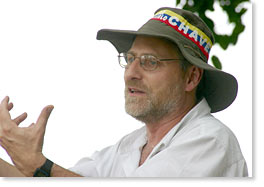

Peter Rosset
BBC Wales: Back to the land
via EB
Patrick Holden, Peak Oil, Local Food and Transition (Video)
Rob Hopkins, Transition Culture An excellent documentary aired on BBC Wales last night, called Back to the Land, which was part of a series called ‘Week In, Week Out’. In featured Patrick Holden, the director of the Soil Association, discussing peak oil and the impact that finding out about it had on his life and on how he farms his farm in Wales, as well as looking at the bigger implications of its ramifications for food and farming. It also included interviews with myself and some peak oil deniers, and sets out a strong argument that the transition to life beyond oil could actually bring many benefits to society. You can watch the film here for the next week.
-----Text from the BBC-Wales site:
Patrick Holden, BBC-Wales Television
One of the country's top food campaigners explains why Wales is heading for massive food shortages and price rises unless more of us get back to the land and start growing our own. ---Oil wells are running, sparking a surge in food prices. This could leave us hungry. There are fears, in the worst case scenario, that this could lead to conflict and anarchy...These are some of the concerns raised in a Week In Week Out presented by one of Wales's leading food campaigners, Patrick Holden.A west Wales-based farmer for 30 years, Mr Holden claims our food distribution system is on shaky ground because of its dependency on oil.He says: "More and more people are coming to agree that oil production will peak in the next few years and when that happens its price could triple."Mr Holden says the end of cheap oil spells the end of cheap food.The petrol and food shortages of the fuel protests in 2000 could happen again, he warns. Mr Holden predicts the end of cheap oil will ignite social disorder and leave people hungry. The answer? We must all get back to the land - grow and eat food produced locally.(10 October 2007)
Study: for most efficient land use, add a little meat
From Cornell University, archived at EB:
Study: for most efficient land use, add a little meat
by Susan Lang
Claude Lewenz, How to Build a Village
via EB
Book Review: How to Build a Village
Malu Fink, WorldChanging
How to Build a Village, by New Zealand author Claude Lewenz, delivers on its promising title. This toolbox is packed with innovative, welcome, and simple solutions to some of the decade's biggest questions.How to Build a Village is a handbook, a toolbox, and an opener to a larger conversation about how better to be in the world. Have 50 years of suburbs delivered on their promise? The book offers solutions to the problems facing modern suburbs through the design and construction of a different type of living arrangement; a Village founded on improving quality of life.The Village differs from the suburban model of sprawling neighborhoods that necessitate a car to get to work and other amenities to describe human-scaled development, scaled at a friendly size for a human. Streets, buildings and the village grid are tailored to give those who live, work and play in and around them a feeling of intimacy, naturalness and safety. People remain the focus of the Village: they are its main resource and have priority. Emphasis is given to the construction of numerous plazas where people are able to gather, patterned on those in old Europe with cafe tables and local shops.(11 October 2007)
Originally at WorldChanging: Tools, Models and Ideas for Building a Bright Green ...
Village Forum - How to Build a Village - by Claude Lewenz
Village Forum - About the Author - Claude Lewenz
How to Build a Village (Manuscript Edition) by Claude Lewenz (Book ...
Houses & Gardens Article: Paradise Found - NZ House & Garden (print version)
Book Review: How to Build a Village
Malu Fink, WorldChanging
How to Build a Village, by New Zealand author Claude Lewenz, delivers on its promising title. This toolbox is packed with innovative, welcome, and simple solutions to some of the decade's biggest questions.How to Build a Village is a handbook, a toolbox, and an opener to a larger conversation about how better to be in the world. Have 50 years of suburbs delivered on their promise? The book offers solutions to the problems facing modern suburbs through the design and construction of a different type of living arrangement; a Village founded on improving quality of life.The Village differs from the suburban model of sprawling neighborhoods that necessitate a car to get to work and other amenities to describe human-scaled development, scaled at a friendly size for a human. Streets, buildings and the village grid are tailored to give those who live, work and play in and around them a feeling of intimacy, naturalness and safety. People remain the focus of the Village: they are its main resource and have priority. Emphasis is given to the construction of numerous plazas where people are able to gather, patterned on those in old Europe with cafe tables and local shops.(11 October 2007)
Originally at WorldChanging: Tools, Models and Ideas for Building a Bright Green ...
Village Forum - How to Build a Village - by Claude Lewenz
Village Forum - About the Author - Claude Lewenz
How to Build a Village (Manuscript Edition) by Claude Lewenz (Book ...
Houses & Gardens Article: Paradise Found - NZ House & Garden (print version)
The Independent, Shipping pollution 'far more damaging than flying'
via EB
Shipping pollution 'far more damaging than flying'
Daniel Howden, The Independent New research suggests that the impact of shipping on climate change has been seriously underestimated and that the industry is currently churning out greenhouse gases at nearly twice the rate of aviation.
Will this be enough to make normal people reconsider globalization? Probably not.
Shipping pollution 'far more damaging than flying'
Daniel Howden, The Independent New research suggests that the impact of shipping on climate change has been seriously underestimated and that the industry is currently churning out greenhouse gases at nearly twice the rate of aviation.
Will this be enough to make normal people reconsider globalization? Probably not.
What are men looking for?
Funny discussion over at Dr. Helen's blog:
"So, in economic terms you are a depreciating asset and I am an earning asset."
"So, in economic terms you are a depreciating asset and I am an earning asset."
E.S. Savas, Breaking the Chinese Code
E. S. Savas
Breaking the Chinese Code
Welcome to the People’s Republic, land of “harmony” and “community.”
Breaking the Chinese Code
Welcome to the People’s Republic, land of “harmony” and “community.”
Chinese Realism
The Western Confucian has a post about Chinese realism in painting. Here are some other examples, in addition to the one posted by Mr. Snyder:


Stories about the nieces
After watching Mass on EWTN a couple of times, niece #1 has learned how to sing "alleluia," though she initially pronounced it like "ah-lay-loo-ah" instead "ah-lay-loo-yah" -- the syllables are very distinct. Niece #2, as I've written, occasionally interlocks her fingers, as if she is praying. (I have a picture of this that I haven't uploaded yet.) Niece #1 saw this and said, "Mui mui ------ , amen!" hahaha.
Niece #1 has been playing with statues of the Blessed Mother and St. Therese. She says, "Mama Mary loves [niece #1]. St. Therese loves [niece #1]." I wonder if she treats them as imaginary friens or if it's something real, linked to faith.
Niece #1 has been playing with statues of the Blessed Mother and St. Therese. She says, "Mama Mary loves [niece #1]. St. Therese loves [niece #1]." I wonder if she treats them as imaginary friens or if it's something real, linked to faith.
Yesterday's trip to SF
The interior of Holy Virgin Cathedral:

From yesterday:
It was raining today, and driving on 280 was a bit hazardous, so I was going rather slow, about 60 or so. The Highway Patrol was busy, I think the officer was pulling over speeders. I saw him whiz by the first time, with his yellow caution lights flashing, and then passed by him pulled over on the side of the road, after he had ticketed? warned? someone. Then he was off again and passed me again...
There were two other CHP cars on a road just off the freeway--I guess they were taking a break and chatting.
I decided to go to Holy Virgin Cathedral bookstore, since I hadn't been there for a while. I was looking for cds from Valaam, but I didn't find anything new. There was a cd from the monks at Chevetogne that I was interested in, but I wasn't sure if I had it already so I didn't get it. I ended up getting a CD commemorating St. John (Maximovitch) of Shanghai and San Francisco? (sung by Holy Trinity Monastery and Seminary Choir in Jordanville, New York) and a book by Theophan the Recluse. There is some discussion of hesychasm in this book, but nothing in-depth. Nothing about seeing the divine energies.
What I read can be harmonized with "Latin" spirituality; there is an emphasis on apatheia, but I will have to see what Fr. Spidlik writes about this. I don't think they are aiming at a state of no emotion (like Vulcans or Buddhists), but towards a state of union with God.
The man minding the bookstore is a convert to Orthodoxy? His last name was Messinger... (first name Ryan)...
They were having a vigil service tonight--probably evening prayer? But I didn't have time to go inside and check it out--I hope next time. Mr. Messinger told a lady that the Akathist was being sung at another parish nearby, on Balboa. So will the ROCOR and Russian Orthodox jurisdictions remain distinct? Or will they eventually be merged? I should ask Daniel Larison, he would know the answer.
Kinokuniya SF is rearranging its shelves. No manga, anime art books in sight, though they may be brought back eventually--I think some gaijin were asking about that. They didn't have what I was looking for--apparently the issue was sold out, though the current issue is due to arrive on the 16th, unless there is a delay.
I learned my lesson about trying to find a parking space near Emperor Palace at night--the food is not worth the gas wasted driving the car around in a fruitless search. (Even if I ended up paying only $13.40 for 3 dishes.) Next time, I'll phone in the order and double-pack to pick it up. Dumb me, I forgot to get a menu while I was there, even though I had been holding one. (The si tau po was making a correction to the menu about the prices--which had been raised by $0.50.)


John Maximovitch - OrthodoxWiki

another icon
Saint John Maximovitch Eastern Orthodox Web Page
St. John Maximovitch
Father Demetrios Serfes -St. John (Maximovitch) of San Francisco
Life of St. John (Maximovich)
St. John of Shanghai and San Francisco
St John the Wonderworker
Photos of the holy relics of St. John Maximovitch
Saint John of Shanghai and San Francisco
St John Maximovitch on The Exaltation of the Precious Cross
St. Theophan the Recluse

Bishop Theophan, the Recluse of Vysha
Theophan the Recluse - OrthodoxWiki
St. Theophan the Recluse On Prayer
Theophan the Recluse - Christian Classics
A Prayer Rule by St. Theophan the Recluse
What is an Anathema? - by Bishop Theophan the Recluse
Theophan the Recluse, Four Homilies on Prayer - Monachos.net
On The Teachings Of Father Agapit On The Jesus Prayer
Compiled by Reverend Presbyter Demetrios Serfes
Boise, Idaho
19 April 1999
(includes a photo of Theophan the Recluse)
From yesterday:
It was raining today, and driving on 280 was a bit hazardous, so I was going rather slow, about 60 or so. The Highway Patrol was busy, I think the officer was pulling over speeders. I saw him whiz by the first time, with his yellow caution lights flashing, and then passed by him pulled over on the side of the road, after he had ticketed? warned? someone. Then he was off again and passed me again...
There were two other CHP cars on a road just off the freeway--I guess they were taking a break and chatting.
I decided to go to Holy Virgin Cathedral bookstore, since I hadn't been there for a while. I was looking for cds from Valaam, but I didn't find anything new. There was a cd from the monks at Chevetogne that I was interested in, but I wasn't sure if I had it already so I didn't get it. I ended up getting a CD commemorating St. John (Maximovitch) of Shanghai and San Francisco? (sung by Holy Trinity Monastery and Seminary Choir in Jordanville, New York) and a book by Theophan the Recluse. There is some discussion of hesychasm in this book, but nothing in-depth. Nothing about seeing the divine energies.
What I read can be harmonized with "Latin" spirituality; there is an emphasis on apatheia, but I will have to see what Fr. Spidlik writes about this. I don't think they are aiming at a state of no emotion (like Vulcans or Buddhists), but towards a state of union with God.
The man minding the bookstore is a convert to Orthodoxy? His last name was Messinger... (first name Ryan)...
They were having a vigil service tonight--probably evening prayer? But I didn't have time to go inside and check it out--I hope next time. Mr. Messinger told a lady that the Akathist was being sung at another parish nearby, on Balboa. So will the ROCOR and Russian Orthodox jurisdictions remain distinct? Or will they eventually be merged? I should ask Daniel Larison, he would know the answer.
Kinokuniya SF is rearranging its shelves. No manga, anime art books in sight, though they may be brought back eventually--I think some gaijin were asking about that. They didn't have what I was looking for--apparently the issue was sold out, though the current issue is due to arrive on the 16th, unless there is a delay.
I learned my lesson about trying to find a parking space near Emperor Palace at night--the food is not worth the gas wasted driving the car around in a fruitless search. (Even if I ended up paying only $13.40 for 3 dishes.) Next time, I'll phone in the order and double-pack to pick it up. Dumb me, I forgot to get a menu while I was there, even though I had been holding one. (The si tau po was making a correction to the menu about the prices--which had been raised by $0.50.)
John Maximovitch - OrthodoxWiki
another icon
Saint John Maximovitch Eastern Orthodox Web Page
St. John Maximovitch
Father Demetrios Serfes -St. John (Maximovitch) of San Francisco
Life of St. John (Maximovich)
St. John of Shanghai and San Francisco
St John the Wonderworker
Photos of the holy relics of St. John Maximovitch
Saint John of Shanghai and San Francisco
St John Maximovitch on The Exaltation of the Precious Cross
St. Theophan the Recluse
Bishop Theophan, the Recluse of Vysha
Theophan the Recluse - OrthodoxWiki
St. Theophan the Recluse On Prayer
Theophan the Recluse - Christian Classics
A Prayer Rule by St. Theophan the Recluse
What is an Anathema? - by Bishop Theophan the Recluse
Theophan the Recluse, Four Homilies on Prayer - Monachos.net
On The Teachings Of Father Agapit On The Jesus Prayer
Compiled by Reverend Presbyter Demetrios Serfes
Boise, Idaho
19 April 1999
(includes a photo of Theophan the Recluse)
Friday, October 12, 2007
The 1986 Hwang Jin Yi movie
<Hwang Jin Yi (KOREA 1986)
on sale at YesAsia
Should I check it out?
wiki on Hwang Jin Yi
SHG blog: Song Hye Kyo Heaven
LunaPark6 review of the 2007 movie
on sale at YesAsia
Should I check it out?
wiki on Hwang Jin Yi
SHG blog: Song Hye Kyo Heaven
LunaPark6 review of the 2007 movie
Kim Tae Hee videos
CF LG CHOCOLATE-Hyun Bin,Daniel Henney,Kim Tae Hee
alt
1:10
Love Story in Harvard - Making Film (Korea)
Kim Tae Hee - May Lee Show (full)
12th PIFF Star Road - Red Carpet October 05, 2007 9.30pm
12th PIFF Actors' Night
APAN Conference October 05, 2007
[PIFF 12th] Kim Tae Hee walking down the red carpet
No doubt there are photos of this at Yahoo Korea.
LW and KTH-Crenchia Photoshoot
KBS1 Love Request on 2007.09.29
金泰熙 김태희 Kim Tae Hee 30sec CF
fansite
alt
1:10
Love Story in Harvard - Making Film (Korea)
Kim Tae Hee - May Lee Show (full)
12th PIFF Star Road - Red Carpet October 05, 2007 9.30pm
12th PIFF Actors' Night
APAN Conference October 05, 2007
[PIFF 12th] Kim Tae Hee walking down the red carpet
No doubt there are photos of this at Yahoo Korea.
LW and KTH-Crenchia Photoshoot
KBS1 Love Request on 2007.09.29
金泰熙 김태희 Kim Tae Hee 30sec CF
fansite
Daniel Larison takes a quick look at Byzantium: The Surprising Life of a Medieval Empire
At WWWTW.
Byzantium: The Surprising Life of a Medieval Empire
by Judith Herrin
Princeton University Press:
Herrin, J.: Byzantium: The Surprising Life of a Medieval Empire.
Times Online review
News for Medievalists: Review of Byzantium: The Surprising Life of ...
Byzantium: The Surprising Life of a Medieval Empire
by Judith Herrin
Princeton University Press:
Herrin, J.: Byzantium: The Surprising Life of a Medieval Empire.
Times Online review
News for Medievalists: Review of Byzantium: The Surprising Life of ...
Extraordinary Use Oratory in San Jose
Here is a California Catholic Daily article reporting the news in January. (Free Republic post)
The Institute of Christ the King is involved:
Does this explain why the Saturady 7:30 P.M. Latin Mass (ordinary form) has been dropped at OLP? (I don't know if it has been dropped permanently, but last Saturday's Mass was in English.)
I expect low Masses, but I will try to check it out this coming Sunday.
Another California Catholic Daily article (gives good news about another diocese).
Miscellaneous blog coverage
WDTPRS
Closed Cafeteria
Domus Dei
A Catholic Life
Augustinian priest Father Pedro Ottonello will serve as chaplain at the Oratory of the Chapel of Our Mother of Perpetual Help, located at 1298 Homestead Road in Santa Clara, telephone (408) 248-4330.Mass Schedule:
Our Lady of Perpetual Help has Masses at 8, 9:30, and 11 a.m. and at 5:30 p.m. Confessions are 30 minutes before Mass.
The Institute of Christ the King is involved:
The oratory will function under the supervision of the Institute of Christ the King, Sovereign Priest, a worldwide foundation of priests founded in 1990 exclusively to celebrate the Mass and sacraments according to the 1962 Missale Romanum.Valley Catholic article
Does this explain why the Saturady 7:30 P.M. Latin Mass (ordinary form) has been dropped at OLP? (I don't know if it has been dropped permanently, but last Saturday's Mass was in English.)
I expect low Masses, but I will try to check it out this coming Sunday.
Another California Catholic Daily article (gives good news about another diocese).
Miscellaneous blog coverage
WDTPRS
Closed Cafeteria
Domus Dei
A Catholic Life
Subscribe to:
Posts (Atom)