Eunomia: The Duduk Comes For You
I have an old unfinished post on the duduk...
See also his A Voting Menagerie.
Thursday, October 30, 2008

Wednesday, October 29, 2008
AT: Sweet salaries for Indian 'eye candy'
By Priyanka Bhardwaj
How will catch up with the "First World Nations" first, China or India?
By Priyanka Bhardwaj
How will catch up with the "First World Nations" first, China or India?
Julianne off DWTS
for surgery... Julianne Hough leaves “Dancing With the Stars” – for now
Julianne Hough & Cody Linley Dancing with the Stars - samba
DWTS Cody Linley & Julianne Hough Week 6
ET with DWTS Julianne Hough - 10-28-08
Julianne Hough & Cody Linley Dancing with the Stars - samba
DWTS Cody Linley & Julianne Hough Week 6
ET with DWTS Julianne Hough - 10-28-08
The St. Ann Choir's Fall Program:
Plus:
Coming Events
ALL SAINTS' DAY
Saturday noon, November 1, 12:15 p.m.
Sung Mass in Latin
Josquin Des Prez, Missa Ave Maris Stella
ALL SOULS' DAY
Sunday, November 2, 12:00 noon
Orlando di Lasso, Missa pro Defunctis
THE SOLEMNITY OF CHRIST THE KING
Sunday, November 23, 12:00 noon
Orlando di Lasso, Missa Laudate Dominum
IMMACULATE CONCEPTION
Monday, December 8 , 8:00 p.m.
Sung Mass in Latin
Tomás Luis de Victoria, Missa O Quam Gloriosum
ADVENT VESPERS
Sunday, December 14, 6:15 p.m.
St. Ann Chapel, Melville at Tasso, Palo Alto
Special Advent Vespers for Gaudete Sunday
Music of Dufay, Lasso, Walter, & Josquin
THE CHRISTMAS SEASON
Masses on Christmas Eve and Day and New Year's Day, and
New Year's Eve Vespers are planned; watch for further details
Plus:
MUSIC ON THE POETRY OF PETRARCH
The Stanford Early Music Singers will present a free concert of Renaissance music-settings of texts of Francesco Petrarch
by Italian and English composers of the sixteenth century:
Festa, Rore, Lasso, Marenzio, Ferrabosco & others.
Wednesday, December 3, 8:00 p.m.,
Stanford Memorial Church.
Coming Events
Tuesday, October 28, 2008
THE COMING ELECTRICITY CRISIS
by Byron W. King
via Daily Reckoning
alt--top link does not appear to be working; it is on the front page of the American Daily Reckoning website, but will undoubtedly be archived tomorrow. Whiskey & Gunpowder.
by Byron W. King
via Daily Reckoning
Earlier this week, I attended a privately sponsored presentation on U.S. energy policy. The main speaker was a senior faculty member from Carnegie Mellon University. This guy has been "doing electricity" for about 40 years or so. He has written reports for the National Academy of Sciences. When the people at the U.S. Department of Energy have a question about electricity, they call this CMU professor.
The news is not good. In 2007, there were about 144 new coal-fired power plants on the drawing boards of the U.S. energy utilities. But, said the professor, "We will probably build none of them." Indeed, "The electric industry in the U.S. is in terrible shape," said the CMU man. So we should expect local and regional brownouts and blackouts to become common occurrences "within five years." But the first isolated instances of brownout and blackout will hit us much sooner than that.
Why is there such a gloomy forecast? Because essentially, the deregulation of the 1990s was botched. According to the CMU electricity expert, botched deregulation "slowed investment, raised prices and led to more and more uncertainty." So now few utilities or their executives want to take political, regulatory, technical or financial risks. Hence, the entire long-range planning cycle has broken down.
It's almost impossible to decide what to build, and at what scale. Costs are exploding, particularly for new construction. It's safe to say that most power plant construction cost projections have doubled within the past 18 months. The prospect of fast-changing environmental regulations also adds to the uncertainty. No one wants to build a power plant and learn in five or 10 years or so that environmental regulations are going to shut it down.
Even the alternative energy industry - with wind, solar and geothermal as the poster children - has formidable challenges. The biggest issue is cost competitiveness. That's because alternative systems provide power at costs that range from slightly higher to much higher than traditional power from, say, coal plants. Then there are issues of reliability, due to the intermittent nature of wind and solar, and the still-novel nature of geothermal power. And other issues include the lack of transmission from the usually remote sites of wind and solar facilities.
Overall, U.S. power producers face the prospect of many different forms of investment uncertainty. What will be the availability of different fuel mixes? Will coal still be useable? Or will natural gas be available at a cost they can afford? Can power producers invest in nuclear systems when there is still no definite program for disposing of the waste stream over the next 50 years? Or should the utility companies go all out for alternative systems?
But the next question is how much can consumers afford to pay? And what rates will the regulators allow? If utilities invest in alternative power systems (like wind or solar) that produce electricity at, say, 20-30 cents per kilowatt hour (kwh), will the regulators set those relatively high costs as the level of reimbursement? And for how long? What if the regulators permit the higher costs for only a few years and then penalize the utilities because some "better" technology comes along? At the end of the day, the base line cost of electricity is set against the cost to produce comparable coal or natural gas-based electricity. And this cost setting occurs even though there is a growing bias against burning carbon in the U.S. political and regulatory culture. One attendee at the discussion commented, "When you're in a 'no-win' situation, guess what? You can't win."
The CMU professor has looked at historical trends for power in the U.S. His best estimate is that over the next decade or so, the price for electricity will about double on average throughout the nation. "This would put the cost of electricity about on par, as a percentage, with where it was back in the 1950s." But that is only if people keep making investments in new power systems and the nation adopts conservation and efficiency measures on a large scale. Absent that? It's lights out.
alt--top link does not appear to be working; it is on the front page of the American Daily Reckoning website, but will undoubtedly be archived tomorrow. Whiskey & Gunpowder.
 via EB: Nassim Nicholas Taleb Angry (video) -- also at Youtube.
Nassim Nicholas Taleb's Home Page
(wiki)
His book, The Black Swan (Google Books)
Time interview on black swans
Nassim Nicholas Taleb: the prophet of boom and doom - Times Online
"The Fourth Quadrant: A Map of the Limits of Statistics"
Interview
IT Conversations (mp3)
His appearance on The Colbert Report.
Wired interview
The Observer profile
Appearance on Charlie Rose.
What is a Black Swan?
Fora.TV
GL, Our hidden wound
Our hidden wound
Gene Logsdon, OrganicToBe.org
Most of us grew up in a society where farmer was often merely a synonym for moron, and I am quite sure that many farmers are still haunted by feelings of inferiority laid on them by this kind of urban and urbane prejudice.
Monday, October 27, 2008
 The FSSP website in Latin...
Orbis Catholicus has a lot of pictures of the celebrations in Rome of the 20th anniversary of the Fraternity. I don't think the website for the FSSP's Rome apostolate has photos yet. Oops, it does--you have to go to the normal (Italian) version. Photos at the official website of the FSSP.
I remembered this week that Natalie MacMaster was coming to California this month. I've missed the opportunity to go to one of her two concerts. Well... even if I had remembered in time, I don't think I would have gone, not with everything that is going on. Besides, it's quite a distance to Napa and Davis, and I wouldn't drive all that way by myself for just a concert.
Here are some videos:
Sharon Shannon Accordeon Accordion Natalie MacMaster Fiddle
Step dancing
Natalie MacMaster Fiddle
Natalie MacMaster, Stéphane Landry -Pointe au Pic set
Natalie MacMaster-Cape Breton Set: 2008 Memoire et Racines
Natalie MacMaster, Stéphane Landry -2008 Memoire et Racines
Natalie MacMaster, Stepdancer - Memoire et Racines 2008
Ceilidh at the Cohn (Part 1)
Ceilidh at Cohn (Part2)
Here are some videos:
Sharon Shannon Accordeon Accordion Natalie MacMaster Fiddle
Step dancing
Natalie MacMaster Fiddle
Natalie MacMaster, Stéphane Landry -Pointe au Pic set
Natalie MacMaster-Cape Breton Set: 2008 Memoire et Racines
Natalie MacMaster, Stéphane Landry -2008 Memoire et Racines
Natalie MacMaster, Stepdancer - Memoire et Racines 2008
Ceilidh at the Cohn (Part 1)
Ceilidh at Cohn (Part2)
Sandro Magister, Eve of Christian-Muslim Forum in Rome. The Perspective of a Jesuit Participant
The aim of the meeting is to speak "a common word." That was the title of the open letter written to the pope by 138 Muslim scholars. But Fr. Christian Troll says that in addition to words, action is needed. Especially in regard to religious freedom
Zenit: Benedict XVI's Homily at Close of Synod
Benedict XVI's Homily at Close of Synod
"Our Thinking Must Conform to God's Thinking"
VATICAN CITY, OCT. 27, 2008 (Zenit.org).- Here is a translation of the homily Benedict XVI gave Sunday at St. Peter's Basilica to mark the conclusion of the world Synod of Bishops on "The Word of God in the Life and Mission of the Church."
* * *
Brothers in the Episcopacy and the Priesthood,
Dear Brothers and Sisters!
The Word of the Lord, which echoed in the Gospel earlier, reminded us that all of Divine Law is summarized in love. Matthew the Evangelist tells that the Pharisees, after God answered the Sadduceans closing their mouths, met to put Him to test (cf. 22:34-35). One of them, a doctor of law, asked Him: “Master, which is the greatest commandment of the Law?” (22:36). The question allows one to see the worry, present in ancient Hebrew tradition, of finding a unifying principle for the various formulations of the Will of God. This was not an easy question, considering that in the Law of Moses, 613 precepts and prohibitions are contemplated. How to find which is the most important one among these? But Jesus has no hesitation, and answers promptly: “You must love the Lord your God with all your heart, with all your soul, and with all your mind. This is the greatest and the first commandment” (22:37-38). Jesus quotes the Shemà in His answer, the prayer the pious Israelite recites several times a day, especially in the morning and in the evening (cf. Dt 6:4-9; 11:13-21; Nb 15:37-41): the proclamation of whole and total love due to God, as the only Lord. Emphasis is put on the totality of this dedication to God, listing the three faculties that define man in his deep psychological structures: heart, soul and mind.
The word mind, diánoia, contains the rational element. God is not only the object of love, commitment, will and feelings, but also the intellect, which should not be excluded from this. Our thinking must conform to God’s thinking. Then, however, Jesus adds something which, in truth, had not been asked by the doctor of law: “The second resembles it: You must love your neighbour as yourself” (22:39). The surprising aspect of Jesus’ answer consists in the fact that He establishes a similarity between the first and the second commandments, defined this time with a Biblical formula drawn from the Levitic code of holiness (cf. Lv 19:18) as well. And therefore, the two commandments are associated in the role of main axis upon which all of Biblical Revelation rests: “On these two commandments hang the whole Law, and the Prophets too” (22:40).
The Evangelical page we are focusing on sheds light on the meaning of being disciples of Christ which is practicing His teachings, that can be summarized in the first and greatest commandment of Divine Law, the commandment of love. Even the First Reading, taken from the Book of Exodus, insists on the duty of love; a love witnessed concretely in relationships between persons: they must be relationships of respect, collaboration, generous help. The next to be loved is the stranger, the orphan, the widow and the indigent, that is to say those citizens that are without a “defender”. The holy author goes into details, as in the case of the object pawned by one of these poor persons (cf. Ex 22:25-26). In this case, God Himself is the guarantor for the person’s situation.
In the Second Reading, we can find a concrete application of the supreme commandment of love in one of the first Christian communities.
Saint Paul writes to the Thessalonians, leading them to understand that, while having known them for such a short time, he appreciated them and bore affection in his heart for them. Because of this, he points to them as “an example to all believers in Macedonia and Achaia” (1 Th 1:6-7). There is no lack of weaknesses or problems in this recently founded community, but love overcomes all, renews all, wins over all: the love of who, knowing their own limits, docilely follows the words of Christ, the Divine Teacher, transmitted through one of His faithful disciples. “You took us and the Lord as your model, welcoming the word with the joy of the Holy Spirit in spite of great hardship”, the Apostle wrote. He continued: “since it was from you that the word of the Lord rang out -- and not only throughout Macedonia and Achaia, for your faith in God has spread everywhere” (1 Th 1:6.8). The lesson that we can draw from the experience of the Thessalonians, and experience that is a common factor in every authentic Christian community, is that love for the neighbor is born from the docile listening to the Divine Word and accepts also hardships for the truth of the divine word and thus true love grows and truth shines. It is so important to listen to the Word and incarnate it in personal and community existence!
In this Eucharistic Celebration, which closes the work of the Synod, we feel, in a particular way, the bond that exists between the loving hearing of the word of God and disinterested service towards the brothers. How many times, in the past few days, have we heard about experiences and reflections that underline the need emerging today for a more intimate hearing of God, of a truer knowledge of His Word of Salvation; of a more sincere sharing of faith which is constantly nourished at the table of the Divine Word! Dear and Venerable Brothers, thank you for the contribution each of you offered in discussing the theme of the Synod: “The Word of God in the Life and the Mission of the Church”. I greet you all with great affection. A special greeting goes to the Cardinals, the Delegate Presidents of the Synod and the General Secretary, whom I thank for their constant dedication. I greet you, dear brothers and sisters, who came from every continent bringing your enriching experience. In returning home, give everyone an affectionate greeting from the Bishop of Rome. I greet the Fraternal Delegates, the Experts, the Auditors and the Invited Guests: the members of the General Secretariat of the Synod, all those who worked with the press. A special thought goes for the Bishops of Continental China, who could not be represented during this Synodal assembly. I would like to speak on behalf of them and thank God for their love for Christ, their communion with the universal Church and their faithfulness to the Successor of the Apostle Peter. They are present in our prayers, along with all the faithful who are entrusted to their pastoral care. We ask the “Chief Shepherd” (1 Pt 5:4) to give them apostolic joy, strength, and zeal to guide, with wisdom and far-sightedness, the Catholic community of China so dear to all of us.
All of us who have taken part in the work of the Synod will carry with us the renewed knowledge that the Church’s principal task, at the start of this new millennium, is above all to nourish ourselves on the Word of God, in order to make more effective new evangelization, the announcement of our times. What is needed now is that this ecclesial experience reach every community; we have to understand the necessity of translating the Word we have heard into gestures of love, because this is the only way to make the Gospel announcement credible, despite the human weaknesses that mark individuals. What this requires first of all is a more intimate knowledge of Christ and an ever-more docile acceptance of his Word.
In this Pauline year, making the words of the Apostle our own: “I should be in trouble if I failed to [preach the Gospel]” (1 Cor 9:16), I hope with all my heart that in every community this yearning of Paul’s will be felt with ever more conviction as a vocation in the service of the Gospel for the world. At the start of the Synod, I recalled the appeal of Jesus: “The harvest is rich” (Mt 9:37), an appeal we must never tire of responding to whatever difficulties we might encounter. So many people are searching for, sometimes unwittingly, the meeting with Christ and His Gospel; so many have to find in Him a meaning for their lives. Giving clear and shared testimony to a life according to the Word of God, witnessed by Jesus, therefore becomes an indispensable criterion to verify the mission of Christ.
The Readings the liturgy offers us today to meditate on remind us that the fullness of the law, as of all the Divine Scriptures, is love. Therefore anyone who believes they have understood the Scriptures, or at least a part of them, without undertaking to build, by means of their intelligence, the twofold love of God and neighbor, demonstrates that in reality they are still a long way from having grasped its deeper meaning. But how should we put into practice this commandment, how can we live the love of God and our brothers without a living and intense contact with the Holy Scriptures? Vatican Council II asserts it is necessary that “easy access to Sacred Scripture should be provided for all the Christian faithful” (Cost. Dei Verbum, 22), so that persons, on meeting the truth, may grow in authentic love. This is a requisite that today is indispensable for evangelization. And since often the encounter with Scriptures is in danger of not being “a fact” of the Church, but informed by subjectivity and arbitrariness, a robust and credible pastoral promotion of the knowledge of Holy Scripture, to announce, celebrate and live the Word in the Christian community, becomes indispensable, dialoguing with the cultures of our time, placing ourselves at the service of truth and not of current ideologies, and increasing the dialogue God wishes to have with all men (cf ibid 21). With this in mind, special care should be paid to the preparation of pastors, ready then to take whatever action is necessary to spread Biblical activity with appropriate means.
Ongoing efforts to give life to the Biblical movement among lay people should be encouraged, along with the formation of group animators, with particular attention being paid to the young. We must also support the effort to allow faith to be known through the Word of God to those who are “far away” as well and especially those who are sincerely looking to give a meaning to their lives.
Many other reflections should be added, but I will limit myself to underlining that the privileged place where the Word of God rings out, that builds the Church, as has been said many times during the Synod, is undoubtedly the liturgy. In this is where it appears that the Bible is a book of a people and for a people; an inheritance, a testament handed over to readers so that they can put into practice in their own lives the history of salvation witnessed in the text. There is therefore a reciprocal relationship of vital belonging between the people and the Book: the Bible remains a living Book with the people which is its subject which reads it; the people cannot exist without the Book, because it is in it that they find their reason for living, their vocation and their identity. This mutual belonging between people and Holy Scripture is celebrated in every liturgical ceremony, which, thanks to the Holy Spirit, listens to Christ since it is He who speaks when the Scripture is read in the Church and welcomes the Covenant that God renews with his people. Scripture and liturgy converge, therefore, with the single aim of bringing the people to dialogue with the Lord and to the obedience of the Lord’s Will. The Word that leaves the mouth of God, witnessed in the Scriptures, returns to Him in the shape of prayerful response, of a living answer, of an answer of love (cf Is 55:10-11).
Dear brothers and sisters, let us pray that from this renewed listening to the Word of God, guided by the action of the Holy Spirit, an authentic renewal of the universal Church may spring forth, as well as of every Christian community. We entrust the fruits of this Synodal Assembly to the motherly intercession of the Virgin Mary. I also entrust to Her the II Special Assembly of the Synod for Africa, that will take place in Rome in October of next year.
Next March I intend to go to Cameroon to deliver the Instrumentum laboris of that Synodal Assembly to the representatives of the Episcopal Conferences of Africa. From there, God willing, I will go on to Angola to celebrate solemnly the 500th anniversary of the evangelization of that country. Most Holy Mary, who offered your life up as the “servant of the Lord”, so that everything would happen in accordance with the divine will (cf Lk 1:38) and who told us to do whatever Jesus tells us to do (cf Jn 2:5), teach us to recognize in our lives the primacy of the Word that alone can grant us salvation. Amen!
On the Word and Words
William May's New Career
Cheapening Beauty
Sunday, October 26, 2008
Calumny in the blogosphere by Michael P. Orsi
via Byzantine, Texas
Is this a warning to bloggers who have opposed certain decisions by the administrators of Ave Maria College, Ave Maria University, and Ave Maria Law School, like Fumare and AveWatch?
I think AveParents has not been updated for a while since they have lost their battle.
via Byzantine, Texas
Is this a warning to bloggers who have opposed certain decisions by the administrators of Ave Maria College, Ave Maria University, and Ave Maria Law School, like Fumare and AveWatch?
I think AveParents has not been updated for a while since they have lost their battle.
AP: US special forces launch rare attack inside Syria
A U.S. military official said the raid by special forces targeted the network of al-Qaida-linked foreign fighters moving through Syria into Iraq. The Americans have been unable to shut the network down in the area struck because Syria was out of the military's reach.
"We are taking matters into our own hands," the official told The Associated Press in Washington, speaking on condition of anonymity because of the political sensitivity of cross-border raids.
Clint Eastwood in Gran Turino
 trailer @ Apple.
Not sure if I want to see this movie (Clint Eastwood as a grumpy old man again--does his character ultimately endorse the proposition nation at the end of the movie?), but it does feature the M-1, no doubt a keepsake from the character's days in the military.
Clint Eastwood is in good shape, though.
official website; Yahoo! movies page
First Showing, MovieWeb

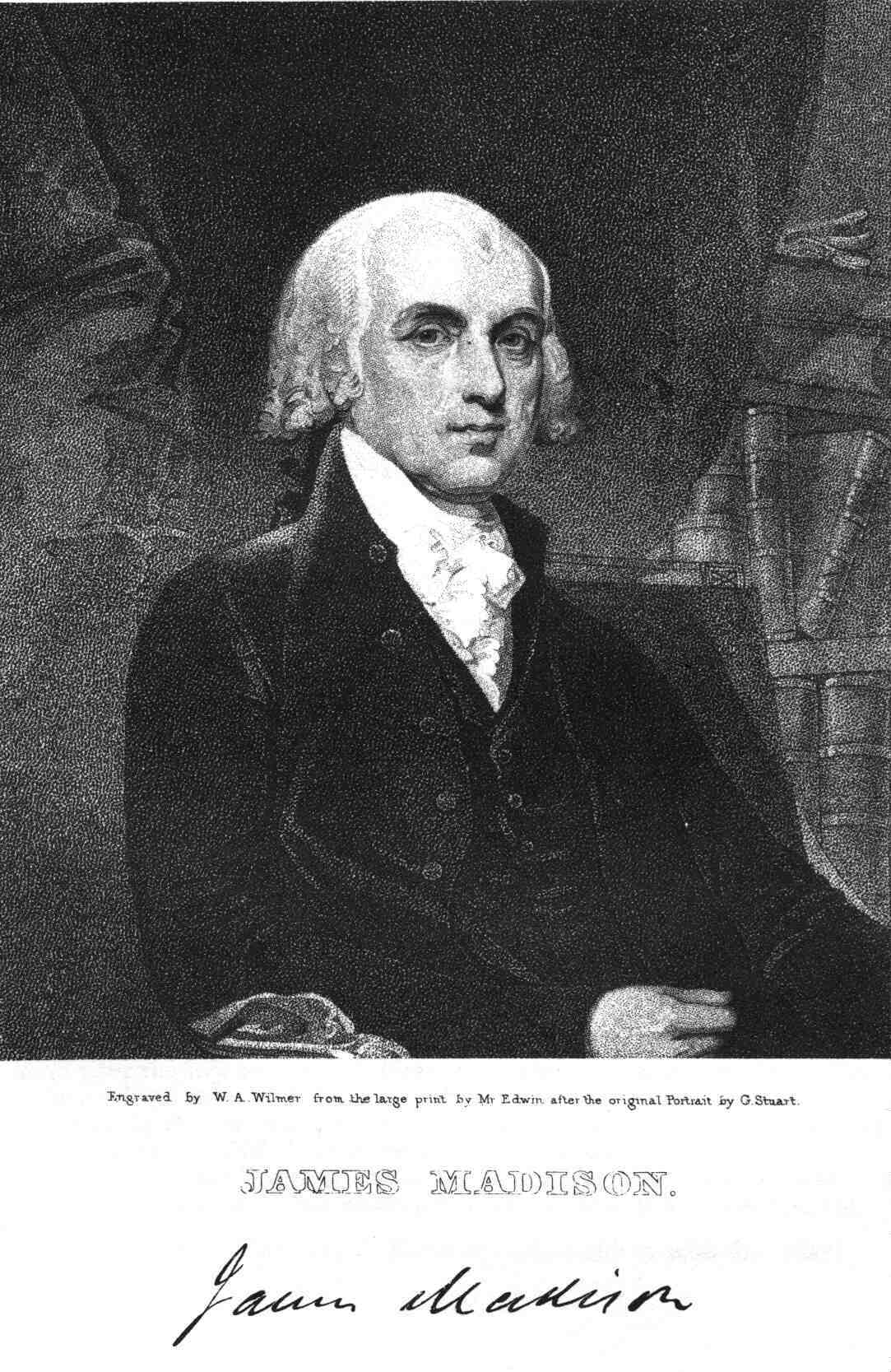
William J. Watkins, Jr., The Kentucky and Virginia Resolutions: Guideposts of Limited Government
See also his book.

Two high school classmates recently expressed their opposition to proposition 8 on Facebook. There are plenty of Soompiers who are voting no on prop 8, or would do so, if they were of age. I am surprised to see as many yes on 8 signs as I do--I would be wary of retaliation by the intolerant tolerant. Of course they see it as a question of justice; driving through Palo Alto and other cities, I see the "No on 8" signs talk about how prop 8 "unfair and wrong." I suppose that it was a wise decision for the opposition campaign not to label the proposition or its supporters as homophobic. Fortunately, if there are any liberals at the 12:00 Mass (and I suspect there are), they did not talk about the proposition, while it and Obama were the topics of conversation for some of the choir members.
Whether the opponents of traditional marriage want to admit it or not, it is ultimately about sex. Their objections to the traditional account based on sterility, the lack of children, are easily answerable--one looks at the other purposes of marriage, the intention of the parties, and also the limits to authority and law (punishing those who deliberately choose not to have children through contraception or sterilization is probably beyond the bounds of law).
I was surprised to see another high school classmate state her support for proposition 8 on FB. I don't really remember her, but since she requested to be added as a friend, I went ahead and approved. With respect to our graduation class, I suspect she and I are among the minority. We were never taught in high school that sex should be between a married man and woman. Isn't 'value-neutral' education wonderful? Look at the results...
I can't but help feel disgust at the school districts and high school of my past, even though I have some fond memories of certain teachers and principals.
Once again I am left wondering why I should waste time with Facebook, adding people as friends when we don't have anything in common except some past experiences. I wouldn't try to persuade anyone from high school that they are wrong to oppose proposition 8. But not all political questions are reducible to money; this is question pertaining to morals as well, and if we don't agree on morals, then what sort of friendship can we have, other than a practical, or commercial one?
The Yes on Prop 8 store is at CafePress. I should see if someone besides the Ratzinger Fan Club has created items there for Benedict XVI.
Edit. 10/30 The Yes on 8 signs there were at the end of the road yesterday are now gone; so are the no on 8 signs a hundred yards away.
California's Proposition 8 Is Indeed a Civil Rights Issue
Subscribe to:
Posts (Atom)