Tuesday, May 15, 2007
Apolo, Julianne paso doble encore
Waiting for more complete clips from this week to show up at youtube...

Small U.S. manufacturers are on the rise?
With a little innovation, who needs outsourcing?
Gentler scalpels? Floats that never fail? Delivered yesterday? No problem! That's why small U.S. manufacturers are on the rise.
via Economy in Crisis
The small companies are able to compete on a national and global level--but this is not the same as relocalization... they are operating according to the same problematic economic paradigm that kills other small companies, and which is a threat to the common good.
Gentler scalpels? Floats that never fail? Delivered yesterday? No problem! That's why small U.S. manufacturers are on the rise.
via Economy in Crisis
The small companies are able to compete on a national and global level--but this is not the same as relocalization... they are operating according to the same problematic economic paradigm that kills other small companies, and which is a threat to the common good.
Lt. Andrew J. Bacevich, RIP
First Lieutenant Andrew J. Bacevich was killed in Iraq. I heard of the news last night at 11 and saw a brief clip of an interview with his father. May he rest in peace. Please pray for him and his family. The Western Confucian has a post on this sad news.
Boston Globe

Boston Herald
I didn't know Dr. Bacevich taught at BU. Or maybe I knew that once but I had forgotten. He has written articles for American Conservative. He also served in the army, and is the author of The New American Militarism: How Americans Are Seduced by War and American Empire
The Realities and Consequences of U.S. Diplomacy.

Here and Now : "Appeal for Redress" - 4/9/2007
Andrew Bacevich - SourceWatch
Conversation with Andrew J. Bacevich, cover page
What's an Iraqi Life Worth? - washingtonpost.com
The Islamic Way of War
Going for Broke
Rescinding the Bush Doctrine
We Aren't Fighting to Win Anymore
The realist persuasion - The Boston Globe
TomDispatch - Tomgram: Andrew Bacevich on the New American Militarism
TomDispatch - Tomdispatch Interview: Bacevich on the Limits of ...
Edit: Scott P. Richert posts the news over at Chronicles. (He reminds me that Dr. Bacevich is contributor to Chronicles as well.)
Boston Globe

Boston Herald
I didn't know Dr. Bacevich taught at BU. Or maybe I knew that once but I had forgotten. He has written articles for American Conservative. He also served in the army, and is the author of The New American Militarism: How Americans Are Seduced by War and American Empire
The Realities and Consequences of U.S. Diplomacy.

Here and Now : "Appeal for Redress" - 4/9/2007
Andrew Bacevich - SourceWatch
Conversation with Andrew J. Bacevich, cover page
What's an Iraqi Life Worth? - washingtonpost.com
The Islamic Way of War
Going for Broke
Rescinding the Bush Doctrine
We Aren't Fighting to Win Anymore
The realist persuasion - The Boston Globe
TomDispatch - Tomgram: Andrew Bacevich on the New American Militarism
TomDispatch - Tomdispatch Interview: Bacevich on the Limits of ...
Edit: Scott P. Richert posts the news over at Chronicles. (He reminds me that Dr. Bacevich is contributor to Chronicles as well.)
Transcripts from the first debates
South Carolina Democratic debate transcript - The Debates - MSNBC.com
California Republican debate transcript - The Debates - MSNBC.com
2nd Republican debate is tonight--it will be aired on Fox News and Foxnews.com at 9 PM EST.
California Republican debate transcript - The Debates - MSNBC.com
2nd Republican debate is tonight--it will be aired on Fox News and Foxnews.com at 9 PM EST.
Center for Environmental Literacy articles
Heinberg, Pollan, Kingsolver on peak oil and sustainable food
Center for Environmental Literacy
Center for Environmental Literacy
For May, the Center for Environmental Literacy offers several articles of interest:via EB
The Challenge of Peak Oil by Richard Heinberg
In this month's Thinking outside the Lunchbox essay, author Richard Heinberg reviews evidence of limitations on our ability to continue producing oil at the rates demanded by growing economies. Because of the climatic consequences, oil can't just be replaced by other fossil fuels, nor is it likely that renewable sources can fully meet current levels of energy use. A lower-energy way of life is possible, he believes, but only through a "coordinated effort on a scale not seen before in human history." Education for sustainable living means assessing such arguments and imagining their implications for food, transportation, and every other oil-dependent aspect of our lives.
You Are What You Grow: Will This Year's Farm Bill Make Us Fatter and Sicker? by Michael Pollan
According to journalist and author Michael Pollan, "The Farm Bill essentially treats our children as a human disposal for all the unhealthful calories that the Farm Bill has encouraged American farmers to overproduce." The first step toward changing this situation, he suggests, is to stop thinking that the Farm Bill is about "farming" and start viewing it as an opportunity to "[align] agricultural policy with our public health and environmental values...with incentives to produce food cleanly, sustainably, and humanely."
New Barbara Kingsolver Book Explores Eating Locally
Best-selling author Barbara Kingsolver's first nonfiction narrative, Animal, Vegetable, Miracle: A Year of Food Life, chronicles her family's move to rural Virginia, committed to eat only food grown by themselves or in their neighborhood. During a 12-state book tour, the author will read at benefits for several regional sustainable agriculture organizations... Visit the Animal, Vegetable, Miracle website
The True Jesus of the Gospels, Part 1
alt
I thought it might be a commentary on Joseph Ratzinger's new book, but this is all right.
The True Jesus of the Gospels (Part 1)
Commentary by Raniero Cantalamessa
VATICAN CITY, MAY 14, 2007 (Zenit.org).- Here is a translation of the Italian-language commentary by Capuchin Father Raniero Cantalamessa, preacher of the Pontifical Household, on the book "Inchiesta su Gesù" (An Investigation on Jesus) by Corrado Augias and Mauro Pesce .
Parts 2 and 3 will appear Tuesday and Wednesday.
* * *
1. In the path of the cyclone
In the wake of Dan Brown's "Da Vinci Code" cyclone there have appeared, as always happens in these cases, new studies of the figure of Jesus of Nazareth whose intention is to reveal Jesus' true face which until now has been distorted by ecclesiastical orthodoxy. Even those who with their words distance themselves from such an undertaking show themselves to be influenced by it in many respects.
I think the book by Corrado Augias and Mauro Pesce, "Inchiesta su Gesù" (An Investigation of Jesus), published this year by Mondadori, is an example of this.
There are differences, as is natural, between the authors, the first being a journalist and the second a historian. But I do not wish to fall into the same error as this "investigation," which is to take account always and only the differences between the evangelists, and never their convergences. It is this error more than any other which I think compromises this "investigation." I will begin, therefore, with what is common to the two authors, Augias and Pesce.
It can be summed up thus: There existed at the beginning not one but many Christianities. One of these versions of Christianity won out over the others; it established, according to its own point of view, the canon of Scripture and imposed itself as orthodoxy, marginalizing the other versions as heresies and striking them from the record. However, thanks to the new discoveries of texts and a rigorous application of the historical method, today we are able to re-establish the truth and finally present Jesus of Nazareth as what he really was and as he intended to be, that is, as something completely different from that which the various Christian churches have up to now pretended he was.
No one questions the right of people to approach the figure of Christ historically, prescinding from the faith of the Church. Believing and non-believing historical criticism has been doing this with the most sophisticated instruments for at least three centuries now. The question is whether this current investigation of Jesus really gathers -- though it be in a popular form accessible to the general public -- the fruit of the work of these three centuries, or whether it operates from the beginning on the basis of a radical internal agenda and ends with a merely partial reconstruction.
I believe that, unfortunately, it is the latter that is the case. The thread that they have chosen is one which runs through Reimarus, Voltaire, Renan, Brandon and Hengel, and which today is taken up by literary critics and "humanities professors" such as Harold Bloom and Elaine Pagels.
What is completely absent is the contribution of the great Protestant and Catholic biblical exegesis developed after the war, in response to the theses of Rudolf Bultmann, which is much more positive about the possibility of reaching the Jesus of history through the Gospels.
To give one example, in 1998 Raymond Brown -- "the most distinguished of American New Testament scholars, with few competitors worldwide," according to the New York Times -- published a work of 1608 pages on the accounts of the passion and death of Jesus. It has been defined by specialists in the field as "the benchmark by which any future study of the Passion narratives will be measured," but in such a work there is no trace in the chapter dedicated to the motives behind Christ's death sentence, nor does it figure in the final bibliography which lists various English titles.
To the selective use of studies there corresponds an equally selective use of sources. The Gospel narratives are later adaptations when they falsify our authors' thesis, but they are taken to be historical when they are in agreement with it. Even the resurrection of Lazarus, although John's Gospel is the only one to attest to it, is taken into consideration if it can serve to corroborate the thesis of the political motivation of Jesus' arrest (p. 140).
2. But what do the apocrypha say?
But let us deal more directly with the book's basic thesis. Here we touch on the discovery of new texts that are supposed to modify the historical understanding of the origins of Christianity. Essentially these are certain apocryphal gospels found in Egypt in the middle of the last century, above all the Nag Hammadi codices. A subtle operation is performed here: The date of the composition of the canonical Gospels is pushed forward as far as possible while the date of the composition of the apocryphal texts is pushed back as far as possible so that the latter can be regarded as valid alternative sources to the former. But here we run up against a wall that cannot be easily gotten over: No canonical Gospel (not even that of John according to modern criticism) can be dated any later than 100 A.D. and no apocryphal text can be dated before that year. (The most daring suggest, by conjecture, dates of composition around the beginning of the third century or the middle of the second century.)
All the apocrypha draw from or assume the canonical Gospels; none of the canonical Gospels draw from or assume the apocrypha. To take an example very much in vogue today, of the 114 sayings of Christ in the Coptic Gospel of Thomas, 79 have parallels in the Synoptics, 11 are variants of synoptic parables. Only three parables are not attested to elsewhere.
Augias, in the line of Elaine Pagels, thinks he can overcome this chronological gap between the Synoptics and the Gospel of Thomas and the way that he tries to do this tells us something about the "historical rigor" with which these modern "investigations of Jesus" are conducted.
According to the author, in the Gospel of John we witness a clear attempt to discredit the apostle Thomas, a true persecution in his regard, comparable to that against Judas. The proof:
The insistence on Thomas' incredulity! Explanation: The author of the fourth Gospel wants to discredit the doctrines that already in his time were circulating under the name of the apostle Thomas and that come together later in the gospel that bears Thomas' name!
Thus we overcome the chronological gap. But what is forgotten is that John the Evangelist puts on Thomas' lips the most moving of declarations of love for Jesus: "Let us go and die with him" (John 11:16) and the most solemn profession of faith in Jesus: "My Lord and my God!" (John 20:28). Many exegetes say that this profession constitutes the crowning moment of John's entire Gospel. If Thomas is persecuted in the canonical Gospels, what should we say of poor Peter and all that they say about him! Perhaps Peter too was maligned so as to discredit a future apocryphal gospel that would bear his name.
But the important point is not even about the dates, but about the content of the apocryphal gospels. They say the exact opposite of that for which their authority is invoked. Our two authors advance a thesis according to which Jesus completely identifies with Judaism and did not intend to bring about any innovations in its regard. But all the apocryphal gospels profess, some more some less, a violent rupture with the Old Testament, making Jesus the revealer of a different and superior God. The revaluation of Judas in the gospel that goes by his name unfolds in conformity with this logic: With his betrayal, Judas helps Jesus to free himself from the last vestige of God the creator -- the body! In this vision the heroes of the Old Testament become the villains and the villains, like Cain, become the heroes.
Jesus is presented in the book as a man who was elevated to the status of God only by the Church that came after him. The apocryphal gospels, on the contrary, present a Jesus who is true God but not true man; he has only taken on the appearance of a body (Docetism). For them, that which causes problems is not the divinity of Christ but his humanity. Are our authors disposed to follow the apocryphal gospels on this point?
We could make an even longer list of the equivocations in the usage of the apocryphal gospels. Dan Brown uses them to support the idea of a Jesus who exalts the feminine, who does not have problems with sex, and who marries Mary Magdalene. And to prove this Brown has recourse to the Gospel of Thomas, where it is said that if a woman wants to save herself she must cease being a woman and become a man!
The fact is that the apocryphal gospels, especially those that are Gnostic in origin, were not written with the intention of narrating historical facts and sayings of Jesus but as means for conveying a certain vision of God, of themselves and the world of an esoteric and Gnostic nature. Taking these texts as a basis for reconstructing the history of Jesus is like taking "Thus Spoke Zarathustra" as a basis not for understanding the thought of Friedrich Nietzsche but as one for understanding the thought of Zarathustra himself. For this reason, in the past although almost all the apocryphal texts were known, at least from ample citations in other works, no one ever thought of using them as sources for historical information about Jesus. Only our era of mass media, always exasperatedly searching for the commercial scoop, is doing this.
There are other historical sources for Jesus besides the canonical Gospels and it is strange that these are practically left out of this "investigation." The principal of these sources is Paul, who wrote less than thirty years after the death of Jesus and after being a proud opponent of Jesus. His testimony is discussed only in regard to the resurrection and, naturally, only to be discredited. And yet what is there that is essential in the faith and in the "dogmas" of Christianity which is not found attested to (in substance if not in form) in Paul, that is, before it had time to absorb alien elements? Is it possible, for example, to claim that the contrast between Jesus and the Pharisees with their legalistic mentality is non-historical and is a fruit of the later concern not to alarm the Roman authorities when Paul himself acknowledges having been a Pharisee and says that he doggedly persecuted Christians because of this?
[Parts 2 and 3 will be published Tuesday and Wednesday.]
I thought it might be a commentary on Joseph Ratzinger's new book, but this is all right.
Monday, May 14, 2007


New Kim Tae-hee cf
Kim Tae-hee Shakes Up Her Image in New Ad
(article includes the cf)
Making of the cf (alt):
#1,
#2
#3
#4
the cf, 30 sec:
20 sec:
KTH fansite
Some older cfs:
Cyon 'Shine' CF (30secs) with Kim Tae Hee and Kang Dong Won
Another with KDW
KDW KTF cf
Restless MV
(article includes the cf)
Making of the cf (alt):
#1,
#2
#3
#4
the cf, 30 sec:
20 sec:
KTH fansite
Some older cfs:
Cyon 'Shine' CF (30secs) with Kim Tae Hee and Kang Dong Won
Another with KDW
KDW KTF cf
Restless MV
Thoughts on the liturgical calendar
Should the number of saints on the universal calendar be reduced, while local cults and observances be encouraged?
Pope OKs stricter norms for mandatory feast days in church calendar
Pope OKs stricter norms for mandatory feast days in church calendar
King's Noyse
American Renaissance violin ensemble, founded and directed by David Douglass.

Noyse Productions
Saint
Paul Sunday


(As you can tell from the above photo, Scott Metcalfe was a member of this group for a while.)
The featured artists for King's Noyse include Paul O'Dette and Ellen Hargis.
Paul O'Dette: Eastman School of Music; Harmonia Mundi profile; Goldbergweb

Abso-LUTE-ly Fabulous

Ellen Hargis & Paul O'Dette MP3s

The Lute Society of America Summer Seminar 2002
Lute Festival 2006 Concerts
St. Louis Classical Guitar Society
(More on Ellen Hargis; profile; American Bach Soloists - Ellen Hargis)
A frequent collaborator with King's Noyse is Andrew Lawrence-King.
AL-K's Early Harp Page
ANDREW LAWRENCE-KING, biography, discography
Andrew Lawrence-King (Harp) - Short Biography
Hyperion

source
Misc:
O'Brien/Cinelli Duo
Vocal Early Musicians

Noyse Productions
Saint
Paul Sunday

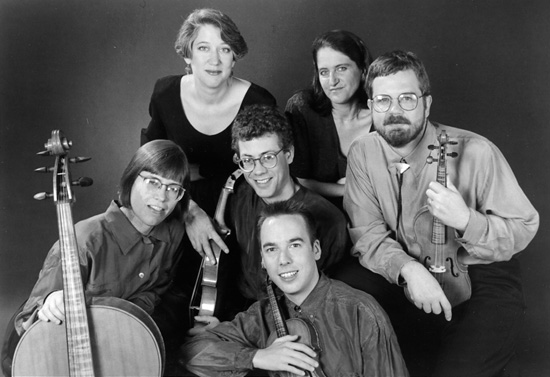
(As you can tell from the above photo, Scott Metcalfe was a member of this group for a while.)
The featured artists for King's Noyse include Paul O'Dette and Ellen Hargis.
Paul O'Dette: Eastman School of Music; Harmonia Mundi profile; Goldbergweb

Abso-LUTE-ly Fabulous

Ellen Hargis & Paul O'Dette MP3s

The Lute Society of America Summer Seminar 2002
Lute Festival 2006 Concerts
St. Louis Classical Guitar Society
(More on Ellen Hargis; profile; American Bach Soloists - Ellen Hargis)
A frequent collaborator with King's Noyse is Andrew Lawrence-King.
AL-K's Early Harp Page
ANDREW LAWRENCE-KING, biography, discography
Andrew Lawrence-King (Harp) - Short Biography
Hyperion

source
Misc:
O'Brien/Cinelli Duo
Vocal Early Musicians
More moronic short-sightedness
From JHK's "Rigged to Blow":
More:
The gassy elephant: Alberta’s tar sands are fuelling an ecological disaster (Frances Russell)
[Alberta] Prairie E-Sierran - Climate Action Rallies, World Water ...
Alberta's tar sands are soaking up too much water — Dogwood Initiative
Potential Ground Water and Surface Water Impacts from Oil Shale and Tar Sands Energy-Production Operations
Toxic waste left in wake of oil sands extraction, by Gerald Jamenko, Post-Tribune
Threats
Origin of the Lower Cretaceous Heavy Oils (“Tar Sands”) of Alberta, by Michael S. Stanton
The Alberta tar sands are big, but even the Canadian government does not project them paying out much more than three million barrels a day when they reach maximum production in five or ten years, and the process will probably poison all the groundwater east of the Canadian Rockies.How many more examples do we need of people selling out the future of a region just so it can be stripped of a resource needed for our unsustainable lifestyle? Who are the real "eco-terrorists"?
More:
The gassy elephant: Alberta’s tar sands are fuelling an ecological disaster (Frances Russell)
[Alberta] Prairie E-Sierran - Climate Action Rallies, World Water ...
Alberta's tar sands are soaking up too much water — Dogwood Initiative
Potential Ground Water and Surface Water Impacts from Oil Shale and Tar Sands Energy-Production Operations
Toxic waste left in wake of oil sands extraction, by Gerald Jamenko, Post-Tribune
Threats
Origin of the Lower Cretaceous Heavy Oils (“Tar Sands”) of Alberta, by Michael S. Stanton
Sunday, May 13, 2007
Trinity Grammar and Prep
Just remembered that there is this school in Napa. No idea if there are any employment opportunities there.
Amy Acker - The Unit unaired pilot
The role of Kim was eventually filled by Audrey Marie Anderson.
unaired pilot credits
Jamie-Lynn Sigler interview
Jamie-Lynn Sigler on Jimmy Kimmel Live 4-13-07 part1
Jamie-Lynn Sigler on Jimmy Kimmel Live 4-13-07 part2
There you go Sarge, haha.
Jamie-Lynn Sigler on Jimmy Kimmel Live 4-13-07 part2
There you go Sarge, haha.
Proclamation of Christ's resurrection
Just found this on Youtube--I presume it is a Korean Orthodox church. No info about who and where. Maybe KoreanCatholic will know something.
Edit: Based on the tags, this would be St. Nicholas in Seoul? The poster has more clips from St. Nicholas.
Niall Ferguson, New York -- the new Venice?
New York - the new Venice? By Niall Ferguson, Sunday Telegraph
Last Updated: 12:01am BST 13/05/2007
via Lew Rockwell
Last Updated: 12:01am BST 13/05/2007
via Lew Rockwell
George Washington's Rules of Civility
George Washington's Rules of Civility and Decent Behavior ...
NPR : George Washington's Rules of Civility
George Washington's Rules of Civility and Decent Behaviour in ...
Washington's Rules of Civility & Decent Behavior In Company and ...
Papers of George Washington
George Washington's Rules of Civility by Moncure D. Conway ...
George Washington's Rules of Civility (Memory): American Treasures ...
I skimmed through the book quickly again yesterday, while at Border's. Most of it is still relevant today, I would think. Is etiquette more than just showing consideration for others? I would think so, even if consideration is a major part of etiquette. What sets us apart from the brute animals? Reason. To act in a way to show the influence of reason, gracefully or with refinement.
While it is true that manners do differ across cultures and societies, I would think that common to all are (1) restraint, self-control with respect to certain desires and actions, (2) expression/communication, (3) acts proper to the virtues allied to justice...
What else? I'll have to think about it more...
One of the more well-known Renaissance guides is byBaldassare Castiglione, Book of the Courtier. I remember that this was a popular genre during the Renaissance period (as well as the late medieval?), but this is the only work that I can find online and at Amazon.
The Book of the Courtier
Answers.com mentions Erasmus' De Civilitate Morum Puerilium and Giovanni Della Casa's Il Galateo.
Manners, Customs, and Dress During the Middle Ages, and During the ...
The American gentleman's guide to politeness and fashion, or, Familiar letters to his nephews (1864) (pdf, txt)
Rudeness and Civility: Manners in 19th Century Urban America by John F. Kasson (Hardcover - Jun 1990)
The ‘Net Guide to 19th Century Courtship And Manners, by Emma Moniz
Etiquette & the Regency Period
Review of The Mirror of Graces
R.L. Shep Publications
Some more contemporary guides:
The Urban Etiquette Handbook -- New York Magazine
The Emily Post Institute offers etiquette advice and manners advice
Miss Etiquette advice, business manners, wedding etiquette.
Maria Elena Vidal has some discussions about etiquette at her blog, Tea at Trianon.
Related Links:
Jane Austen's World
Benjamin Franklin: Yale editon of complete works; Project Gutenberg
Dance Instruction Manuals
Western Social Dance
From the wiki entry on etiquette: Are Paris Waiters Rude Or Is It You?
Japan FAQ--Japanese Manners and Etiquette
Table Etiquette and Manners
Guide to Japanese manners and etiquette
China: A History of the Laws, Manners and Customs of the People
Misc Links:
Erasmus Center for Early Modern Studies
NPR : George Washington's Rules of Civility
George Washington's Rules of Civility and Decent Behaviour in ...
Washington's Rules of Civility & Decent Behavior In Company and ...
Papers of George Washington
George Washington's Rules of Civility by Moncure D. Conway ...
George Washington's Rules of Civility (Memory): American Treasures ...
I skimmed through the book quickly again yesterday, while at Border's. Most of it is still relevant today, I would think. Is etiquette more than just showing consideration for others? I would think so, even if consideration is a major part of etiquette. What sets us apart from the brute animals? Reason. To act in a way to show the influence of reason, gracefully or with refinement.
While it is true that manners do differ across cultures and societies, I would think that common to all are (1) restraint, self-control with respect to certain desires and actions, (2) expression/communication, (3) acts proper to the virtues allied to justice...
What else? I'll have to think about it more...
One of the more well-known Renaissance guides is byBaldassare Castiglione, Book of the Courtier. I remember that this was a popular genre during the Renaissance period (as well as the late medieval?), but this is the only work that I can find online and at Amazon.
The Book of the Courtier
Answers.com mentions Erasmus' De Civilitate Morum Puerilium and Giovanni Della Casa's Il Galateo.
Manners, Customs, and Dress During the Middle Ages, and During the ...
The American gentleman's guide to politeness and fashion, or, Familiar letters to his nephews (1864) (pdf, txt)
Rudeness and Civility: Manners in 19th Century Urban America by John F. Kasson (Hardcover - Jun 1990)
The ‘Net Guide to 19th Century Courtship And Manners, by Emma Moniz
Etiquette & the Regency Period
Review of The Mirror of Graces
R.L. Shep Publications
Some more contemporary guides:
The Urban Etiquette Handbook -- New York Magazine
The Emily Post Institute offers etiquette advice and manners advice
Miss Etiquette advice, business manners, wedding etiquette.
Maria Elena Vidal has some discussions about etiquette at her blog, Tea at Trianon.
Related Links:
Jane Austen's World
Benjamin Franklin: Yale editon of complete works; Project Gutenberg
Dance Instruction Manuals
Western Social Dance
From the wiki entry on etiquette: Are Paris Waiters Rude Or Is It You?
Japan FAQ--Japanese Manners and Etiquette
Table Etiquette and Manners
Guide to Japanese manners and etiquette
China: A History of the Laws, Manners and Customs of the People
Misc Links:
Erasmus Center for Early Modern Studies
Polyphony
Yesterday was a day filled with polyphony.
Before I headed to the First Lutheran Church in Boston, I dropped by KFC to try the chicken again. (I used a coupon for a free piece of trans fat-free chicken yesterday.) The fried chicken (original) really tastes like the fried chicken one gets at one of the Buffet.com restaurants. The "herbs and spices" still taste the same; what accounts for the difference? It's not like the pieces are fried at the "restaurant--aren't they just heated up and put in the warmer? I think I will have to try Korean fried chicken, and see if that becomes the new KFC for me.
The performance yesterday was the last of the free community outreach concerts being put on by Exsultemus for the 2006-7 season. The group performs around 3 programs each season, usually 2 times for each program. The last program is free though donations are welcome, and they performed it at 4 different venues. The theme for the program was the Portuguese Renaissance. They have a new female singer; there is some turnover for the group. This was the first Exsultemus performance I attended this season, but I don't think the change in members affected the quality of singing. Miss Thea Lobo is still a member of the ensemble, and she has her own website. (Some samples of her singing.)
Their pronunciation of the Latin was quite different this time -- iirc, soft c's ( = s), different pronunciations of the e's depending on the position (final e = short i, first e = short a), and u's were short u's, or almost like a's? I forgot if the j's were pronounced as they are in English or as y's. (Sorry, I don't know the proper phonetic term.) Is this the portuguese pronunciation of Latin? If so, I wonder if they had a coach or resource.
There was a nice reception after the concert.
I took another walk down Newbury Street, before heading over to Cambridge for the performance by Convivium Musicum.

The ensemble is quite proficient, though there was some hesitation or restraint (meekness) at the beginning of some of certain parts, which were initiated by a small number of voices. Perhaps that is their style, but it did seem a bit off to me. Their pronunciation of the Latin was not quite ecclesiastical either--soft c's instead of the "ch" sound. I think everything else was the same though.
Some info about last night's performance:

You can hear some samples here.
Note: Musica Sacra will be singing some Renaissance madrigals on June 2.
I will post some photos that I took in the past couple of days some time this week.
Random comments:
A lot of the older women at the concerts were wearing unflattering clothes--a certain kind of frumpy look. It reminded me of a certain professor visiting Harvard this past week to give the Whitehead lecture. Pants and shirts all around... certainly not very feminine and appropriately dignified for a lady. Certainly the clothes do not hide the figure well, and taken to an extreme it appears very careless and slovenly. The same sort of criticism could be applied to some of the academic women attending the Whitehead lecture, though undoubtedly for many of them the look is a part of their feminist identity.
The older men wore shirts and slacks, maybe a jacket as well. No criticism to be made specific to them. (The advantage of having a rather fixed wardrobe.)
I wonder how much of a problem obesity was for the ancient Greeks. Would being fat (and being responsible for that condition of the body) be a source of shame for them?
During the day I was wondering if retreats would be necessary if people had a structured prayer life, setting aside time to be apart from others and to devote to private and liturgical prayer. The quality of time spent, rather than the quantity. Then again, even the pope and the cardinals go on retreats, and one would think that their prayer life has enough structure. Even if one has a good prayer life, it may be that there isn't enough time for meditation and prayer because it is occupied by the affairs of life, and so one really needs to find solitude and go on a time out. Perhaps the better question to ask is whether a beginner can profit from a retreat devoted exclusively to prayer (like at certain monasteries), or if he would not benefit from having other activities fill up his time, such as work (as is the case at other monasteries). I'm a beginner, and definitely do not have the appropriate state of soul that would enable me to benefit from that much leisure time. It would be better for me to have some time filled up by useful work.
While I was listening to polyphony I was wondering how it would be possible to keep both polyphony and plainchant, if one is trying to bring back an authentic liturgical spirituality for the laity, and all that entails, including the various forms of participation, such as singing. Hence my preference for an Eastern-rite liturgy over the typical Roman-rite liturgy (whether it be according to the old missal or the new)...
It's been a while since I've participated in a Christendom liturgy.
Before I headed to the First Lutheran Church in Boston, I dropped by KFC to try the chicken again. (I used a coupon for a free piece of trans fat-free chicken yesterday.) The fried chicken (original) really tastes like the fried chicken one gets at one of the Buffet.com restaurants. The "herbs and spices" still taste the same; what accounts for the difference? It's not like the pieces are fried at the "restaurant--aren't they just heated up and put in the warmer? I think I will have to try Korean fried chicken, and see if that becomes the new KFC for me.
The performance yesterday was the last of the free community outreach concerts being put on by Exsultemus for the 2006-7 season. The group performs around 3 programs each season, usually 2 times for each program. The last program is free though donations are welcome, and they performed it at 4 different venues. The theme for the program was the Portuguese Renaissance. They have a new female singer; there is some turnover for the group. This was the first Exsultemus performance I attended this season, but I don't think the change in members affected the quality of singing. Miss Thea Lobo is still a member of the ensemble, and she has her own website. (Some samples of her singing.)
Their pronunciation of the Latin was quite different this time -- iirc, soft c's ( = s), different pronunciations of the e's depending on the position (final e = short i, first e = short a), and u's were short u's, or almost like a's? I forgot if the j's were pronounced as they are in English or as y's. (Sorry, I don't know the proper phonetic term.) Is this the portuguese pronunciation of Latin? If so, I wonder if they had a coach or resource.
There was a nice reception after the concert.
I took another walk down Newbury Street, before heading over to Cambridge for the performance by Convivium Musicum.

The ensemble is quite proficient, though there was some hesitation or restraint (meekness) at the beginning of some of certain parts, which were initiated by a small number of voices. Perhaps that is their style, but it did seem a bit off to me. Their pronunciation of the Latin was not quite ecclesiastical either--soft c's instead of the "ch" sound. I think everything else was the same though.
Some info about last night's performance:
Convivium presents a concert of joyous and festive music by Cristóbal de Morales, Francisco Guerrero, and Alonso de Lobo. The program’s centerpiece is Lobo’s Missa Simile est regnum caelorum, a mass whose musical material is derived throughout from Guerrero’s radiant motet of the same name, which sets a parable about grace.The director of Convuvium Musicum, Mr. Scott Metcalfe is stepping down after this season.

You can hear some samples here.
Note: Musica Sacra will be singing some Renaissance madrigals on June 2.
I will post some photos that I took in the past couple of days some time this week.
Random comments:
A lot of the older women at the concerts were wearing unflattering clothes--a certain kind of frumpy look. It reminded me of a certain professor visiting Harvard this past week to give the Whitehead lecture. Pants and shirts all around... certainly not very feminine and appropriately dignified for a lady. Certainly the clothes do not hide the figure well, and taken to an extreme it appears very careless and slovenly. The same sort of criticism could be applied to some of the academic women attending the Whitehead lecture, though undoubtedly for many of them the look is a part of their feminist identity.
The older men wore shirts and slacks, maybe a jacket as well. No criticism to be made specific to them. (The advantage of having a rather fixed wardrobe.)
I wonder how much of a problem obesity was for the ancient Greeks. Would being fat (and being responsible for that condition of the body) be a source of shame for them?
During the day I was wondering if retreats would be necessary if people had a structured prayer life, setting aside time to be apart from others and to devote to private and liturgical prayer. The quality of time spent, rather than the quantity. Then again, even the pope and the cardinals go on retreats, and one would think that their prayer life has enough structure. Even if one has a good prayer life, it may be that there isn't enough time for meditation and prayer because it is occupied by the affairs of life, and so one really needs to find solitude and go on a time out. Perhaps the better question to ask is whether a beginner can profit from a retreat devoted exclusively to prayer (like at certain monasteries), or if he would not benefit from having other activities fill up his time, such as work (as is the case at other monasteries). I'm a beginner, and definitely do not have the appropriate state of soul that would enable me to benefit from that much leisure time. It would be better for me to have some time filled up by useful work.
While I was listening to polyphony I was wondering how it would be possible to keep both polyphony and plainchant, if one is trying to bring back an authentic liturgical spirituality for the laity, and all that entails, including the various forms of participation, such as singing. Hence my preference for an Eastern-rite liturgy over the typical Roman-rite liturgy (whether it be according to the old missal or the new)...
It's been a while since I've participated in a Christendom liturgy.
Subscribe to:
Posts (Atom)